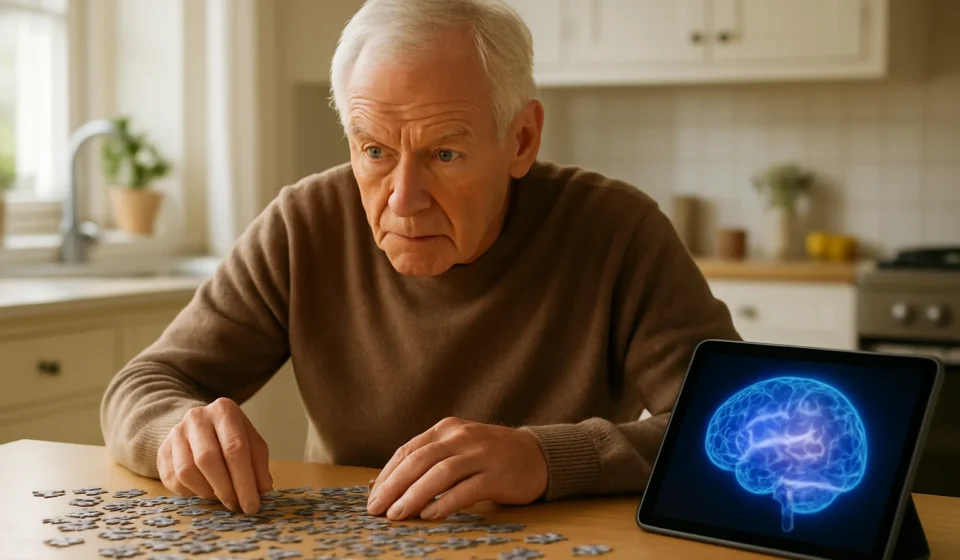

The belief that cognitive decline is an inevitable feature of aging is not only scientifically outdated — it is actively harmful. Decades of neuroscience research have established that the adult brain retains remarkable neuroplasticity throughout the seventh, eighth, and even ninth decades of life. The question is not whether your brain can grow new synaptic connections after 65. The evidence confirms it can. The question is which brain fitness strategies produce the largest, most durable benefits — and which ones are expensive placebos. This 2026 guide cuts through the noise.
Table of Contents
- The Neuroscience of Brain Fitness After 65
- Aerobic Exercise: The Single Most Powerful Brain Intervention
- Cognitive Training: What Works, What Doesn’t
- Sleep Architecture and Glymphatic Clearance
- Social Engagement and the Cognitive Reserve Hypothesis
- Dietary Patterns That Protect the Aging Brain
- Chronic Stress, Cortisol, and Hippocampal Atrophy
- Your Weekly Brain Fitness Protocol
- Frequently Asked Questions
The Neuroscience of Brain Fitness After 65
The aging brain does change — there is no point minimizing this. Cortical gray matter volume declines at roughly 0.5–1% per year after age 60. Hippocampal volume — critical for memory consolidation — shrinks approximately 1–2% annually. Processing speed, working memory capacity, and executive function show measurable decline on standardized testing. But these population-level averages obscure a crucial heterogeneity: some 80-year-olds outperform 60-year-olds on cognitive benchmarks. The difference is almost never genetics alone.
Neuroimaging studies from the Rush Memory and Aging Project (tracking 1,700 seniors for 20+ years) and the FINGER trial (Finland, 1,260 participants) have collectively demonstrated that lifestyle-based interventions measurably alter brain structure and function. The FINGER trial — the largest multidomain dementia prevention RCT ever conducted — showed a 25% improvement in overall cognitive performance versus controls after just two years of a combined diet, exercise, cognitive training, and vascular monitoring intervention.
The mechanism is multipronged: exercise increases BDNF (brain-derived neurotrophic factor) — often called “Miracle-Gro for the brain” — which promotes neurogenesis in the hippocampal dentate gyrus. Cognitive challenge drives synaptogenesis. Sleep activates the glymphatic system, which clears amyloid-beta and tau proteins during slow-wave sleep. Social connection reduces allostatic load and inflammatory cytokine burden. Each domain amplifies the others.
Aerobic Exercise: The Single Most Powerful Brain Intervention
If you do only one thing for your brain health after 65, do this: walk briskly for 30–45 minutes, 4–5 days per week. The evidence for aerobic exercise as a cognitive intervention is more robust than any drug, supplement, or brain training program currently available.
A landmark 2011 RCT published in PNAS (Kirk Erickson, University of Pittsburgh) found that aerobic exercise for one year increased hippocampal volume by 2% in older adults — effectively reversing 1–2 years of age-related shrinkage. The control group (stretching only) showed the expected 1.4% volume decline. BDNF levels correlated directly with hippocampal growth and spatial memory improvement.
The 2024 EXERT trial (Exercise Training and Brain Health study, published in Neurology) randomized 296 older adults with mild cognitive impairment to aerobic exercise versus stretching over 12 months. Both groups showed less cognitive decline than predicted — suggesting that even low-intensity exercise has neuroprotective effects — but the aerobic group demonstrated greater preservation of entorhinal cortex thickness, a region among the first to degrade in Alzheimer’s pathology.
Optimal parameters based on current evidence: moderate intensity (60–75% max heart rate); 150+ minutes per week total; activities that involve coordination (dancing, swimming, cycling) add motor-learning benefits beyond walking alone.
Cognitive Training: What Works, What Doesn’t
The “brain game” industry generates over $3 billion annually, most of it built on inflated claims. The hard truth: most brain training apps produce narrow task-specific improvements that do not transfer to real-world cognitive function. The distinction between “near transfer” (getting better at the specific task you practiced) and “far transfer” (generalizing improvements to untrained cognitive domains) is the dividing line between genuine benefit and expensive entertainment.
| Activity | Evidence Level | What Improves | Transfer to Daily Life? |
|---|---|---|---|
| Speed-of-processing training (InSight/ACTIVE trial) | High — 20-year RCT, 2,785 participants | Processing speed; 48% reduction in dementia risk over 10 years | Yes — driving safety, daily tasks |
| Learning a new language | High — neuroimaging studies confirm structural changes | Executive function, attention switching, cognitive reserve | Yes — broadest transfer |
| Learning a musical instrument | Moderate-High — functional MRI evidence | Auditory processing, fine motor, working memory | Moderate |
| Crossword puzzles / Sudoku | Low-Moderate — task-specific improvement only | Vocabulary, number pattern recognition | Minimal transfer |
| Commercial brain apps (Lumosity, BrainHQ) | Variable — BrainHQ has some RCT support; most others do not | Specific trained skills | Minimal to moderate |
| Strategy board games (chess, bridge) | Moderate — observational data strong, RCTs limited | Planning, working memory, attention | Moderate |
The ACTIVE trial deserves special mention: this NIH-funded 20-year study found that speed-of-processing training (10 sessions total) reduced dementia risk by 29–48% depending on session dose — a result that dwarfs virtually any pharmacological intervention studied to date. This specific training is available through Posit Science (BrainHQ) and select senior centers.
Sleep Architecture and Glymphatic Clearance
Most seniors know they “don’t sleep as well as they used to.” What they may not know is that disrupted sleep is not merely a symptom of aging — it is an active accelerant of neurodegenerative pathology.
During slow-wave (deep) sleep, the glymphatic system — a brain-wide waste clearance network mediated by aquaporin-4 channels on astrocyte endfeet — expands the interstitial space by up to 60%, allowing cerebrospinal fluid to flush amyloid-beta and phosphorylated tau from the parenchyma. A single night of sleep deprivation increases amyloid-beta levels in the human brain by ~5%, as demonstrated by PET imaging studies from the National Institutes of Health. Chronic disruption of slow-wave sleep — common in older adults due to sleep architecture fragmentation — represents years of cumulative amyloid accumulation.
Prioritize 7–9 hours of consolidated sleep. Address obstructive sleep apnea aggressively — untreated moderate-to-severe OSA increases dementia risk by 26% (Yaffe et al., JAMA Neurology, 2022). Avoid benzodiazepines and Z-drugs (zolpidem, eszopiclone), which suppress slow-wave sleep while inducing subjective sleep — creating the illusion of rest without the neurocognitive benefit.
Social Engagement and the Cognitive Reserve Hypothesis
Cognitive reserve — the brain’s resilience against pathological damage — is not fixed at birth. It accumulates across a lifetime through education, occupational complexity, and social engagement. Individuals with higher cognitive reserve can sustain substantial Alzheimer’s pathology (amyloid plaques, tau tangles) while remaining clinically asymptomatic — effectively delaying the threshold at which pathology translates into dementia symptoms by years to decades.
A 2023 meta-analysis in JAMA Psychiatry pooled data from 27 cohort studies (n = 78,000+) and found that social isolation was associated with a 26% increased dementia risk, independent of depression, physical activity, and cardiovascular disease. The mechanism involves reduced cognitive stimulation, higher allostatic load from chronic loneliness (elevating cortisol and IL-6), and diminished motivation for health-promoting behaviors.
High-value social activities for cognitive reserve: conversation-intensive social groups (book clubs, language classes, choir); volunteering (associated with slower cognitive decline in Rush MAP); intergenerational engagement; and intellectually demanding joint activities like bridge, chess, or collaborative learning programs at local colleges.
Dietary Patterns That Protect the Aging Brain
The MIND diet (Mediterranean-DASH Intervention for Neurodegenerative Delay), developed by Dr. Martha Clare Morris at Rush University, is the most evidence-specific dietary pattern for cognitive aging. A 2015 observational study found that high adherence to the MIND diet was associated with cognitive functioning equivalent to being 7.5 years younger — outperforming the Mediterranean and DASH diets when assessed specifically against cognitive aging biomarkers.
Key MIND diet components with the strongest neuroprotective evidence: leafy green vegetables (6+ servings/week — spinach, kale, arugula contain folate, lutein, and vitamin K, all associated with slower cognitive decline); berries (2+ servings/week — blueberry anthocyanins cross the blood-brain barrier and reduce neuroinflammation); fatty fish (omega-3 DHA is structurally incorporated into neuronal membranes and modulates amyloid precursor protein processing); and olive oil (oleocanthal inhibits neuroinflammatory pathways analogous to ibuprofen).
Conversely, ultra-processed foods — defined by the NOVA classification as industrially formulated products with multiple additives — were associated in a 2022 JAMA Neurology study of 72,000 UK Biobank participants with a 28% higher risk of cognitive impairment for each 10% increase in UPF proportion of total diet.
Chronic Stress, Cortisol, and Hippocampal Atrophy
Glucocorticoid excess — the neurobiological signature of chronic psychological stress — is directly neurotoxic to hippocampal CA3 pyramidal neurons. Prolonged cortisol elevation suppresses BDNF production, reduces neurogenesis in the hippocampal dentate gyrus, and accelerates synaptic pruning. Human neuroimaging studies consistently show smaller hippocampal volumes in individuals with histories of chronic psychological stress, depression, or PTSD.
Evidence-based stress reduction strategies with the strongest cognitive data: mindfulness-based stress reduction (MBSR) — an 8-week program with demonstrated effects on amygdala reactivity and prefrontal cortical thickness; progressive muscle relaxation; and structured nature exposure (a 90-minute walk in a natural setting reduces rumination-associated prefrontal cortex activity, per a 2015 Stanford study). Medicare Part B covers mental health treatment including therapy for anxiety and stress disorders.
Your Weekly Brain Fitness Protocol
| Day | Activity | Duration | Primary Benefit |
|---|---|---|---|
| Monday | Brisk walk or swimming (moderate intensity) | 45 min | BDNF production, hippocampal neurogenesis |
| Tuesday | Language lesson (Duolingo, community college, or conversation group) + social lunch | 60 min + social | Executive function, cognitive reserve |
| Wednesday | Aerobic exercise + speed-of-processing training (BrainHQ) | 30 + 20 min | Processing speed, dementia risk reduction |
| Thursday | Social engagement (book club, volunteer work, bridge club) | 2+ hours | Cognitive reserve, allostatic load reduction |
| Friday | Aerobic exercise (dancing preferred) + new skill practice | 45 + 30 min | Motor learning, neuroplasticity |
| Saturday | Nature walk + MBSR meditation practice | 60 + 20 min | Cortisol regulation, stress resilience |
| Sunday | Strategic game (chess, bridge) + rest with 7–9 hr sleep target | 90 min | Planning, working memory, glymphatic clearance |
For more on keeping your mind and body strong after 65, explore our Senior Health Conditions Guide 2026 and our Senior Fitness & Exercise Guide 2026.
Brain Fitness for Seniors: The 5 Pillars That Move the Needle
If you remember nothing else, remember this: effective brain fitness for seniors is not about one clever app or a single supplement. The trials that actually show benefit—like the landmark FINGER study—combine several habits at once, because cognitive decline has several drivers. Here are the five pillars that the strongest evidence supports, and how they reinforce each other.
| Pillar | Why it protects the brain | Practical target |
|---|---|---|
| Aerobic exercise | Raises BDNF and grows the hippocampus (Erickson 2011) | 150 min/week brisk activity |
| Cognitive challenge | Builds cognitive reserve and new connections | Learn something genuinely new weekly |
| Diet | Reduces vascular and inflammatory damage | MIND/Mediterranean pattern |
| Sleep | Clears amyloid via the glymphatic system | 7–8 hours, consistent schedule |
| Social & B-vitamin status | Lowers homocysteine; buffers stress | Stay connected; correct B12/folate gaps |
That last pillar is the one most often missed. Low levels of vitamin B12 and folate raise homocysteine, a marker linked to faster brain shrinkage—and both deficiencies are common after 60. A simple blood test and, when needed, correction can remove a hidden drag on memory. Pair that with a brain-protective plate from our MIND diet guide and the deep, consistent sleep described in our sleep and dementia guide, and you have built four of the five pillars without a single brain-training app. Brain fitness for seniors works best as this kind of stacked routine, not as any one trick in isolation.
Frequently Asked Questions
What is the best brain fitness activity for seniors?
There is no single best activity—the evidence favors a combination. Regular aerobic exercise has the strongest data for growing brain volume, but pairing it with learning something new, a MIND-style diet, good sleep, and social connection produces far larger benefits than any one habit alone.
Can brain fitness reverse memory loss that has already started?
For normal age-related forgetfulness and mild cognitive impairment, multidomain programs have improved or stabilized cognition in trials. They do not cure dementia, but it is never too late to benefit, and addressing reversible causes like B12 deficiency, poor sleep, and inactivity can produce real gains.
At what age does brain fitness training stop being effective?
There is no evidence of an upper age ceiling for brain fitness benefits. The ACTIVE trial included participants up to age 91 and showed cognitive benefits across all age groups. Neuroimaging studies have documented hippocampal volume increases from aerobic exercise in adults in their 80s. Neuroplasticity diminishes with age but does not disappear. The appropriate clinical response to “I’m too old for this to help” is: you are not.
Do brain supplements like phosphatidylserine or lion’s mane mushroom work?
The evidence base for brain supplements is thin compared to lifestyle interventions. Phosphatidylserine has qualified FDA health claim status — meaning it “may” reduce dementia risk, but evidence is limited. Lion’s mane (Hericium erinaceus) shows promising preclinical data and a small 2023 RCT showing cognitive improvement over 12 weeks, but large phase III trials are lacking. Omega-3 DHA has stronger evidence, particularly for individuals with low baseline DHA levels. None of these supplements should substitute for — or are as potent as — the lifestyle strategies outlined above.
Does Medicare cover brain health programs or cognitive training?
Medicare does not currently cover commercial brain training programs. However, Medicare covers: the Annual Wellness Visit (which includes cognitive impairment detection screening), neuropsychological testing when ordered by a physician for diagnostic purposes, psychiatric care and therapy services, and cardiac rehabilitation programs that have demonstrated cognitive benefits. Some Medicare Advantage plans offer SilverSneakers gym access and wellness programs that support the physical activity component of brain health.
Related Articles You May Find Helpful
- Dementia Prevention 2026: 14 Risk Factors You Can Reduce Now
- Memory Loss vs. Dementia in Seniors 2026: How to Tell the Difference
- Senior Fitness & Exercise Guide 2026
- Insomnia in Seniors 2026: Safe Sleep Solutions That Actually Work
- Senior Loneliness 2026: Health Risks and Solutions
Sources