
If you or a loved one is living with neuropathy — the nerve damage that causes numbness, tingling, burning, or loss of sensation in the feet — choosing the right footwear isn’t a luxury. It’s a medical necessity that can mean the difference between healthy feet and a serious wound that threatens your mobility, and in severe cases, your foot itself. This is your complete 2026 guide to the best neuropathy footwear — including what Medicare will pay for.
Why Proper Shoes for Neuropathy Are a Medical Priority in 2026
Neuropathy causes insensitivity or complete loss of the ability to feel pain, heat, and cold in the feet. This creates a dangerous situation: you can develop cuts, blisters, pressure sores, or ulcers without ever feeling them. Left untreated, these injuries can progress to serious infections. According to the American Podiatric Medical Association, diabetic foot complications — most driven by neuropathy — are the leading cause of non-traumatic lower limb amputations in the United States.
Specialized neuropathy shoes address this danger in several critical ways: they eliminate internal seams that cause pressure points, provide extra depth for protective insoles, distribute foot pressure more evenly, reduce fall risk through enhanced stability, and accommodate swelling that commonly accompanies neuropathy.
What to Look for in Neuropathy Shoes: The 8 Non-Negotiable Features
Not all “comfort shoes” are appropriate for neuropathy. Here are the essential features every neuropathy shoe must have:
- Seamless interior construction — Any seam inside the shoe can cause a pressure point that leads to a blister or ulcer in a neuropathic foot. The interior must be completely smooth
- Extra depth (0.5–1 inch additional) — To accommodate custom diabetic insoles and foot swelling, which commonly increases throughout the day
- Wide, rounded toe box with adequate height — Prevents toe crowding and the resulting pressure sores on the tops and sides of toes
- Adjustable closure — Velcro or lace closures allow for swelling accommodation and ensure proper fit throughout the day
- Moisture-wicking lining — Excess moisture trapped against neuropathic skin dramatically increases infection risk
- Firm, stable midsole — Provides the structural support needed to protect the foot from ground forces
- Rocker sole — A slightly curved sole that rolls the foot forward reduces pressure on the forefoot and heel — the areas most vulnerable to ulcers
- Non-slip outsole — Critical for fall prevention, since neuropathy also impairs balance
Top 5 Best Shoes for Neuropathy in 2026
These recommendations are based on podiatric review, user outcomes in diabetic neuropathy populations, and compliance with Medicare’s therapeutic shoe standards:
1. Dr. Comfort William (Men) / Paradise (Women) — Best Overall
The Dr. Comfort line is the most widely prescribed diabetic therapeutic shoe by podiatrists and meets all Medicare diabetic shoe criteria. Features include a fully seamless interior, genuine leather upper, extra depth for custom orthotics, Velcro closure, and a protective toe box. Price: $140–$170. Medicare coverage: Yes, if prescribed by your doctor.
2. New Balance 928 Walking Shoe — Best for Active Seniors
The New Balance 928 offers wide and extra-wide widths, a supportive ROLLBAR stability system, and a roomy toe box. While not technically a Medicare-approved diabetic shoe, many podiatrists recommend it for seniors with mild to moderate neuropathy who remain active. Available in 2E and 4E widths. Price: $110–$130.
3. Orthofeet Orthopedic Neuropathy Shoes — Best for Severe Nerve Damage
Orthofeet specializes specifically in neuropathy footwear. Their shoes feature an extra-wide toe box, padded foam lining with no hard edges, orthotics with anatomical arch support, and a non-binding upper. They offer multiple widths from medium to EEEE. Available in over 50 styles including sneakers, dress shoes, slippers, and sandals. Price: $100–$150.
4. Apex Ariya Knit Slip-On — Best for Ease of Wear
For seniors who have difficulty with laces or Velcro due to arthritis or limited hand mobility, the Apex Ariya Knit offers a slip-on design with a stretch knit upper that accommodates swelling naturally, no seams against the foot, and extra depth for orthotics. Price: $120–$145. Medicare reimbursable in some cases.
5. Propét LifeWalker Strap — Best Budget Medicare-Eligible Option
Propét is Medicare-certified for diabetic therapeutic footwear at a lower price point. The LifeWalker Strap features dual Velcro straps, a seamless interior, extra depth, and durable rubber outsole. Available in A through 5E widths. Price: $85–$110. Highly recommended for seniors on fixed incomes who need Medicare-covered footwear.
Does Medicare Cover Shoes for Neuropathy in 2026?
Yes — and this is one of the most underutilized Medicare benefits available. Under the Medicare Therapeutic Shoe Bill (part of Medicare Part B), qualifying diabetic patients are entitled to:
- One pair of therapeutic diabetic shoes per calendar year
- Three pairs of custom-molded insoles per calendar year
- OR one pair of custom-molded shoes plus two pairs of insoles
Medicare pays 80% of the approved amount after your Part B deductible. Your cost: typically $20–$60 out-of-pocket for the shoes. If you have a Medigap supplement plan or Medicaid, your cost may be $0.
How to Qualify for Medicare Diabetic Shoe Coverage
| Requirement | Details |
|---|---|
| Have Medicare Part B | Original Medicare or Medicare Advantage |
| Have diabetes | Diagnosed by your treating physician |
| Physician documents foot condition | Must have at least one of: previous foot ulcer, callus buildup, poor circulation, nerve damage, foot deformity, or amputation history |
| Physician certifies need | Your primary care doctor or endocrinologist must complete a certification form |
| Shoes furnished by qualified supplier | Must get shoes from a podiatrist, orthotist, prosthetist, or certified pedorthist who accepts Medicare |
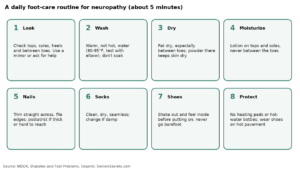
Daily Foot Care for Seniors with Neuropathy: 7 Essential Steps
The right shoes are only part of neuropathy foot care. These daily habits are equally critical:
- Inspect your feet every single day — Use a mirror or ask a family member to check the bottom of your feet, between your toes, and around your heels. Any redness, blister, cut, or discoloration warrants immediate attention
- Never walk barefoot — Even inside your home. A pebble, a carpet staple, or a splinter can cause a wound you won’t feel
- Wash and dry your feet thoroughly — Dry completely between toes to prevent fungal infections
- Moisturize the tops and bottoms of your feet — But never between the toes (excess moisture there promotes infection)
- Trim toenails straight across — Never cut into the corners; this prevents ingrown toenails that can become infected
- See a podiatrist regularly — Seniors with diabetic neuropathy should see a podiatrist every 3 months; Medicare covers this visit
- Never use a heating pad or soak feet in hot water — You can’t feel the temperature and may burn yourself without realizing it
5 Action Steps to Protect Your Feet Starting Today
- Ask your doctor about Medicare diabetic shoe coverage at your next visit. If you have diabetes and any foot condition, you almost certainly qualify.
- Request a podiatry referral — a podiatrist can assess your specific foot anatomy and recommend the exact shoe model best suited to your condition.
- Inspect your current shoes — Reach inside and feel for any seams, rough spots, or narrow toe boxes. If your current shoes have any of these, they pose a risk to neuropathic feet.
- Visit an Orthofeet or Dr. Comfort retailer (or their websites) for a professional fitting that accounts for both feet separately — neuropathy often creates asymmetric swelling.
- Start a daily foot inspection habit — Set a daily reminder on your phone. This five-minute habit prevents amputations.
Sources
- Medicare.gov — Therapeutic Shoes or Inserts Coverage
- Michigan Foot Doctors — Best Shoes for Diabetic Neuropathy 2026
- Solace Health — Shoes for Neuropathy & Medicare Coverage Guide
Related Articles You May Find Helpful
- Peripheral Neuropathy Relief: Latest Treatments for Seniors in 2026
- Sarcopenia Warning: Why Every Senior Needs Strength Training in 2026
- Medicare Drug Price Cuts 2026: Save Up to 79% on 10 Top Medications
- Best Blood Pressure Monitors for Seniors 2026: Expert Picks
- Medicare Mental Health Coverage 2026: Complete Senior Guide