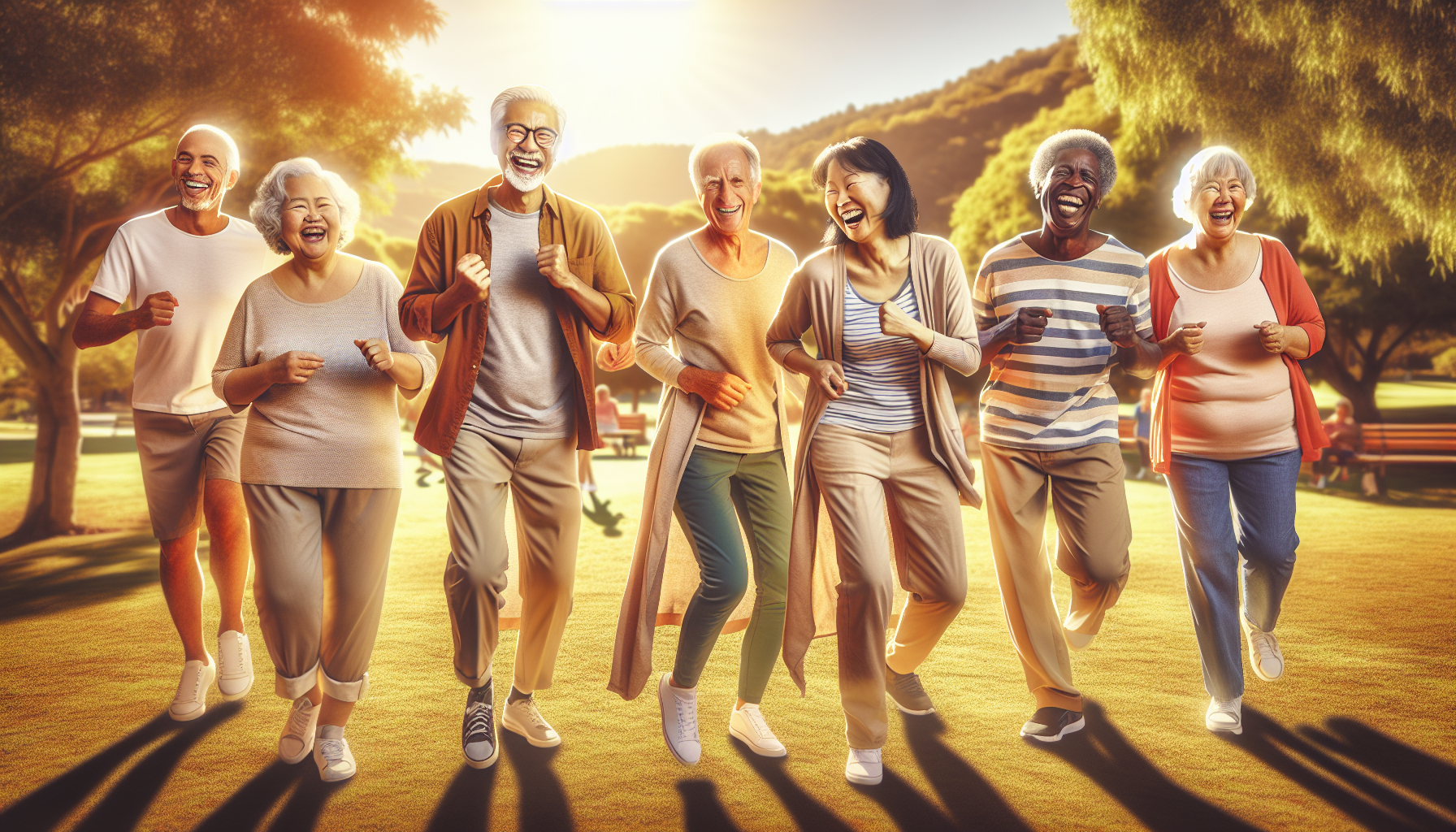

For decades, the goal of medicine was simple: help people live longer. But in 2026, the conversation among the world’s top longevity researchers has fundamentally shifted. The new goal isn’t just a longer life — it’s a longer healthspan. Healthspan refers to the years of life lived in genuine good health: full physical and cognitive function, independence, and purpose. And the habits that extend healthspan are not exotic, expensive, or out of reach. They are practices any senior can start today. Healthspan longevity for seniors in 2026 means choosing a better life, not just a longer one.
I’m Margaret Collins, Senior Health Expert, and after years researching what actually keeps people thriving in their 70s, 80s, and beyond, I can tell you this: the gap between a good old age and a difficult one is largely determined by daily habits — not genetics, not luck. Here are the 8 most evidence-based healthspan habits for 2026, drawn from the Global Wellness Institute, Stanford Medicine, and the world’s leading aging scientists.
Healthspan vs. Lifespan: Why the Distinction Matters
Lifespan is simply the total years you live. Healthspan is the years lived with meaningful physical capacity, cognitive clarity, emotional wellbeing, and independence. The gap between the two — sometimes called the “disability span” — is the period of life spent in disease, pain, and dependence. According to the CDC, the average American lives to about 77 but has their last 10–15 years heavily burdened by chronic illness. The mission of modern longevity science is to compress that disability span and extend the years of vibrant, functional living as far as possible.
At the 2026 World Congress on Targeting Longevity in Berlin, scientists emphasized a powerful new framework: instead of “fixing aging,” the focus is now on preserving biological coordination — the integrated functioning of all the body’s systems. This shifts the conversation from treating disease to maintaining resilience, making daily lifestyle choices more powerful than any pharmaceutical intervention.
8 Science-Backed Healthspan Longevity Habits for Seniors in 2026
Habit 1: Resistance Training — Every Single Week
If longevity researchers agree on one thing, it is that resistance training is the single most important intervention for extending healthspan in seniors. Muscle is the organ of longevity — it protects joints, enables independence, regulates glucose metabolism, and produces myokines: muscle-secreted molecules with anti-inflammatory, anti-cancer, and neuroprotective properties. The NIA recommends strength training at least twice per week for older adults, targeting major muscle groups with 2–3 sets of 10–15 repetitions. Resistance bands, bodyweight exercises (squats, wall push-ups, rows), and water aerobics all qualify.
Habit 2: Walk at Least 7,000 Steps Daily
A landmark JAMA study found that walking just 7,000 steps per day (not 10,000) was associated with a 50–70% reduction in all-cause mortality in older adults. Daily walking improves cardiovascular health, maintains bone density, reduces depression and anxiety, controls blood sugar, and enhances cognitive function through increased cerebral blood flow. A pedometer, fitness tracker, or free smartphone app can track your daily steps. Small changes — parking farther, taking stairs, walking after dinner — accumulate into significant benefits.
Habit 3: Sleep 7–9 Hours Every Night
Sleep is the foundation of biological repair. During deep sleep, the brain’s glymphatic system activates to flush out metabolic waste including beta-amyloid plaques linked to Alzheimer’s. Chronic sleep deprivation accelerates cellular aging, impairs immune function, raises cortisol, and dramatically increases dementia risk. For seniors: maintain consistent sleep-wake schedules even on weekends, keep bedrooms cool and dark, limit caffeine after noon, avoid screens 1 hour before bed, and consider Cognitive Behavioral Therapy for Insomnia (CBT-I) — more effective than sleep medications and with no side effects.
Habit 4: Follow a Whole-Food, Anti-Inflammatory Diet
Chronic inflammation is the common driver behind virtually all major diseases of aging — heart disease, cancer, Alzheimer’s, diabetes, and arthritis. A whole-food, anti-inflammatory diet directly counteracts this. The Mediterranean and MIND (Mediterranean-DASH for Neurodegenerative Delay) diets are the most well-studied for longevity and brain health in seniors. Emphasize colorful vegetables, fruits, fatty fish, olive oil, whole grains, legumes, and nuts. Minimize ultra-processed foods, added sugars, and red meat. Consume adequate protein (1.0–1.3 g per kg of body weight daily) to preserve muscle — essential for healthspan.
Habit 5: Invest in Strong Social Connections
Harvard’s 80-year Study of Adult Development found that quality of close relationships is the single strongest predictor of health and happiness in old age — more predictive than cholesterol levels, income, or exercise habits. Chronic social isolation raises mortality risk by 29% and significantly increases dementia risk. In 2026, longevity researchers categorize social connection as a biological necessity. Join a fitness class, club, or volunteer program. Attend religious services or community events. Even brief positive daily interactions contribute meaningfully to wellbeing. One or two deeply close relationships provide more health benefit than many superficial ones.
Habit 6: Practice Daily Mindfulness to Manage Stress
Chronic stress accelerates biological aging through multiple pathways: elevated cortisol damages hippocampal neurons, shortens telomeres (the protective caps on chromosomes), promotes systemic inflammation, and disrupts sleep and immune function. Research from Stanford Medicine found just 10–15 minutes of daily mindfulness meditation significantly reduced biomarkers of biological aging in adults over 65 after 8 weeks. Breath-focused meditation, body scan relaxation, gentle yoga, tai chi, and mindful walking all deliver measurable stress-reduction benefits. Consistency matters most — daily practice, even briefly, builds structural brain resilience over time.
Habit 7: Never Stop Learning
Cognitive reserve — the brain’s ability to compensate for damage through alternative neural pathways — is built through a lifetime of mental engagement. High-value cognitive activities for healthspan: learning a new language, studying a musical instrument, taking online courses (free through Coursera, edX, or your local library), playing strategy games like chess or bridge, pursuing creative arts, or mastering new technology. The critical element is novelty and genuine challenge — your brain builds new neural connections when it encounters something it doesn’t yet know how to process. Routine mental tasks, even crosswords, offer diminishing returns.
Habit 8: Stay Proactive About Preventive Healthcare
Healthspan is protected, in significant part, by catching health problems early when they are most treatable. In 2026, Medicare covers a comprehensive suite of free preventive services: annual wellness visits, cancer screenings (colonoscopy, mammogram, lung CT), cardiovascular risk assessments, depression screening, diabetes screening, and DEXA bone density scans. Many seniors don’t fully utilize these covered services. Also: keep vaccinations current (flu, COVID, RSV, shingles, pneumococcal), review all medications with your pharmacist annually to catch dangerous interactions, and prioritize dental and vision care — both are closely linked to systemic health outcomes in older adults.
The Compound Power of These 8 Habits
What makes the healthspan approach transformative is the compound effect: each habit amplifies the others. Better sleep improves exercise capacity. Exercise reduces stress and improves sleep. Anti-inflammatory nutrition supports brain function and mood. Strong social connections motivate consistent healthy behaviors. Research from Stanford Medicine’s 2026 healthy aging initiative found that adopting even 3–4 of these habits consistently is associated with a 10–15 year reduction in biological age compared to chronological age. You don’t need to implement all 8 overnight. Build one habit at a time — give it 4–6 weeks to take root, then add another. Over a year, you will have fundamentally transformed your aging trajectory. For more, visit NIA’s Healthy Aging resource center.
Sources
- National Institute on Aging — Healthy Aging
- Global Wellness Institute — Aging Well Initiative Trends for 2026
- CDC — Life Expectancy Data
Related Articles You May Find Helpful
- Exercise Variety Cuts Premature Death Risk 19%: What Seniors Need to Know
- Sarcopenia Warning: Why Every Senior Needs Strength Training in 2026
- Anti-Inflammatory Diet for Seniors: 10 Foods That Fight Chronic Disease
- Science Confirms: A Positive Attitude About Aging Slows Decline
- Aging in Place in 2026: Smart Tech Helping Seniors Stay Home Safely