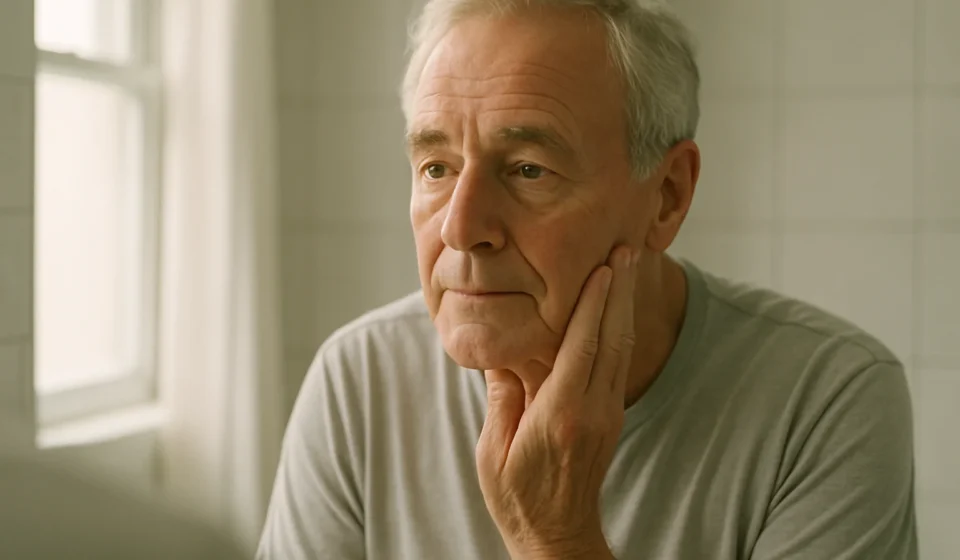

If your scalp flakes no matter how often you wash it, or the sides of your nose, eyebrows, and ears stay red, greasy, and scaly, you may be dealing with seborrheic dermatitis in seniors. It is one of the most common skin conditions in older adults, affecting roughly 1 in 7 middle-aged and elderly people, yet it is often dismissed as “just dandruff” or dry skin. The good news: it is manageable once you understand what is actually driving it. As a senior health writer, let me walk you through the real causes, the treatments that work, and the red flags that mean it is time to see a doctor.
Table of Contents
- What seborrheic dermatitis is
- Why it gets worse with age
- Treatments that actually work
- Conditions that look similar
- Daily routine and gentle self-care
- Frequently asked questions
What Seborrheic Dermatitis Is
Seborrheic dermatitis in seniors is a chronic, relapsing inflammatory skin condition that targets the oil-rich (sebaceous) areas of the body: the scalp, eyebrows, the creases beside the nose, behind the ears, the chest, and sometimes the eyelids. It shows up as greasy yellowish scales on red skin, often with mild itching or burning. On the scalp, a mild form is simply called dandruff. It is not contagious, it is not caused by poor hygiene, and washing harder usually makes it worse, not better.
The condition tends to flare and settle in cycles. Cold, dry winter air, stress, illness, and fatigue commonly trigger flares, while warm, humid weather and sunlight often calm it. Because it is chronic, the goal is control, not a one-time cure. Most people who treat it consistently can keep their skin clear or nearly clear most of the time.
Why It Gets Worse With Age
The current understanding centers on three factors working together: a yeast that normally lives on skin called Malassezia, an individual inflammatory reaction to that yeast, and the amount and makeup of skin oil. In older adults, a weaker skin barrier and slower skin renewal make flares more stubborn. Several age-related issues raise the risk further.
- Neurological conditions: Parkinson’s disease, stroke, and tremor disorders are strongly linked to more severe, harder-to-treat seborrheic dermatitis.
- Weakened immunity: Illness, certain cancers, and immune-suppressing medications can trigger extensive disease.
- Reduced self-care ability: Limited mobility or arthritis can make thorough scalp and facial washing difficult, allowing scale to build up.
- Medications and dry indoor heat: Some drugs and winter heating dry the skin barrier and worsen flares.
This is why a sudden, severe, or widespread case in an older adult deserves a medical look. It is occasionally the first visible sign of an underlying neurological or immune condition rather than a simple skin nuisance.
Treatments That Actually Work
Topical treatment is the gold standard, and most cases respond well to over-the-counter products used correctly. The two pillars are antifungals (to reduce the Malassezia yeast) and short-term anti-inflammatories (to calm a flare). Below is how the main options compare.
| Treatment | How it helps | Notes for seniors |
|---|---|---|
| Ketoconazole or ciclopirox (shampoo/cream) | Antifungal; reduces yeast, the core driver | First-line; leave shampoo on 5 minutes before rinsing |
| Zinc pyrithione / selenium sulfide shampoo | Antifungal, anti-scale | Good OTC maintenance; rotate to avoid tolerance |
| Low-potency steroid (e.g., hydrocortisone) | Calms redness and itch fast | Short courses only; thinning skin risk with overuse |
| Calcineurin inhibitors (tacrolimus, pimecrolimus) | Steroid-free anti-inflammatory for face/eyelids | Useful on delicate areas; doctor-prescribed |
| Roflumilast 0.3% foam (PDE4 inhibitor) | Once-daily, steroid-free, for hair-bearing areas | FDA-approved option; ask your doctor if flares persist |
A practical plan for most people: use an antifungal shampoo two to three times a week, treat facial areas with an antifungal cream, and reserve a low-potency steroid for short bursts during a bad flare. If the rash does not improve in a few weeks, spreads, weeps, or crusts, see a clinician. Oral antifungals such as itraconazole or fluconazole are reserved for stubborn, widespread cases under medical supervision.
What not to do
Do not scrub scales off aggressively, do not use harsh or alcohol-heavy products, and do not apply potent steroids to the face for long periods. These approaches damage the skin barrier and lead to a worse rebound flare.
Conditions That Look Similar
Several other skin problems can masquerade as seborrheic dermatitis, which is one more reason a stubborn or unusual rash deserves a professional eye. Getting the diagnosis right matters, because the treatments differ.
- Psoriasis produces thicker, silvery scale with sharply defined edges, often on the elbows, knees, and scalp, and may need different therapy.
- Rosacea causes facial redness and small bumps but lacks the greasy yellow scale, and can overlap with seborrheic dermatitis on the face.
- Contact dermatitis from a new shampoo, soap, or cosmetic causes itchy redness that clears once the irritant is removed.
- Fungal infections and, rarely, skin cancers can resemble a scaly patch, which is why any sore that will not heal should be checked.
If a patch keeps changing, bleeds, or never fully heals, do not assume it is harmless flaking. Our guide on skin cancer risk in seniors explains the warning signs worth taking seriously.
Daily Routine and Gentle Self-Care
Consistent, gentle habits keep flares shorter and less frequent.
- Soften scale first: A little mineral oil or olive oil left on the scalp for an hour helps lift crusts before shampooing.
- Cleanse gently: Use lukewarm (not hot) water and a mild, fragrance-free cleanser on the face.
- Moisturize the barrier: A light, non-greasy moisturizer supports healing between flares.
- Humidify in winter: Indoor heating dries skin; a humidifier can reduce flare frequency.
- Manage stress and sleep: Both are common flare triggers, and dry skin elsewhere can compound irritation.
If you also struggle with dryness in other areas, our guide on dry mouth in seniors covers a related medication-and-aging connection worth understanding.
Frequently Asked Questions
Is seborrheic dermatitis the same as dandruff?
Dandruff is the mildest form of seborrheic dermatitis, limited to flaking of the scalp without much redness. Seborrheic dermatitis is broader, involving inflammation and greasy scale that can also affect the face, ears, and chest.
Can seborrheic dermatitis be cured?
It cannot be permanently cured because it is a chronic condition, but it can be well controlled. Most people keep it in check with antifungal shampoos and creams, using stronger treatments only during flares.
Why did I suddenly get it as an older adult?
A weaker skin barrier, dry indoor heat, stress, and certain medications can all trigger it later in life. A sudden severe case can also be linked to neurological conditions like Parkinson’s or to a weakened immune system, so see a doctor if it appears abruptly or spreads.
When should I see a doctor?
Seek care if the rash does not improve after a few weeks of OTC treatment, becomes painful, weeps or crusts, affects the eyelids, or spreads quickly. These signs may point to infection or another condition that needs prescription treatment.
Related Articles You May Find Helpful
- Senior Health Conditions Guide 2026
- Skin Cancer Risk in Seniors 2026
- Psoriasis in Seniors 2026: Symptoms & Treatments
- Dry Mouth in Seniors 2026: Causes & Relief
- Varicose Veins in Seniors 2026
This article is for general education and is not a substitute for professional medical advice. Please review our Medical Disclaimer and consult your doctor or dermatologist about your skin.
Sources
- American Academy of Dermatology (AAD) — Seborrheic dermatitis: diagnosis and treatment
- National Institutes of Health (NIH/PubMed) — Seborrheic dermatitis in older adults: pathogenesis and treatment
- Cleveland Clinic — Seborrheic dermatitis: symptoms, causes, and treatment
Related guides