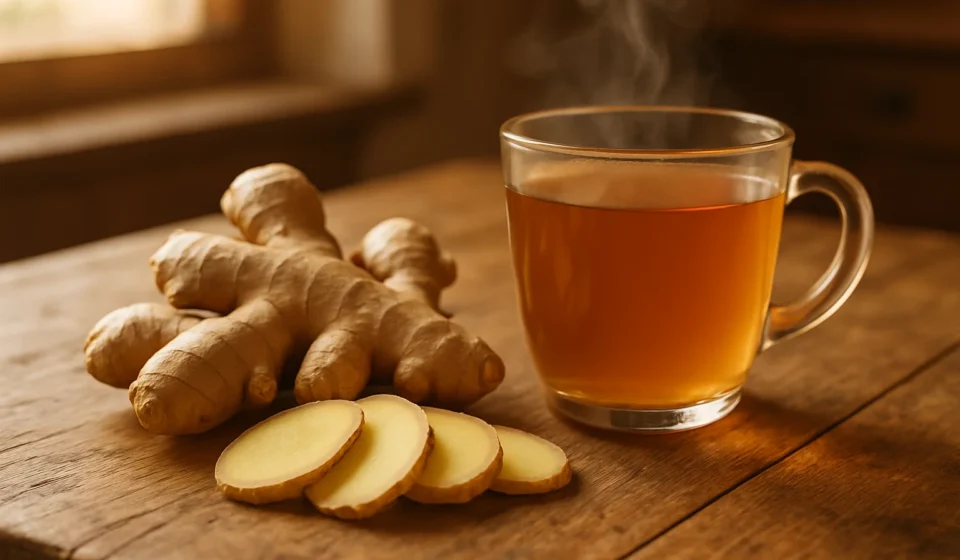

Ginger has been a kitchen-and-medicine-cabinet staple for thousands of years, and modern trials are finally catching up to the folklore. For seniors, ginger has the strongest evidence for easing nausea and shows promising—though more modest—benefits for knee osteoarthritis pain, inflammation, and cholesterol. It is not a cure-all, and it interacts with common blood thinners, so the details matter. As a senior health writer, let me separate what the research actually supports from the marketing, and give you a safe, practical way to use ginger for seniors in 2026.
Table of Contents
- Why Ginger Works: The Active Compounds
- Evidence-Based Benefits for Seniors
- How Much Ginger Is Safe?
- Cautions & Drug Interactions
- Easy Ways to Add Ginger
- Frequently Asked Questions
Why Ginger Works: The Active Compounds
Ginger’s effects trace mainly to gingerols in the fresh root and shogaols, which form when ginger is dried or heated. These compounds have anti-inflammatory and antioxidant activity and appear to act on the same gut and nervous-system pathways—including serotonin receptors—that anti-nausea drugs target. That dual action on the stomach and on inflammation is why a single root keeps appearing in studies on such different problems.
Evidence-Based Benefits for Seniors
Nausea: the strongest evidence
This is ginger’s best-documented use. Randomized trials and reviews show statistically significant benefit for nausea from motion sickness, post-surgery recovery, and chemotherapy-induced nausea and vomiting. For an older adult prone to queasiness on car trips or after anesthesia, ginger is a low-risk first thing to try—though anyone on chemotherapy should clear it with their oncology team first.
Knee osteoarthritis pain
A frequently cited controlled study of 261 patients with knee osteoarthritis found that about 63% taking ginger extract reported reduced pain, versus roughly 50% on placebo. Meta-analyses agree ginger modestly lowers arthritis pain and stiffness, especially early in treatment, though the effect is smaller than prescription anti-inflammatories. As a gentle add-on for achy knees, it is reasonable; as a sole treatment for severe arthritis, it falls short.
Digestion, bloating, and appetite
Many seniors deal with sluggish digestion, early fullness, and bloating, partly because the stomach empties more slowly with age and with certain medications. Ginger has been shown to speed gastric emptying and stimulate digestive motility, which is one reason it eases that “heavy stomach” feeling and can gently support appetite before meals. A warm cup of ginger tea about 20 minutes before eating is a time-honored, low-risk way to take the edge off queasiness and make food more appealing—useful for older adults who are eating less than they should.
One caveat: in people with frequent acid reflux or GERD, concentrated ginger can occasionally worsen heartburn. If that describes you, start with a weak, well-diluted tea and see how your stomach responds before building up.
Blood pressure, cholesterol, and blood sugar
A 2022 review of 26 clinical trials concluded ginger supplementation can meaningfully improve cholesterol levels and may modestly lower blood pressure, and a 2025 review echoed cardiovascular and lipid benefits. Some trials also report small reductions in fasting blood sugar and HbA1c. These are supportive effects—helpful alongside diet, exercise, and prescribed medication, not a replacement for them.
| Use | Strength of evidence | Realistic expectation |
|---|---|---|
| Nausea / vomiting | Strong | Reliable relief for many |
| Knee osteoarthritis | Moderate | Modest pain reduction |
| Cholesterol | Moderate | Small improvement |
| Blood pressure | Emerging | Mild lowering in some |
| Blood sugar | Emerging | Small reductions reported |
How Much Ginger Is Safe?
Across trials, the effective and well-tolerated range is roughly 0.5 to 3 grams of ginger per day, usually in divided doses, taken for up to about three months in study settings. In everyday terms, that is a few cups of real ginger tea, a thumb-sized piece grated into cooking, or a standardized capsule. More is not better: very high doses are where side effects cluster, and there is no evidence that megadoses add benefit.
If you choose a supplement, look for products independently verified by USP, NSF, or ConsumerLab, since the supplement aisle is loosely regulated and potency varies. Food-first is the safest default for most seniors.
Cautions & Drug Interactions
This is the part the tea boxes leave out, and it matters most for older adults, who are the heaviest users of the relevant medications.
- Blood thinners: Ginger can have a mild anti-platelet effect. If you take warfarin, apixaban, clopidogrel, or daily aspirin, high-dose ginger supplements may add to bleeding risk—use culinary amounts and ask your doctor before supplementing.
- Diabetes and blood-pressure drugs: Because ginger can nudge blood sugar and blood pressure down, it may amplify your medications. Monitor and report unusual lows.
- Gallstones: Ginger increases bile flow, so check with a clinician if you have gallstone disease.
- Surgery: Stop high-dose ginger supplements about a week before any scheduled surgery.
Mild side effects—heartburn, mouth or stomach irritation, gas—are usually dose-related and ease when you cut back.
Easy Ways to Add Ginger
Fresh ginger steeped in hot water for 10 minutes makes a soothing tea—add lemon and a touch of honey. Grate it into stir-fries, soups, oatmeal, and marinades, or blend a small piece into a smoothie. Crystallized ginger works for motion sickness on the go, though it is sugary, so use sparingly if you watch blood sugar. Pairing ginger with an overall anti-inflammatory eating pattern is where the real payoff lives.
Choosing and storing ginger well makes it easier to use daily. Pick firm roots with smooth, taut skin and a fresh, peppery smell; wrinkled or soft pieces are past their prime. Unpeeled fresh ginger keeps for several weeks in the refrigerator and for months in the freezer—you can grate it straight from frozen, which is gentler on arthritic hands than slicing. A trick worth knowing: the skin on young ginger is thin enough to leave on, and the edge of a spoon peels older roots with far less waste than a knife.
Frequently Asked Questions
Is ginger safe to take every day?
For most seniors, culinary amounts of ginger daily are safe and well tolerated. Supplement-level doses up to about 3 grams a day were safe in trials, but check with your doctor first if you take blood thinners, diabetes or blood-pressure medication, or have gallstones.
Does ginger interact with blood thinners?
It can. Ginger has a mild blood-thinning effect, so combining high-dose supplements with warfarin, apixaban, clopidogrel, or aspirin may raise bleeding risk. Cooking with ginger is generally fine; concentrated capsules deserve a conversation with your pharmacist.
Can ginger lower blood pressure?
Some reviews report a mild blood-pressure-lowering effect, likely from ginger’s anti-inflammatory action and improved blood-vessel function. Treat it as a helpful complement to your prescribed regimen and home monitoring—never a reason to stop your medication.
Fresh ginger or ginger supplements—which is better?
Fresh or dried culinary ginger is the safest and most pleasant route for everyday use. Standardized supplements deliver a consistent dose for a specific goal like arthritis, but carry more interaction risk and quality variation, so choose third-party-verified brands.
Related Articles You May Find Helpful
- Senior Nutrition Guide 2026
- Anti-Inflammatory Diet for Seniors
- Arthritis Pain Relief for Seniors 2026
- Omega-3 Fish Oil for Seniors 2026
- Gut Health & Aging: Boost Your Microbiome in 2026
Sources
- National Center for Complementary and Integrative Health (NIH) — Ginger
- American Journal of Clinical Nutrition — Orally consumed ginger and human health: an umbrella review
- Arthritis Foundation — Health Benefits of Ginger
This article is educational and not a substitute for medical advice. Talk with your doctor or pharmacist before starting supplements, especially with existing medications. See our Medical Disclaimer.