
Does Medicare cover dentures? No — Original Medicare (Part A and Part B) does not pay for dentures or routine dental care in 2026. But that one-word answer hides several real paths to affordable dentures that most seniors never hear about. As a senior health writer who fields this question almost weekly, I can tell you the people who end up paying $0 to a few hundred dollars instead of $1,800 per plate are simply the ones who know where coverage actually lives. Let’s walk through exactly what Medicare will and won’t do, and the five ways to bring denture costs down this year.
Table of Contents
- Why Original Medicare Excludes Dentures
- The Narrow Medical Exception
- Medicare Advantage Dental Benefits
- What Dentures Actually Cost in 2026
- 5 Ways to Pay Less for Dentures
- Frequently Asked Questions
Why Original Medicare Excludes Dentures
The exclusion is written into the law itself. Section 1862(a)(12) of the Social Security Act bars Medicare from paying “for services in connection with the care, treatment, filling, removal, or replacement of teeth or structures directly supporting teeth.” That is why, when you ask does Medicare cover dentures, the honest answer is no—not cleanings, not fillings, not extractions for decay, and not the dentures themselves. It is not an oversight or a paperwork problem you can appeal your way around; it is statutory.
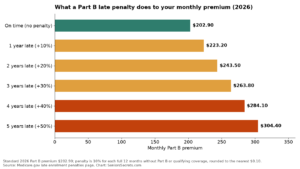
This catches millions of people off guard. Roughly one in five adults over 65 has lost all of their natural teeth, and dental care is one of the most common out-of-pocket health expenses in retirement. Yet because dentistry was carved out of Medicare in 1965 and never folded back in, a $202.90 monthly Part B premium buys you nothing at the denturist’s office.
It is worth treating dentures as a health issue, not a vanity one. Tooth loss is linked in geriatric research to poorer nutrition, unintended weight loss, and social withdrawal, because people with ill-fitting or missing teeth quietly drop hard-to-chew vegetables, meats, and fruit from their diet. Well-fitted dentures restore chewing efficiency to a meaningful fraction of natural teeth and help protect the protein and fiber intake that guards against frailty. That is the real reason it pays to find affordable coverage rather than going without.
The Narrow Medical Exception
There is a sliver of dental work Original Medicare will pay for, but it is about protecting a medical outcome, not your smile. Medicare may cover dental services that are an integral part of a covered procedure—for example, a tooth extraction required to clear infection before organ transplant, heart-valve surgery, or radiation treatment for oral cancer, or a dental exam needed before a kidney transplant. CMS modestly widened this “inextricably linked” policy in recent rulemaking, so jaw reconstruction after an accident or tumor removal can also qualify.
What this never includes is the denture you need because age and gum disease took your teeth. If a hospital dentist removes teeth as part of cancer care, Part A or B may cover that extraction—but the prosthetic plate that replaces them is still on you. Knowing this distinction keeps you from wasting weeks filing an appeal that cannot win.
Medicare Advantage Dental Benefits
This is where most seniors find real denture help. The large majority of Medicare Advantage (Part C) plans now bundle a dental benefit, and many specifically list dentures—partial or full—as a “comprehensive” service alongside crowns, extractions, and root canals. The catch is the fine print, and it varies enormously from plan to plan.
The three numbers that decide your real cost
Before you trust a plan’s “dental included” headline, find these three figures in the Evidence of Coverage: the annual maximum (the ceiling the plan pays per year, commonly $1,000–$3,000), the coinsurance on major services (dentures usually sit in the 50% tier), and whether the plan uses a network that includes a denturist near you. A plan with a $1,000 cap and 50% coinsurance pays at most $1,000 toward a $3,600 set of full upper-and-lower dentures—helpful, but far from free.
What Dentures Actually Cost in 2026
Prices swing widely by material and region, but these ranges reflect typical 2026 U.S. fees so you can sanity-check any quote.
| Denture type | Typical cost (per arch) | What you get |
|---|---|---|
| Economy full denture | $300–$600 | Basic pre-made plate, fewer fittings |
| Mid-range full denture | $1,000–$1,800 | Custom fit, better-looking teeth |
| Premium full denture | $2,000–$4,000+ | Highest realism, durable materials |
| Partial denture | $700–$1,800 | Replaces some teeth, metal/acrylic frame |
| Implant-supported denture | $6,000–$25,000 | Snaps onto implants, no slipping |
Remember these are per arch. A full set for both upper and lower jaws roughly doubles the figure. Implant-supported overdentures cost the most because they combine surgery with the prosthetic—and Medicare covers neither the implants nor the denture.
5 Ways to Pay Less for Dentures
1. Choose a Medicare Advantage plan for its dental cap
If dentures are on your horizon, compare plans specifically on dental annual maximum and denture coinsurance during Open Enrollment (October 15–December 7). The plan with the lowest premium is rarely the one that saves a denture-wearer the most.
2. Stack a standalone dental plan
If you keep Original Medicare, a standalone senior dental insurance policy can cover a share of dentures—watch for waiting periods (often 6–12 months) and annual maximums. We compare the leading options in our guide to senior dental insurance alternatives to Medicare.
3. Use a dental school or community health center
University dental schools make dentures at a fraction of private fees under faculty supervision. Federally Qualified Health Centers (FQHCs) charge on a sliding scale tied to income, and many have on-site dental labs.
4. Check Medicaid and Medicare Savings Programs
Many states’ Medicaid programs cover adult dentures for those who qualify financially. If your income is limited, see whether you also qualify for help with premiums and cost-sharing through Medicare Savings Programs, which can free up cash for dental work.
5. Ask about dental discount plans and payment terms
Dental discount memberships (not insurance) cut 15–50% off the cash price with no waiting period—useful if you need dentures now. Many denturists also offer interest-free payment plans.
Frequently Asked Questions
Will Medicare ever pay for dentures?
Not under current law. Original Medicare’s dental exclusion is statutory, so dentures are covered only when a Medicare Advantage plan adds a dental benefit or a rare medically integral procedure applies. There is no expansion of routine dental coverage scheduled for 2026.
Does Medicare Advantage cover implant dentures?
Some richer Medicare Advantage plans contribute toward implants or implant-supported dentures, but because the cost runs into five figures, the plan’s annual maximum usually covers only a slice. Always confirm implants are listed—many plans exclude them entirely.
How much do dentures cost without insurance?
Expect roughly $300–$600 per arch for economy plates and $2,000–$4,000+ per arch for premium ones, so a full upper-and-lower set can range from about $600 to well over $8,000. Dental schools and community health centers offer the lowest supervised prices.
Can I switch plans just to get denture coverage?
Yes. During the Annual Election Period (October 15–December 7) you can move from Original Medicare to a Medicare Advantage plan with dental benefits, effective January 1. Just verify the dental maximum and that your dentist is in network before enrolling.
Related Articles You May Find Helpful
- Medicare Complete Guide 2026
- Senior Dental Insurance: 5 Best Medicare Alternatives in 2026
- Medicare Cochlear Implant & Hearing Coverage 2026
- Does Medicare Cover Eye Exams & Glasses in 2026?
- 4 Medicare Savings Programs That Cut Your Bills in 2026
Sources
- Medicare.gov — Dental services coverage
- CMS — Calendar Year Physician Fee Schedule dental policy (medically integral services)
- Social Security Act §1862(a)(12) — statutory dental exclusion
This article is for education only and is not medical, dental, or insurance advice. Confirm benefits with your plan and a licensed professional. See our Medical Disclaimer.
Related guides