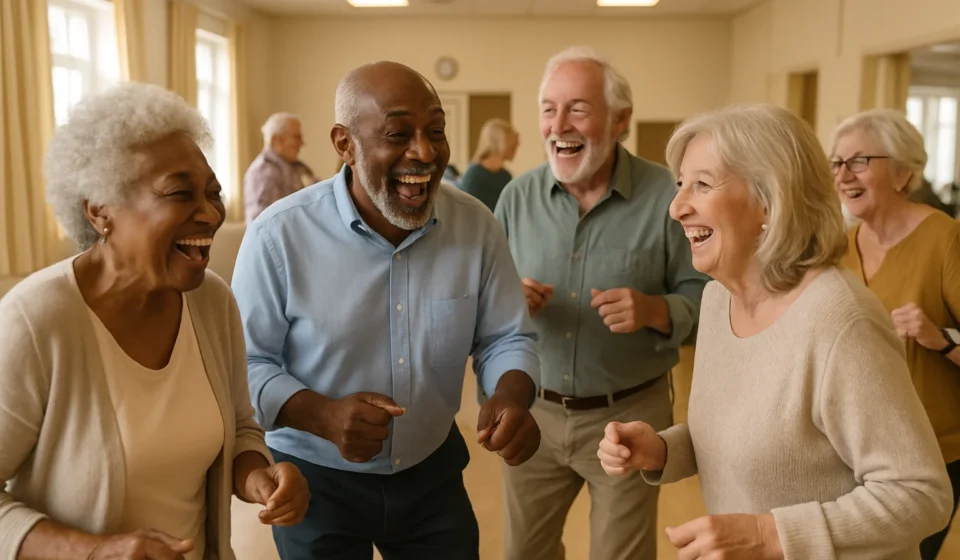

If you could bottle a single activity that strengthened the heart, sharpened the memory, improved balance, lifted mood, and fought loneliness all at once, it would be the most prescribed therapy in geriatric medicine. That activity already exists, costs little, and is genuinely fun: it is dancing. Dancing for seniors is one of the few forms of exercise that trains the body and the brain in the same moment, and a wave of recent trials shows it can lower the risk of falls, slow cognitive decline, and ease depression. You don’t need a partner, a studio, or any experience — just music and a little space. Here is what the science says and how to begin safely.
Table of Contents
- Why Dancing Works So Well
- The Brain and Mood Benefits
- Balance and Fall Prevention
- Best Dance Styles for Seniors
- How Much and How Often
- Getting Started Safely
- Frequently Asked Questions
Why Dancing Works So Well
Most exercise trains one system. Walking builds endurance; weights build strength; stretching builds flexibility. Dancing is unusual because it trains several at once. A dance routine is aerobic (it raises your heart rate), it loads the muscles and bones, and — uniquely — it demands constant balance corrections and coordination. On top of that, it is a cognitive workout: you must remember sequences, anticipate the next move, and synchronize with music and other people. Scientists call this “dual-tasking,” doing a physical and mental task simultaneously, and it is exactly the kind of challenge that builds resilience against falls and decline. Add the social connection of a class, and dancing hits nearly every pillar of healthy aging in one session.
The Brain and Mood Benefits
The cognitive evidence is striking. A 2025 systematic review and Bayesian network meta-analysis in Archives of Gerontology and Geriatrics compared dance styles head-to-head and found that ballroom dancing was the most effective for improving cognitive ability, while square dancing ranked highest for mental health and tango stood out for balance and mobility. Earlier meta-analyses of randomized trials reached a consistent conclusion: dance interventions significantly improve global cognition and memory and significantly reduce depression in older adults. The classic “Dancing Mind” randomized controlled trial found that social dancing benefited cognition in old age, and reviews of dance for people with mild cognitive impairment and dementia show measurable gains. Dancing appears to build the brain’s processing and memory networks precisely because it forces the mind and body to work together under the pressure of rhythm.
Balance and Fall Prevention
Falls are the leading cause of injury in older adults, and dance directly targets the systems that prevent them. A network meta-analysis on dance for fall risk found that dance interventions improve balance and reduce fall risk in community-dwelling seniors. Just as important is fear of falling, which itself makes people move less and fall more. In the GERAS DANCE feasibility trial — one-hour virtual dance classes twice weekly — participants reported higher balance confidence and a lower fear of falling. Tango in particular, with its deliberate weight shifts, backward steps, and pauses, repeatedly shows up in studies as a powerful balance trainer, likely because those movements rehearse exactly the kinds of recoveries the body needs in real life.
Best Dance Styles for Seniors
The “best” style is the one you’ll keep doing, but the research suggests matching the style to your goal.
| Style | Best for | Notes |
|---|---|---|
| Ballroom (waltz, foxtrot) | Cognition, partner coordination | Top performer for thinking skills; partner optional in class |
| Tango | Balance and mobility | Weight shifts and back steps rehearse fall recovery |
| Square / line dancing | Mental health, memory, social bonds | No partner needed; strong community element |
| Zumba Gold | Aerobic fitness | Low-impact version designed for older adults |
| Seated / chair dance | Limited mobility, wheelchair users | Keeps the upper-body and cognitive benefits |
If mobility is limited, seated dance preserves the rhythm, coordination, and joy without the fall risk of standing routines — a genuine option, not a consolation prize.
How Much and How Often
The trials offer a practical prescription. Reviewers advocate an 8-week minimum to generate meaningful benefits, and shorter sessions of around 20 minutes can actually improve adherence — you are more likely to stick with bite-sized, enjoyable bouts than marathon classes. A reasonable target is two sessions a week to start, building toward the general guideline of 150 minutes of moderate activity weekly. Consistency beats intensity: the brain and balance gains accrue with repetition over weeks and months.
Getting Started Safely
- Clear the space. Remove rugs and clutter; dance on a non-slip surface with a sturdy chair or counter nearby to steady yourself.
- Wear supportive shoes with non-slip soles — not socks or loose slippers.
- Warm up and hydrate. Begin with gentle marching and arm swings; keep water close.
- Start seated or holding support if your balance is uncertain, then progress.
- Check with your doctor first if you have heart disease, recent surgery, severe arthritis, dizziness, or a history of falls.
Free options abound: senior centers, libraries, places of worship, and parks-and-recreation departments frequently offer low-cost classes, and countless follow-along senior dance videos are available online. This article is educational and not medical advice; see our medical disclaimer and get clearance before starting a new exercise program.
The Hidden Benefit: Connection
One advantage of dancing rarely shows up on a fitness tracker but may matter most of all: it is profoundly social. Loneliness and social isolation are now recognized as serious health risks in later life, linked to higher rates of heart disease, depression, and cognitive decline — some research equates chronic isolation with the harm of smoking. A weekly dance class is a standing appointment with other people, a reason to leave the house, learn names, share laughter, and belong to a group. That social glue is part of why square and ballroom dancing score so well for mood in head-to-head studies; the movement and the connection reinforce each other. For seniors who live alone, the class itself can be as therapeutic as the steps.
Cost is rarely a barrier. Original Medicare does not pay for dance classes, but many Medicare Advantage fitness benefits such as SilverSneakers include dance-based group classes at no extra charge — worth checking if you are enrolled. Between those benefits, senior centers, and free online videos, almost anyone can find a way to start this week.
Frequently Asked Questions
Is dancing good exercise for seniors with arthritis?
Yes — low-impact styles like ballroom, Zumba Gold, and seated dance keep joints moving without jarring impact, which can ease stiffness. Start gently and stop any movement that causes sharp joint pain.
Can dancing really improve memory?
The evidence says yes. Randomized trials and 2025 meta-analyses show dance improves global cognition and memory in older adults, with ballroom dancing ranking highest for cognitive benefit — likely because it combines movement with learning sequences.
How often should a senior dance to see benefits?
Aim for about two sessions a week over at least 8 weeks. Sessions as short as 20 minutes are effective and easier to sustain. Consistency over weeks matters more than long, intense workouts.
What if I have poor balance or use a wheelchair?
Seated and chair dancing deliver the coordination, aerobic, and brain benefits without standing. Many programs are designed specifically for wheelchair users and those with limited mobility.
Related Articles You May Find Helpful
- Senior Fitness & Exercise Guide 2026
- Fall Prevention for Seniors: 10 Proven Strategies
- Balance Exercises for Seniors Over 70
- Tai Chi for Seniors: Balance & Fall Prevention
- Brain Fitness for Seniors: Proven Habits
Sources
- Archives of Gerontology and Geriatrics (2025) — Effects of dance interventions on cognition, balance, mobility, and quality of life: systematic review and Bayesian network meta-analysis
- Frontiers in Public Health — Effects of dance interventions on reducing fall risk in older adults: a network meta-analysis
- Innovation in Aging — GERAS DANCE feasibility randomized controlled trial; Frontiers in Aging Neuroscience — Dancing Mind RCT