
Wall pilates for seniors has exploded in popularity — and unlike a lot of fitness trends, this one makes real sense for older bodies. By using a wall for support and feedback, it turns classic Pilates core and balance work into something safer and more accessible for anyone worried about getting down on the floor or losing their balance. As a senior health writer, I like wall pilates because it targets exactly what protects independence: a strong core, steady balance, and good posture. Here is what the approach involves, what the evidence on Pilates actually supports, and six beginner-friendly moves to start with.
Table of Contents
- What Wall Pilates Is
- Benefits Backed by the Evidence
- 6 Beginner Wall Pilates Moves
- Building a Safe Weekly Routine
- Wall Pilates vs. Mat & Reformer Pilates
- Safety & When to Check With Your Doctor
- Frequently Asked Questions
What Wall Pilates Is
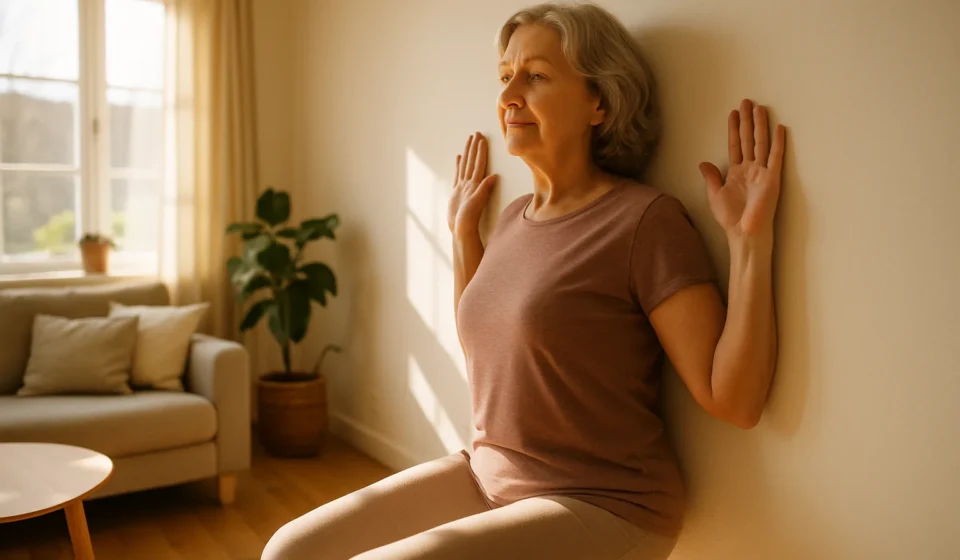
Pilates is a low-impact method built around controlled movement, core engagement, posture, and breathing. Wall pilates simply uses a wall as a prop — for support, resistance, and alignment feedback. Pressing your back, hands, or feet against the wall gives you a stable reference point, which reduces fall risk and lets you feel whether your spine and hips are positioned correctly. It uses only your body weight and the wall, so there is no equipment to buy and most moves can be done standing or seated, making it ideal for beginners and people with limited mobility or balance concerns.
Benefits Backed by the Evidence
It is worth being precise here: most published research studies Pilates generally rather than the “wall pilates” label specifically. But that body of evidence is encouraging for older adults. Systematic reviews and randomized trials of Pilates in seniors report improvements in balance, lower-body strength, and functional mobility, with reductions in fall risk — the same outcomes that matter most for staying independent. The wall modification keeps those proven movement patterns while adding stability.
- Core strength & posture: the deep abdominal and back muscles that support the spine, easing back pain and improving how you stand.
- Balance & fall prevention: better stability and coordination lower fall risk, a leading cause of injury after 65.
- Flexibility & mobility: gentle, controlled range-of-motion work that supports everyday tasks.
- Low-impact and joint-friendly: no jumping or pounding, with the wall reducing injury risk.
It pairs naturally with other gentle modalities. If you enjoy wall pilates, you will likely also benefit from tai chi and chair yoga, which target balance and flexibility too.
6 Beginner Wall Pilates Moves
| Move | What it targets | How to do it |
|---|---|---|
| Wall stand & breathe | Posture, core awareness | Back flat against wall, gently draw navel in, breathe slowly for 5 breaths |
| Wall push-up | Chest, arms, shoulders | Hands on wall at shoulder height, bend elbows, press back out; 8–12 reps |
| Wall sit (partial) | Thighs, glutes | Slide a few inches down the wall, hold 5–15 seconds, rise; repeat |
| Standing rear leg lift | Glutes, balance | Face wall, hands resting on it, lift one leg straight back; alternate sides |
| Wall calf raise | Calves, ankle stability | Hands on wall, rise onto toes, lower slowly; 10–15 reps |
| Wall march | Core, hip flexors, balance | Back to wall, lift knees one at a time as if marching in place |
Move slowly and with control — Pilates rewards quality over speed. Keep the movements within a comfortable range, exhale on the effort, and stop any exercise that causes sharp pain.
Building a Safe Weekly Routine
Aim for two to three sessions a week of 15–30 minutes, with at least a day of rest in between when you are starting. Begin with one set of each move and build toward two sets as you get stronger. Wear supportive shoes or go barefoot on a non-slip surface, keep water nearby, and make sure the wall area is clear of obstacles. Consistency beats intensity: a short routine done regularly will do far more for your balance and core than an occasional long session. Combine it with daily walking and dedicated balance exercises for a well-rounded week, as outlined in our senior fitness guide.
Wall Pilates vs. Mat & Reformer Pilates
All three share the same Pilates principles, but they differ in accessibility. Mat Pilates is done on the floor and is inexpensive, but getting up and down off the ground can be a barrier — or a fall risk — for some seniors. Reformer Pilates uses a spring-loaded machine and is excellent but requires a studio and an instructor, which adds cost. Wall pilates sits neatly in between: it keeps you upright (or seated) with constant support, needs no equipment, and can be done at home, which is exactly why it suits older beginners and people easing back into movement.
None is “best” for everyone. If you are steady on the floor, mat work adds variety; if you want professional progression and can access a studio, the reformer is powerful. For most seniors starting out at home, the wall is the gentlest on-ramp — and you can always graduate to the others later.
Safety & When to Check With Your Doctor
Wall pilates is gentle, but check with your doctor before starting if you have osteoporosis, a recent fracture or joint replacement, severe balance problems, uncontrolled blood pressure, or a heart condition. People with osteoporosis should generally avoid deep forward-bending (flexion) of the spine, so favor upright, posture-focused moves. If you have had falls, consider starting with a physical therapist or a class designed for older adults — Medicare may cover physical therapy when it is medically necessary. Stop and seek help for chest pain, dizziness, or shortness of breath.
Frequently Asked Questions
Is wall pilates good for seniors with bad knees?
Often yes — it is low-impact and the wall provides support, so you can control how far you bend. Reduce the range on moves like the wall sit, avoid deep knee bends, and stop anything that causes joint pain. Check with your doctor or physical therapist if you have significant knee problems.
How often should seniors do wall pilates?
Two to three sessions of 15–30 minutes per week is a sensible target, with rest days in between when you begin. Consistency matters more than duration for building balance and core strength.
Do I need any equipment?
No. Wall pilates uses only your body weight and a clear, sturdy wall. Supportive shoes or bare feet on a non-slip surface and a bottle of water are all you need. A mat can add comfort for any seated moves.
Can wall pilates really help prevent falls?
The Pilates movement patterns it uses have been shown to improve balance, lower-body strength, and mobility in older adults — all of which reduce fall risk. Combined with walking and dedicated balance training, it is a useful part of a fall-prevention plan.
Related Articles You May Find Helpful
- Senior Fitness & Exercise Guide 2026
- Balance Exercises for Seniors Over 70: 8 Proven Moves
- Chair Yoga for Seniors 2026: 8 Seated Poses
- Tai Chi for Seniors 2026: Better Balance, Fewer Falls
- Fall Prevention for Seniors 2026: 10 Proven Strategies
Sources
- National Institute on Aging (NIH) — Exercise & Physical Activity for Older Adults
- Peer-reviewed systematic reviews of Pilates for balance and fall risk in older adults
- Centers for Disease Control and Prevention — STEADI fall-prevention resources
This article is educational and not a substitute for personalized medical advice. Check with your doctor before beginning a new exercise program, especially with osteoporosis, heart, or balance conditions. See our medical disclaimer.