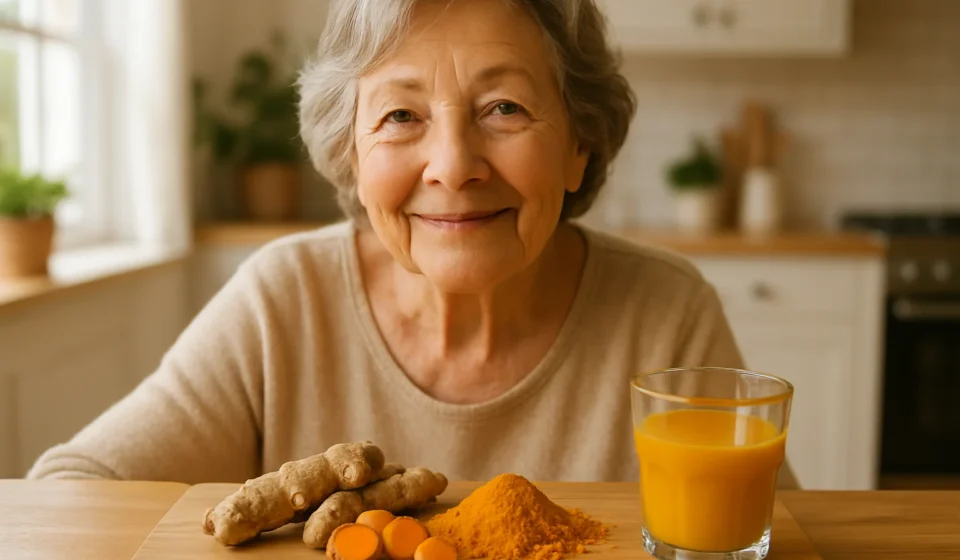

Turmeric for seniors has become one of the most-bought supplements in America, and for older adults with joint pain the interest is well founded — but the science comes with important caveats most labels never mention. The active compound is curcumin, and a 2021 review of 15 randomized controlled trials found that standardized curcumin relieved osteoarthritis pain and stiffness as well as or better than NSAIDs such as ibuprofen and celecoxib, with fewer stomach side effects. Yet plain turmeric powder is poorly absorbed, and curcumin thins the blood — a real concern if you take warfarin or daily aspirin. Here is what actually works, at what dose, and when to be cautious.
Table of Contents
- Does turmeric really help joint pain?
- How much curcumin to take
- The absorption problem
- Drug interactions and safety
- How to choose a quality supplement
- Frequently asked questions
Does Turmeric Really Help Joint Pain?
For osteoarthritis, the evidence is genuinely encouraging. More than 20 clinical trials have tested turmeric and curcumin for arthritis, and several found pain relief comparable to ibuprofen. Curcumin works by dampening inflammatory signaling pathways — it inhibits NF-kB and lowers inflammatory cytokines, the same biology that drives joint swelling. For rheumatoid arthritis, early trials suggest curcumin can reduce pain and swelling, though the studies are smaller and the disease usually requires prescription therapy. The honest summary: curcumin is one of the better-supported natural options for osteoarthritis, but it is a complement to, not a replacement for, your doctor’s treatment plan.
How Much Curcumin to Take
The dose that matters is curcumin, not raw turmeric. Most adults see benefit with 500 to 1,000 mg of standardized curcumin extract per day, split into two doses, taken for 8 to 12 weeks before judging results. Some osteoarthritis trials used 1,000 to 1,500 mg daily under medical supervision. Doses up to 2,000 mg per day have generally been well tolerated in studies.
| Goal | Typical curcumin dose | Timeframe |
|---|---|---|
| General anti-inflammatory support | 500 mg/day | 8–12 weeks |
| Osteoarthritis pain | 500–1,000 mg, split twice daily | 8–12 weeks |
| Trial-level dosing (supervised) | 1,000–1,500 mg/day | Per clinician |
Note that a teaspoon of culinary turmeric contains only a few hundred milligrams of curcuminoids, and very little is absorbed — which is why cooking with turmeric is good for flavor but unlikely to match a standardized extract for joint relief.
The Absorption Problem
Curcumin on its own is notoriously hard for the body to absorb — it is broken down quickly and poorly soluble in water. This is the single biggest reason a cheap turmeric capsule may do nothing. Two fixes have strong support. The first is piperine, a black-pepper extract that can dramatically increase curcumin absorption. The second is specially formulated curcumin (phytosome, liposomal, or nanoparticle forms) designed for higher bioavailability. When comparing products, the formulation often matters more than the milligram number on the front of the bottle.
Drug Interactions and Safety
This is the part seniors must not skip. Curcumin has natural anticoagulant properties, so combining it with blood thinners can raise the risk of bleeding or bruising. Common interacting medications include warfarin (Coumadin), clopidogrel (Plavix), and daily aspirin therapy. Curcumin may also lower blood sugar, which can compound the effect of diabetes medications, and very high doses can cause stomach upset or, rarely, liver irritation. If you are scheduled for surgery, most clinicians advise stopping curcumin supplements about two weeks beforehand. Always clear curcumin with your physician or pharmacist first — they may need to monitor your clotting times or adjust a dose.
How to Choose a Quality Supplement
Supplements are not tightly regulated, so independent verification matters. Look for a product third-party tested by NSF International or USP, standardized to 95% curcuminoids, and paired with an absorption enhancer such as piperine or a recognized bioavailable formulation. Avoid mega-dose “proprietary blends” that hide the actual curcumin content. Buy from established brands, and remember that a higher price does not guarantee a better-absorbed product — the formulation details on the label tell you more than the marketing.
Frequently Asked Questions
Can I take turmeric if I’m on a blood thinner?
Only with your doctor’s approval. Curcumin has blood-thinning effects that can add to medications like warfarin, clopidogrel, or aspirin, raising bleeding risk. Your physician may need to monitor your INR or advise against it entirely.
How long before turmeric works for joint pain?
Most trials show benefits after 8 to 12 weeks of consistent daily use. It is not a fast-acting painkiller; think of it as a slow, steady reduction in inflammation rather than immediate relief.
Is cooking with turmeric enough?
Probably not for joint relief. Culinary turmeric contains relatively little curcumin and the body absorbs very little of it. It is healthy to cook with, but the doses used in arthritis studies come from standardized extracts.
Are there people who should avoid turmeric supplements?
Yes. People on blood thinners, those with gallbladder disease or bile-duct obstruction, anyone scheduled for surgery, and people with active liver disease should be cautious or avoid it. Check with your doctor if you take multiple prescription medications.
How Turmeric Compares to Other Joint Supplements
Curcumin is one option among several popular joint supplements, and they work through different mechanisms. Glucosamine and chondroitin aim to support cartilage, though large trials have produced mixed results and effects tend to be modest. Omega-3 fish oil reduces inflammation through a separate pathway and also benefits the heart, making it a reasonable companion to curcumin rather than a competitor. Collagen peptides have growing evidence for joint comfort and skin, while boswellia (Indian frankincense) is another anti-inflammatory botanical sometimes paired with curcumin in joint formulas.
What sets curcumin apart in the osteoarthritis research is the consistency of pain relief at standardized doses, with a side-effect profile gentler on the stomach than long-term NSAID use — an important advantage for older adults, since chronic ibuprofen or naproxen carries real risks of stomach bleeding, kidney strain, and blood-pressure elevation. That said, no supplement reverses joint damage, and none should replace the foundations: maintaining a healthy weight to reduce load on the knees and hips, staying active with low-impact exercise, and following your physician’s plan. Think of curcumin as a well-supported addition to those basics, not a standalone cure.
Does turmeric interact with blood pressure or diabetes medications?
It can. Curcumin may lower blood sugar, so combined with diabetes drugs it could increase the risk of a low. It may also have a mild blood-pressure-lowering effect. Neither is necessarily dangerous, but if you take medication for either condition, tell your doctor so your levels can be monitored when you start.
The Bottom Line on Turmeric for Seniors
Curcumin is among the better-studied natural options for osteoarthritis pain, with multiple trials showing relief comparable to common anti-inflammatory drugs and a gentler effect on the stomach. To get a real benefit, choose a standardized extract with an absorption enhancer rather than relying on kitchen turmeric, give it a full 8 to 12 weeks, and most importantly, clear it with your doctor or pharmacist first if you take blood thinners, diabetes medication, or are heading toward surgery. Used thoughtfully and alongside weight management and gentle exercise, it can be a worthwhile addition to a senior’s joint-care routine.
Related Articles You May Find Helpful
- Senior Nutrition Guide 2026: Best Diets, Vitamins & Supplements
- Anti-Inflammatory Diet for Seniors: 10 Foods That Fight Chronic Disease
- Omega-3 Fish Oil for Seniors 2026: Benefits, Dosage & Best Supplements
- Berberine for Seniors 2026: Blood Sugar & Heart Benefits Explained
- Best Multivitamins for Seniors 2026: What Doctors Recommend
Sources
- Arthritis Foundation — Turmeric and Curcumin for Arthritis
- Johns Hopkins Medicine — Turmeric Benefits
- National Center for Complementary and Integrative Health (NIH) — Turmeric
This article is educational and not a substitute for medical advice. Talk to your doctor before starting any supplement. See our Medical Disclaimer.