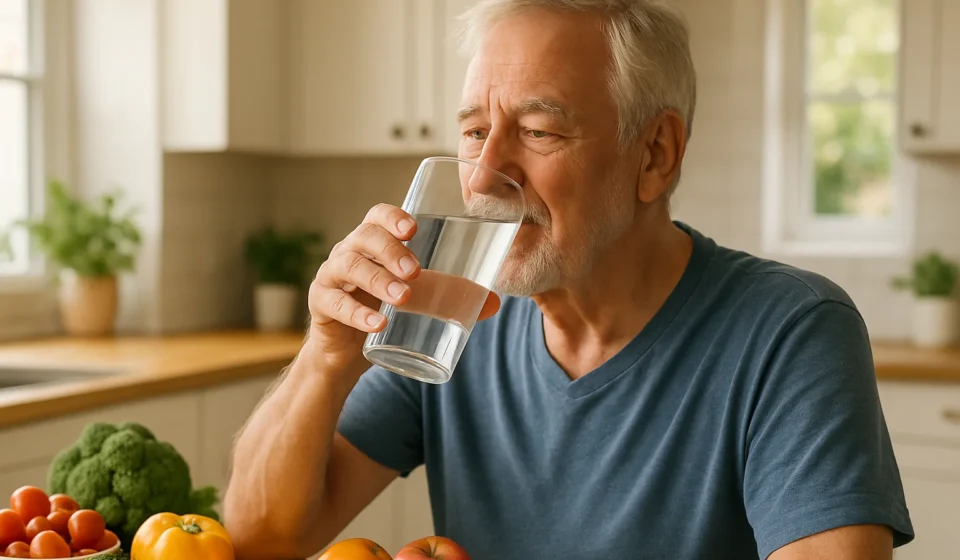

Kidney stones are far more common in seniors than most people realize. The lifetime risk of kidney stones is 11 percent in men and 9 percent in women, but among adults over 65, the prevalence reaches 14 percent — and that number is rising due to increasing rates of dehydration, diabetes, obesity, and heat exposure linked to climate change. More importantly, kidney stones in seniors are riskier and more complex than in younger adults: older patients have higher rates of comorbidities, take more medications that affect stone risk, and experience atypical symptoms that delay diagnosis. This clinically detailed guide covers how kidney stones form, why seniors are uniquely vulnerable, and the evidence-based prevention and treatment strategies that actually work in 2026.
Table of Contents
- Types of Kidney Stones: Which Are Most Common in Seniors
- Why Seniors Face Higher Risk
- Symptoms: What Kidney Stone Pain Feels Like (and What’s Atypical in Seniors)
- Diagnosis: CT Scan, Ultrasound, and the Metabolic Workup
- Treatment: From Watchful Waiting to Ureteroscopy
- Prevention: The 6-Step Clinical Protocol
- Medicare Coverage for Kidney Stones
- Frequently Asked Questions
Types of Kidney Stones: Which Are Most Common in Seniors
Kidney stones form when urine becomes supersaturated with minerals that crystallize in the renal collecting system. Understanding the stone type is essential because each type has a distinct cause, prevention strategy, and treatment approach. A 24-hour urine collection (the metabolic stone workup) identifies exactly which minerals are out of balance.
| Stone Type | Frequency | Primary Cause in Seniors | Unique Features |
|---|---|---|---|
| Calcium oxalate | 70–80% | Low fluid intake, low dietary calcium, high oxalate foods | Appears bright white on CT; does not dissolve with medication |
| Calcium phosphate | 10–15% | Hyperparathyroidism (common in elderly), renal tubular acidosis, excessive calcium supplements | Associated with alkaline urine; check PTH and calcium levels |
| Uric acid | 5–10% | Gout, diabetes, obesity, low urine pH — all more prevalent in seniors | Radiolucent on plain X-ray (CT needed); UNIQUELY can be dissolved with potassium citrate |
| Struvite (infection stones) | 5–10% | Recurrent UTIs with urease-producing bacteria (Proteus, Klebsiella) | More common in women 70+; can form large “staghorn” calculi; urgent treatment required |
| Cystine | <1% | Genetic (cystinuria); autosomal recessive disorder | Requires specialized management with d-penicillamine or tiopronin |
The most clinically important distinction for seniors is uric acid stones, because they are the only stone type that can be completely dissolved with medical management (alkalinization of urine to pH 6.5–7.0 with potassium citrate), avoiding the need for any surgical procedure. This is particularly valuable for older patients with higher surgical risk.
Why Seniors Face Higher Risk for Kidney Stones
Several age-related physiological changes and common senior health conditions create a “perfect storm” for stone formation:
- Reduced thirst sensation: The hypothalamic thirst mechanism weakens with age. Seniors require 2.5 to 3 liters of fluid daily to maintain protective urine dilution, yet many drink less than 1.5 liters — creating chronic concentrated urine that promotes crystallization.
- Immobility and bone resorption: Reduced physical activity triggers bone breakdown, releasing calcium into the bloodstream. Hypercalciuria (excess urinary calcium excretion) is more prevalent in less mobile elderly adults.
- Hyperparathyroidism: Primary hyperparathyroidism — the third most common endocrine disorder in postmenopausal women — causes elevated PTH that increases urinary calcium excretion. Up to 30% of seniors with calcium stones have occult hyperparathyroidism.
- Medications that increase stone risk:
- Loop diuretics (furosemide/Lasix): increase urinary calcium excretion
- Calcium supplements (especially if taken without meals): may increase urinary calcium
- Topiramate (Topamax, used for seizures/migraines): causes calcium phosphate stones via carbonic anhydrase inhibition
- Laxative overuse: causes dehydration and acidic urine
- Vitamin D supplementation (excess): drives hypercalcemia and hypercalciuria
- Diabetes mellitus: Insulin resistance creates acidic urine (low pH), which promotes uric acid crystallization. Seniors with Type 2 diabetes have a 2-fold higher risk of uric acid stones.
- Gout: Present in 9% of men over 70; dramatically increases uric acid stone risk. Allopurinol (the standard gout treatment) also reduces uric acid stone formation.
- Recurrence rate: Without metabolic evaluation and preventive therapy, kidney stones recur in 50% of patients within 5 years. In seniors with multiple metabolic risk factors, recurrence rates approach 70% within 10 years.
Symptoms: Classic Presentation and What Is Atypical in Seniors
Classic kidney stone pain — “renal colic” — is one of the most severe pains in medicine, often described as worse than childbirth or a broken bone. The characteristic pattern is sudden, severe, cramping flank pain that radiates from the back (costovertebral angle) downward to the groin and inner thigh (“loin to groin” radiation), corresponding to the stone’s passage through the ureter. Nausea and vomiting accompany pain in 70 to 80 percent of cases. Hematuria (blood in urine) is present in 85 percent of cases, though it may be microscopic and not visible to the eye.
Why seniors often present differently: Peripheral neuropathy — affecting 30 to 50 percent of adults over 70 — can blunt the sensation of ureteral colic, meaning some seniors experience only mild discomfort, nausea, or vague abdominal distress rather than classic severe pain. Additionally, cognitive impairment may prevent seniors from clearly describing or localizing pain. Clinicians should maintain a high index of suspicion for kidney stones in seniors presenting with any combination of unexplained flank discomfort, new urinary urgency, microscopic hematuria, or nausea.
Emergency Warning Signs — Seek Immediate Care
Kidney stones can become life-threatening when complicated by urinary tract obstruction and infection. Go to the emergency room immediately if stone symptoms are accompanied by fever above 101°F (38.3°C) — this combination signals obstructive uropathy with infection (sepsis can develop within hours). Other emergency indicators: complete inability to urinate (bilateral obstruction), worsening kidney function (detected via blood creatinine), or severe pain uncontrolled by oral analgesics.
Diagnosis: CT Scan, Ultrasound, and the Metabolic Stone Workup
The diagnostic gold standard for acute kidney stone is the non-contrast helical CT scan (CT KUB — kidneys, ureters, bladder). This study detects more than 97 percent of stones regardless of composition, precisely measures stone size and location, identifies obstruction (hydronephrosis), and detects alternative diagnoses (appendicitis, aortic aneurysm) that can mimic colic. Radiation exposure is the primary downside.
Renal ultrasound is the appropriate first-line imaging in seniors who should minimize radiation exposure (or in pregnant women). Ultrasound is highly sensitive for stones larger than 5 mm and for detecting hydronephrosis, but misses small ureteral stones below 3 mm. The American College of Radiology 2026 guidelines recommend point-of-care ultrasound as first-line imaging for uncomplicated suspected renal colic, with CT reserved for unclear cases or when intervention is being planned.
The Metabolic Stone Workup: Essential for Recurrent Stones
For any senior with a second kidney stone (or a first stone with significant metabolic risk factors), a comprehensive metabolic evaluation is indicated. This includes two separate 24-hour urine collections measuring: urine volume, pH, calcium, oxalate, uric acid, citrate, sodium, and creatinine. Blood tests include serum calcium, uric acid, bicarbonate, and PTH. This workup identifies the specific metabolic abnormality driving stone formation — essential for targeted prevention rather than generic advice.
Treatment: From Watchful Waiting to Ureteroscopy
Stone treatment is determined by size, location, composition, degree of obstruction, and patient health status. For older patients, the risk-benefit analysis of each intervention must account for comorbidities, anticoagulation use, and anesthetic risk.
| Stone Size | Spontaneous Passage Rate | First-Line Treatment | Notes for Seniors |
|---|---|---|---|
| <5 mm | 85–90% | Watchful waiting + hydration + pain control | Alpha-blocker (tamsulosin/Flomax) relaxes ureter, increases passage rate to 90%+; monitor BPH symptoms |
| 5–10 mm | ~50% | Medical expulsive therapy or ureteroscopy | Decision based on pain, obstruction, and patient preference |
| 10–20 mm | <25% | Shock wave lithotripsy (SWL) or ureteroscopy | SWL: non-invasive; 70–80% stone-free rate; avoid with anticoagulants, aortic aneurysm |
| >20 mm | Rare | Percutaneous nephrolithotomy (PCNL) or ureteroscopy | PCNL carries higher surgical risk in elderly; staged procedures preferred |
| Uric acid stones (any size) | N/A | Medical dissolution: potassium citrate to urine pH 6.5–7.0 | Remarkably effective; avoids surgery entirely; takes 4–8 weeks for complete dissolution |
Ureteroscopy with laser lithotripsy (holmium:YAG laser) has become the preferred surgical option for ureteral stones in elderly patients in the modern era. A 2024 multicenter study in the European Urology journal found ureteroscopy to be safe and effective in patients aged 75 and older, with complication rates comparable to younger cohorts when performed by experienced surgeons. The procedure is done under general or spinal anesthesia in 30 to 60 minutes and typically requires only a 23-hour hospital stay.
Prevention: The 6-Step Clinical Protocol
The most important fact about kidney stones is that they are highly preventable with specific dietary and pharmacological interventions targeted to your stone type. Generic advice (“drink more water”) is necessary but insufficient for seniors with metabolic risk factors.
Step 1: Aggressive Hydration
Target a urine output of 2.0 to 2.5 liters daily — which typically requires drinking 2.5 to 3.0 liters of fluid. A practical guide: your urine should be pale yellow to nearly clear throughout the day. If it is darker than lemonade, you are not drinking enough. Set timed drinking reminders every 2 hours — do not rely on thirst, which is unreliable in seniors. Studies show that achieving a urine volume above 2 liters daily reduces stone recurrence by 50% regardless of stone type.
Step 2: Adequate Dietary Calcium (Not Supplements)
This is counterintuitive but critical: increasing dietary calcium reduces calcium oxalate stone risk. When calcium is consumed with meals, it binds oxalate in the intestine, preventing oxalate absorption and reducing urinary oxalate excretion. The recommended intake is 1,000 to 1,200 mg of calcium daily from food sources (dairy, leafy greens, fortified foods). Calcium supplements taken without meals do NOT bind oxalate and may actually increase urinary calcium excretion — a net pro-stone effect. If supplementing, take calcium with meals.
Step 3: Sodium Restriction
High sodium intake causes the kidney to excrete more calcium in urine, directly increasing calcium stone risk. Restrict sodium to below 2,300 mg daily (the American Heart Association target) — ideally closer to 1,500 mg for senior stone formers. This single dietary change can reduce urinary calcium excretion by 30 to 40 mg/day.
Step 4: Moderate Animal Protein
Excess dietary animal protein (red meat, poultry, shellfish) increases urinary excretion of uric acid, calcium, and oxalate while decreasing urinary citrate — a four-way pro-stone effect. Limit animal protein to 6 to 8 ounces per day. Plant-based protein (legumes, tofu, quinoa) does not carry this risk and should be substituted where possible.
Step 5: Lemon Juice (Citrate Therapy)
Urinary citrate is a natural stone inhibitor — it binds to calcium in urine, preventing crystal formation and aggregation. Many stone formers are citrate-deficient. Drinking 4 ounces of fresh lemon juice or 16 ounces of lemonade (4 oz lemon juice + water + minimal sugar) daily raises urinary citrate measurably and has been shown in multiple controlled trials to reduce calcium oxalate stone recurrence by 30 to 50%. Potassium citrate supplements (prescription: Urocit-K) provide a more precise and potent form of citrate therapy for documented hypocitraturia.
Step 6: Targeted Pharmacotherapy
Based on metabolic workup findings, your urologist or nephrologist may prescribe:
- Hydrochlorothiazide or chlorthalidone: Reduces urinary calcium excretion by 30–40% in hypercalciuric stone formers
- Allopurinol or febuxostat: Reduces uric acid production for uric acid and calcium oxalate stones with hyperuricosuria
- Potassium citrate (Urocit-K): First-line for hypocitraturia, uric acid stones, and distal renal tubular acidosis
- Pyridoxine (Vitamin B6): Reduces urinary oxalate in primary hyperoxaluria
Medicare Coverage for Kidney Stones in 2026
Medicare Part B covers diagnostic imaging (CT scan, ultrasound) for suspected kidney stones at 80% of the Medicare-approved amount after the $283 annual deductible. Emergency department visits for acute renal colic are covered under Part B or Part A depending on whether they lead to inpatient admission. Urologic procedures — ureteroscopy, shock wave lithotripsy, and PCNL — are covered under Medicare Part B (outpatient at ASC) or Part A (inpatient). Metabolic stone workup laboratory tests (24-hour urine, serum chemistry) are covered under Part B when ordered for stone recurrence prevention. Prescription medications for stone prevention (potassium citrate, hydrochlorothiazide, allopurinol) are covered under Medicare Part D, with most being Tier 1 or Tier 2 generics at very low cost ($1–10/month). Medigap Plan G covers the 20% coinsurance for all Part B services.
How can I tell if I’m passing a kidney stone versus having another problem?
Classic renal colic causes cramping, wave-like pain in the flank (side of the back between the rib cage and hip) that radiates to the groin, often with nausea and blood-tinged urine. Importantly, patients with kidney stones often cannot find a comfortable position — unlike appendicitis pain, which worsens with movement. However, the differential diagnosis in seniors includes aortic aneurysm, appendicitis, bowel obstruction, and musculoskeletal pain — all of which can mimic stone pain. Any new severe flank or abdominal pain in an older adult warrants medical evaluation, not just reassurance.
Is spinach bad for kidney stones?
Spinach contains 750 mg of oxalate per 100 grams — one of the highest oxalate contents of any food — and is a recognized risk factor for calcium oxalate stones in susceptible individuals. However, eliminating spinach entirely is not necessary for most stone formers. The key is consuming calcium-rich foods (dairy, fortified milk, yogurt) at the same meal as oxalate-rich foods, so intestinal calcium binds the oxalate before it reaches the kidney. Other high-oxalate foods to moderate include rhubarb, beets, nuts (almonds), chocolate, tea, and sweet potatoes.
Can kidney stones damage the kidneys permanently?
A single uncomplicated kidney stone rarely causes permanent kidney damage if treated appropriately. However, stones that cause prolonged ureteral obstruction (over 4 to 6 weeks) can cause irreversible renal tubular injury to the affected kidney. Obstructive uropathy complicated by infection (pyonephrosis) can cause permanent cortical damage within 24 to 72 hours if not urgently drained. Recurrent bilateral stones, staghorn calculi, or stones in patients with a solitary kidney carry the highest risk for chronic kidney disease progression.
Should I save a passed kidney stone?
Yes — absolutely. If you pass a stone into the toilet, recover it by urinating through a strainer or piece of gauze. Stone composition analysis by your urologist (a simple laboratory test called stone spectroscopy) is the single most precise guide to personalized prevention. Knowing whether your stone is calcium oxalate, uric acid, or struvite tells your physician exactly which metabolic pathway to target and which medications are most likely to prevent recurrence.
Sources
- NIH National Institute of Diabetes and Digestive and Kidney Diseases — Kidney Stones
- American Urological Association — Medical Management of Kidney Stones Guidelines 2024
- Nephrolithiasis in Elderly Population — PMC/NIH 2017
Related Articles You May Find Helpful
- Chronic Kidney Disease in Seniors 2026: Stages, Treatments & Medicare
- Urinary Incontinence in Seniors 2026: Causes & Medicare Treatment Options
- Dehydration in Seniors 2026: Warning Signs & Prevention Strategies
- Polypharmacy in Seniors 2026: When 5+ Medications Become Dangerous
- Senior Health Conditions Guide 2026