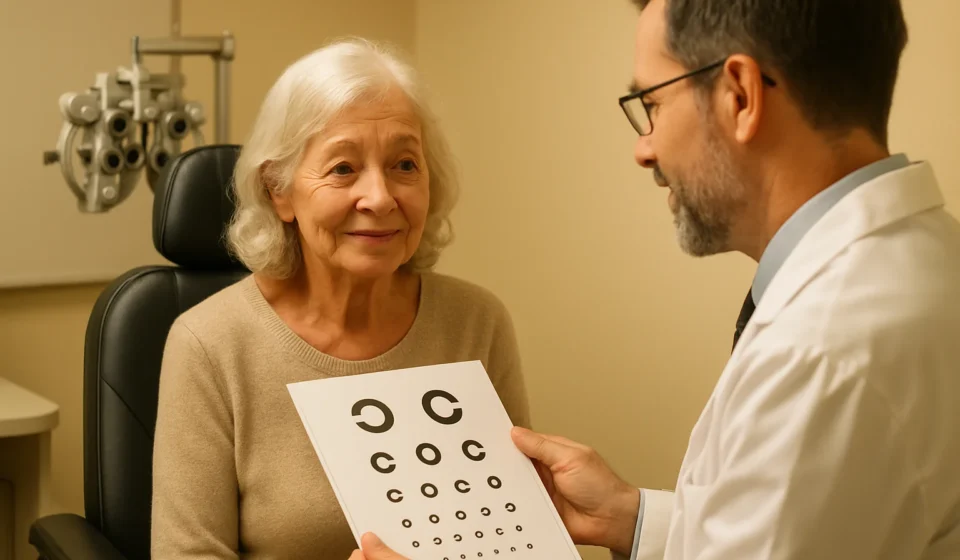

Cataract surgery is the single most commonly performed surgical procedure on Medicare — and for good reason. If you are a senior experiencing blurry vision, glare around lights, or difficulty reading, cataracts may be the cause. The good news: Medicare covers cataract surgery as a medically necessary procedure, and the visual outcomes are among the best of any surgery in medicine, with more than 98% of patients reporting improved vision. Here is everything you need to know about cataract surgery, Medicare coverage, costs, lens options, and recovery in 2026.
Table of Contents
- What Are Cataracts and Who Gets Them?
- Warning Signs: When Is It Time for Surgery?
- How Cataract Surgery Works in 2026
- IOL Lens Options: Standard vs. Premium
- Medicare Coverage for Cataract Surgery
- What You Will Pay in 2026
- Recovery: What to Expect Week by Week
- Risks and Complications
- Frequently Asked Questions
What Are Cataracts and Who Gets Them?
A cataract is a clouding of the eye’s natural crystalline lens, which sits directly behind the iris and pupil. The lens is normally transparent, bending light precisely onto the retina. When proteins in the lens clump together and aggregate — a process accelerated by aging, UV exposure, diabetes, corticosteroid use, and smoking — the lens progressively loses its clarity.
The prevalence of cataracts rises steeply with age. Data from the National Eye Institute shows that more than 24 million Americans have cataracts by age 40, and by age 75, approximately 70% of Americans have cataracts significant enough to affect vision. There are three main subtypes relevant to older adults:
- Nuclear sclerosis (most common in seniors): Yellowing and hardening of the central lens nucleus, causing gradual blurring and a shift toward near-sightedness
- Cortical cataracts: Spoke-like opacities radiating from the periphery, causing glare and contrast loss
- Posterior subcapsular cataracts (PSC): Form at the back of the lens; associated with diabetes, prolonged steroid use, and radiation; progress faster and cause significant glare and reading difficulty
Warning Signs: When Is It Time for Surgery?
There is no medication, drop, or supplement that reverses cataracts. The only effective treatment is surgical removal. The clinical guideline for surgery timing is functional impairment — meaning cataracts are causing meaningful difficulty with daily activities. Common indications include:
- Blurry or cloudy vision that cannot be corrected with glasses
- Glare, halos, or starbursts around headlights while driving at night
- Difficulty reading, watching television, or recognizing faces
- Frequent changes in eyeglass prescription with diminishing effect
- Faded or yellowed color perception
- Double vision in one eye (monocular diplopia)
- Failure to pass a driving vision test
Medicare requires documented functional impairment. Your ophthalmologist will measure best-corrected visual acuity (BCVA), glare sensitivity (Brightness Acuity Test), and contrast sensitivity to establish medical necessity. A visual acuity of 20/40 or worse with documented functional impairment typically qualifies for Medicare coverage. Early cataracts that are not affecting daily function generally do not meet the threshold for covered surgery.
How Cataract Surgery Works in 2026
Modern cataract surgery — phacoemulsification — is one of the safest and most refined surgical procedures in medicine. The procedure typically takes 10 to 20 minutes under topical (eye drop) or local anesthesia, and most patients go home the same day.
The Phacoemulsification Technique
Your surgeon makes a tiny self-sealing incision of 2.2 to 2.8 mm in the cornea. A probe using ultrasonic energy (phacoemulsification) breaks the clouded lens into small fragments, which are simultaneously aspirated (vacuumed) out. A foldable intraocular lens (IOL) is then inserted through the same small incision and unfolds into position. No stitches are typically required.
Femtosecond Laser-Assisted Cataract Surgery (FLACS)
An upgraded option available at many centers, FLACS uses a femtosecond laser to perform the corneal incision, capsular opening, and lens fragmentation with computer-guided precision before the surgeon completes the procedure. Medicare does not cover the laser component, which adds $500 to $1,500 per eye as an out-of-pocket upgrade — though evidence on functional outcomes versus traditional phacoemulsification remains mixed as of 2026.
IOL Lens Options: Standard vs. Premium
The intraocular lens (IOL) implanted after the natural lens is removed is the critical decision in cataract surgery. Medicare covers the standard monofocal IOL. Premium lenses are available but require additional out-of-pocket payment.
| IOL Type | What It Corrects | Medicare Covers? | Patient Upgrade Cost |
|---|---|---|---|
| Monofocal (standard) | One distance (usually distance vision) | Yes — 80% of approved amount | $0 upgrade |
| Toric | Distance + astigmatism correction | Standard portion only | $750–$1,500/eye |
| Multifocal | Distance + near (reading) vision | Standard portion only | $1,500–$3,500/eye |
| Extended Depth of Focus (EDOF) | Distance + intermediate range | Standard portion only | $1,000–$2,500/eye |
| Light-Adjustable Lens (LAL) | Post-surgery fine-tuning with UV light | Standard portion only | $1,200–$2,000/eye |
For most seniors on a fixed income, the standard monofocal IOL produces excellent distance vision. You will typically need reading glasses after surgery for close work, which Medicare covers (one pair of standard prescription eyeglasses following IOL implantation — a unique benefit not available for any other eye procedure).
Medicare Coverage for Cataract Surgery in 2026
Medicare Part B covers cataract surgery as a medically necessary outpatient procedure. Coverage applies to:
- Pre-operative eye examination and biometry measurements (A-scan/optical coherence biometry)
- Surgeon fees
- Ambulatory surgical center (ASC) or hospital outpatient facility fee
- Anesthesia
- Standard monofocal IOL
- Post-operative follow-up visits (typically 1 day, 1 week, 4 weeks)
- One pair of standard prescription eyeglasses or a set of contact lenses after IOL surgery
Medicare pays 80% of the Medicare-approved amount after the annual Part B deductible ($283 in 2026). Medigap Plan G covers the remaining 20% coinsurance, meaning qualifying Plan G holders pay nothing beyond their monthly premium for standard cataract surgery.
Medicare Advantage (Part C) Considerations
If you have a Medicare Advantage plan, coverage must be at least equivalent to Original Medicare — but the plan may require prior authorization, network restrictions, and referrals. Always verify prior authorization requirements before scheduling surgery with a Medicare Advantage plan. As of 2026, CMS reforms require MA plans to approve or deny prior authorization requests within 72 hours for urgent cases and 7 calendar days for standard requests, with a clinical reviewer required for all denials. Get the prior authorization approval number in writing before your surgery date.
What You Will Pay in 2026: Cost Breakdown
The national Medicare-approved payment rate for routine cataract surgery at an ambulatory surgical center is approximately $1,255 per eye in 2026. With Original Medicare (Part B only, no supplemental coverage):
| Cost Item | Original Medicare Only | Medicare + Plan G | Medicare Advantage |
|---|---|---|---|
| Part B deductible (first service of year) | $283 (once/year) | Covered by Plan G | Plan-specific |
| 20% coinsurance per eye | ~$200–$400 | $0 | Plan copay (often $0–$150) |
| Standard IOL upgrade | $0 | $0 | $0 |
| Premium IOL upgrade (toric/multifocal) | $750–$3,500/eye OOP | Same — not covered | Same — not covered |
| Post-op eyeglasses (one pair) | 80% covered | 20% covered by Plan G | Varies |
Without any Medicare coverage, cataract surgery costs $3,000 to $6,000 per eye at most U.S. surgical centers. Medicare dramatically reduces this to out-of-pocket costs of $200 to $600 for most beneficiaries using Original Medicare, and often $0 with a comprehensive Medigap plan.
Recovery: What to Expect Week by Week
Cataract surgery recovery is generally straightforward, but specific precautions are critical — particularly for seniors who may be at higher risk for complications.
Week 1 (Days 1–7)
Vision will often be noticeably clearer within 24 hours, though some blurriness, mild redness, and light sensitivity are normal. You will use a regimen of three post-operative eye drops: an antibiotic (to prevent infection), a corticosteroid (to reduce inflammation), and an NSAID (to prevent cystoid macular edema). These drops are typically used for 2 to 4 weeks. Critical restrictions Week 1: no rubbing the eye, no swimming or hot tubs, avoid getting water directly in the eye while showering, wear the protective eye shield provided by your surgeon at night.
Weeks 2–4
Most activities resume normally. Avoid heavy lifting (over 25 lbs), strenuous exercise, bending with your head below your waist, or activities that increase intraocular pressure for the first 2 weeks. Most seniors can resume driving within 1 to 2 weeks once vision meets state legal requirements. Full stabilization of vision typically takes 4 to 6 weeks, after which your final glasses prescription can be measured.
Second Eye Surgery
Most ophthalmologists recommend waiting 2 to 6 weeks between eyes to allow the first eye to fully heal and stabilize. Medicare covers both eyes, but the Part B deductible applies only once per year, not per eye.
Risks and Complications Seniors Should Know
Cataract surgery has a remarkable safety profile — serious complications occur in fewer than 1% of procedures at experienced surgical centers. However, seniors should be aware of the following:
- Posterior Capsule Opacification (PCO): The most common post-surgical issue, occurring in 20–50% of patients within 2–5 years. The membrane behind the IOL becomes cloudy, causing vision to blur again. Treatment is a quick, painless in-office laser procedure (YAG laser capsulotomy) covered by Medicare Part B, which restores vision in minutes.
- Endophthalmitis (intraocular infection): Rare (0.03–0.05%), but serious. Symptoms — sudden severe eye pain, redness, vision loss — require emergency treatment within 24 hours.
- Cystoid macular edema (CME): Swelling of the central retina; treated with NSAID drops.
- Retinal detachment: Slightly elevated risk (0.5–1%) compared to non-operated eyes, higher in myopic patients. Warning signs: sudden shower of floaters, flashing lights, or curtain across vision — go to emergency ophthalmology immediately.
- Elevated intraocular pressure (IOP): Transient in the first 24 hours; more concerning in patients with pre-existing glaucoma.
Finding a Qualified Surgeon and Preparing for Surgery
To find a board-certified ophthalmologist who accepts Medicare assignment, visit medicare.gov/care-compare and search under “doctors and clinicians.” A surgeon who accepts Medicare assignment agrees to charge no more than the Medicare-approved amount, protecting you from surprise balance bills. Ask specifically about the surgeon’s annual cataract surgery volume — high-volume surgeons (performing 500+ cases per year) have demonstrably lower complication rates in published literature.
Before surgery, your ophthalmologist will perform a detailed biometry measurement using optical coherence interferometry (OCI) — the gold standard for calculating IOL power. Accurate biometry is the single most important determinant of post-surgical visual outcome. The American Academy of Ophthalmology 2024 guidelines recommend IOL power calculation with modern formulae (Barrett Universal II, Kane formula) for all patients, particularly those with prior refractive surgery.
Does Medicare cover cataract surgery on both eyes?
Yes. Medicare Part B covers medically necessary cataract surgery on both eyes. The procedures are typically scheduled 2 to 6 weeks apart. The annual Part B deductible ($283 in 2026) applies once per year, not per eye. You pay the 20% coinsurance for each eye separately unless you have a Medigap supplement plan covering coinsurance.
Will I still need glasses after cataract surgery?
With standard monofocal IOLs set for distance vision, most patients need reading glasses for close work. Medicare covers one pair of standard prescription eyeglasses or contacts following IOL implantation — a benefit unique to cataract surgery. Premium multifocal or EDOF lenses reduce (but do not always eliminate) the need for glasses, at significant additional cost not covered by Medicare.
How do I know if my cataracts are “bad enough” for Medicare to cover surgery?
Medicare covers cataract surgery when cataracts cause documented functional impairment — difficulty driving, reading, watching television, or performing daily activities. Your ophthalmologist must document that your symptoms cannot be adequately corrected with updated glasses and that surgery is medically necessary. Visual acuity of 20/40 or worse with documented functional limitations is the typical qualifying threshold.
Can cataracts come back after surgery?
The cataract itself cannot return — the clouded natural lens has been permanently removed. However, posterior capsule opacification (PCO), sometimes called a “secondary cataract,” develops in 20–50% of patients within a few years when the membrane behind the IOL clouds over. PCO is treated with a fast, painless in-office YAG laser procedure covered by Medicare Part B, which typically restores vision immediately.
What is the best age to have cataract surgery?
There is no ideal age — surgery is recommended when cataracts are significantly affecting quality of life and daily function. Delaying surgery beyond the point of functional impairment carries risks: severely mature cataracts (“hypermature” cataracts) are technically harder to remove and carry higher complication rates. A recent retrospective analysis published in Ophthalmology (2023) found that age alone was not an independent predictor of surgical outcome — octogenarians and nonagenarians achieved comparable visual results to younger patients when comorbidities were managed appropriately.
Sources
- Medicare.gov — Cataract Surgery Coverage
- National Eye Institute — Cataracts
- American Academy of Ophthalmology — Cataract Guidelines 2024
Related Articles You May Find Helpful