Heat Safety for Seniors: Heat Stroke Warning Signs, Medicines That Raise Risk, and a Hot-Weather Plan

Heat is one of the deadliest weather hazards in the U.S., and older adults are hit hardest. The CDC explains why: people 65 and older don’t adjust as well to sudden temperature changes, are more likely to have a chronic condition that changes how the body responds to heat, and are more likely to take medicines that affect sweating or temperature control.
The good news is that heat illness is largely preventable with a plan. This guide covers the warning signs, first aid, the medicines to ask about, and the steps to take before and during a heat wave.
I’m a researcher, not a doctor. If you have heart or kidney disease or have been told to limit fluids, ask your doctor for a personal hot-weather plan.
Why heat hits older adults harder
- Less sweating, and later. Sweating is the body’s main way to cool down, and it weakens with age.
- A blunted sense of thirst. You can be getting dehydrated without feeling thirsty.
- Chronic conditions. Heart disease, diabetes, kidney disease and obesity all make it harder to handle heat stress. Hot weather makes the heart work harder.
- Medicines that affect fluid balance, heart rate or sweating (more below).
- Living alone. Heat illness can cause confusion, so you may not realize you need help.
- Dementia. People with memory problems may not notice they’re overheating or remember to drink. See the NIA’s hot weather safety tips.
Heat exhaustion vs. heat stroke
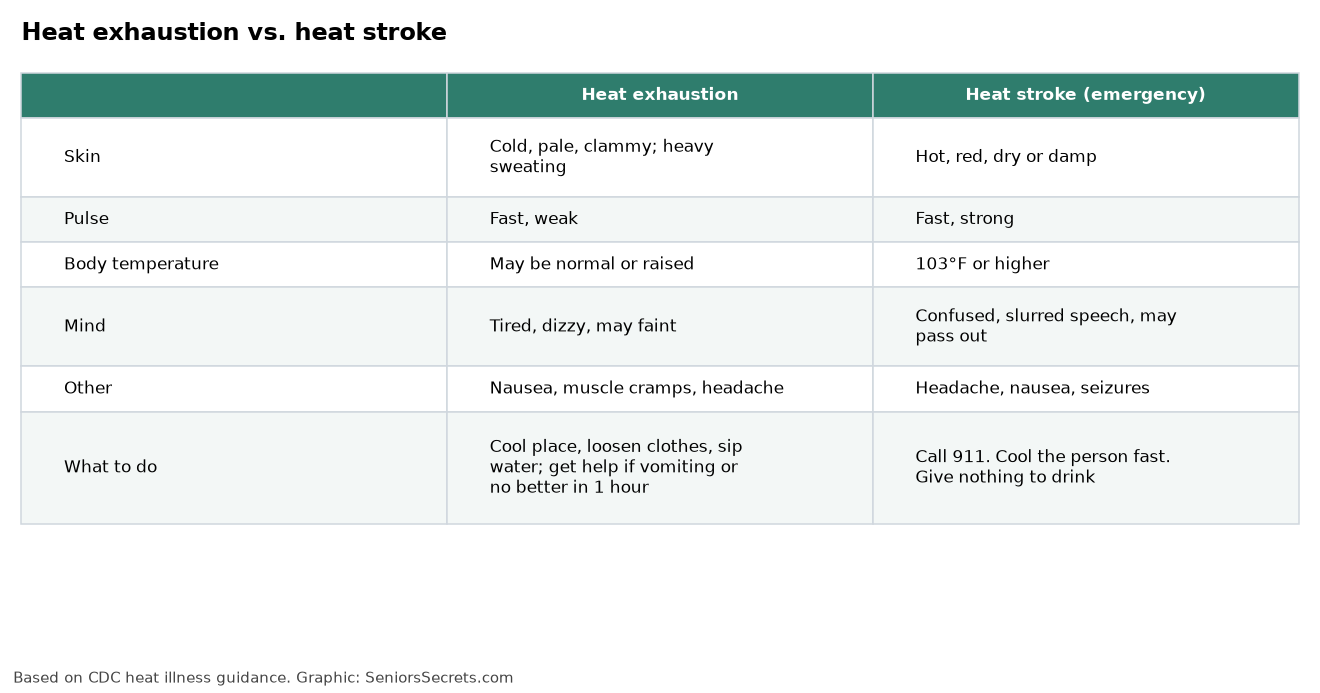
Heat exhaustion is the warning stage. Signs include heavy sweating, cold, pale, clammy skin, a fast but weak pulse, nausea or vomiting, muscle cramps, tiredness, dizziness, headache and fainting.
What to do: move to a cool place, loosen clothing, put cool wet cloths on the skin, and sip water. Get medical help if the person is vomiting, if symptoms get worse, or if they last more than an hour.
Heat stroke is a life-threatening emergency. Signs include:
- a body temperature of 103°F or higher
- hot, red skin that may be dry or damp
- a fast, strong pulse
- headache, dizziness and nausea
- confusion, slurred speech, seizures, or passing out
In older adults, heat stroke can come on without much warning, particularly in people who take diuretics or don’t sweat well. Confusion may be the first sign anyone notices.
Heat cramps (painful muscle spasms with heavy sweating) and heat fainting (feeling lightheaded or fainting when standing in the heat) are also warning signs to stop, cool down and drink.
First aid for suspected heat stroke
- Call 911.
- Move the person to a cooler place, ideally air-conditioned or at least shaded.
- Cool them fast, with whatever you have: cool water on the skin, a cool bath or shower if they can sit safely, wet cloths or ice packs on the neck, armpits and groin, and a fan blowing over damp skin.
- Don’t give anything to drink if they’re confused, vomiting or drowsy, because they could choke.
- Keep cooling until help arrives.
Medicines that can raise heat risk
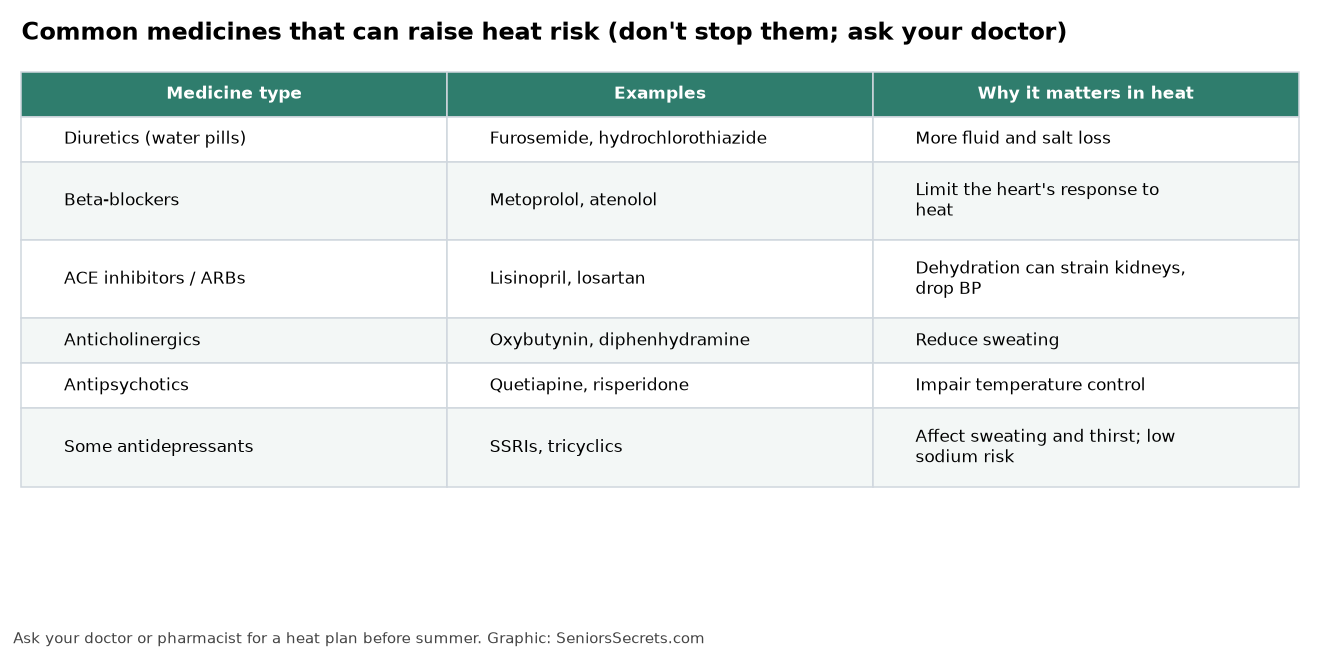
- Diuretics (water pills) like furosemide and hydrochlorothiazide increase fluid and salt loss.
- Beta-blockers like metoprolol and atenolol limit how much the heart can speed up to help with cooling.
- ACE inhibitors and ARBs like lisinopril and losartan: dehydration while on them can strain the kidneys and lower blood pressure.
- Anticholinergics, including some bladder medicines and the antihistamine diphenhydramine (Benadryl), reduce sweating.
- Antipsychotics can impair temperature control.
- Some antidepressants can affect sweating and sodium levels.
Don’t stop any medicine on your own. Before summer, ask your doctor or pharmacist: “Do any of my medicines raise my risk in the heat, and how much should I drink?” The CDC specifically advises people on water pills or fluid limits to ask how much to drink in hot weather. My guide to dangerous drug interactions is a good starting point for that conversation.
Staying safe on hot days
- Air conditioning is the best protection. If you don’t have it, spend the hottest hours in an air-conditioned library, mall, senior center or official cooling center. Call 211 to find one.
- Don’t rely on a fan alone when it’s really hot. The CDC warns that fans aren’t enough as your main cooling source in extreme heat. They’re fine for circulating cool air or blowing over damp skin.
- Drink more water than usual, before you feel thirsty, unless your doctor limits your fluids. Keep a filled water bottle where you can see it. Limit alcohol. See my guide to dehydration in seniors.
- Take cool showers or baths.
- Don’t use the stove or oven on hot days. Choose cold meals instead.
- Wear loose, light-colored, lightweight clothing, and a wide-brimmed hat outdoors.
- Do errands and walks early in the morning or in the evening. Rest in the shade, and avoid strenuous activity in the heat.
- Use sun protection. Sunburn makes it harder for the body to cool itself. See my skin cancer prevention guide.
Your heat-wave plan
Before summer
- Have your medicines reviewed for heat risk, and get a personal fluid target.
- Service your air conditioner, or find out where your nearest cooling center is.
- Put a thermometer in your main living area.
- Set up a check-in buddy. The CDC suggests caregivers visit older adults at least twice a day during heat waves.
- Check your local forecast with the National Weather Service’s HeatRisk tool.
During a heat wave
- Stay in air conditioning during the hottest part of the day.
- Drink regularly, and keep track of how much.
- Check on neighbors who live alone.
- Watch for confusion, dizziness or unusual tiredness, in yourself and others.
Help paying for cooling: the federal LIHEAP program helps eligible households with energy bills, and in some states with cooling costs or air conditioners. Some Medicare Advantage plans offer extra benefits, such as air conditioners, for members with certain chronic conditions. Ask your plan.
What Medicare covers
If heat illness needs treatment, Medicare covers emergency care. Part B covers ER visits and ambulance transport when medically necessary, after the $283 deductible in 2026. Part A covers hospital stays, after the $1,736 deductible per benefit period. Never skip calling 911 because of cost.
FAQ
At what temperature is heat dangerous for seniors?
There’s no single cutoff. Humidity, sun, health conditions and medicines all matter. Check the heat index and your local HeatRisk forecast, and take extra precautions when your area is under a heat advisory.
Is a fan enough to stay cool?
Not in extreme heat. The CDC advises against using a fan as your main cooling source when it’s very hot. Air conditioning, cool showers and cooling centers are safer.
How much water should seniors drink in hot weather?
More than usual, and before you feel thirsty, unless your doctor limits your fluids. If you take water pills or have heart or kidney disease, ask your doctor for a specific amount.
What’s the first sign of heat stroke in older adults?
Often confusion, unusual behavior or drowsiness, along with a high temperature and hot skin. Call 911.
How often should I check on an elderly neighbor during a heat wave?
The CDC suggests at least twice a day.
Related guides