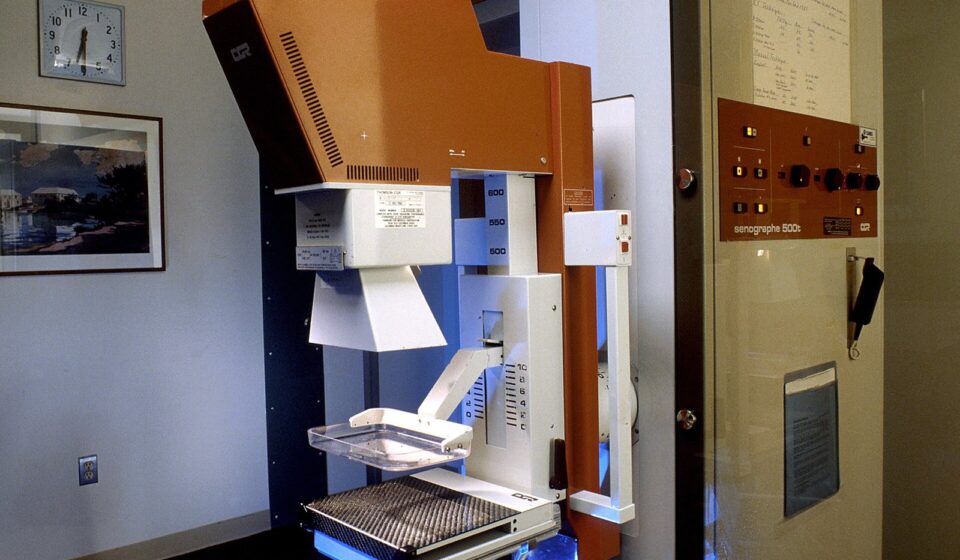
Does Medicare Cover Mammograms? Screening, Diagnostic, and What You’ll Pay

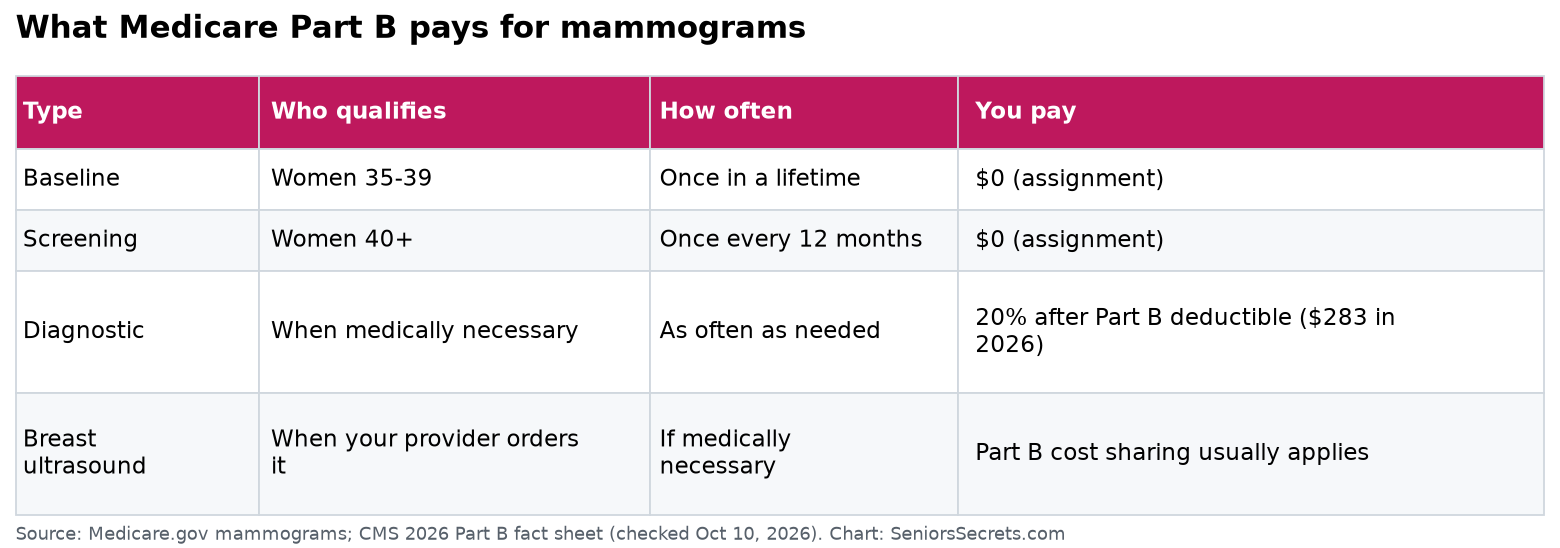
Yes. Medicare Part B covers a screening mammogram once every 12 months for women 40 and older, and you pay nothing for the test if the provider accepts assignment. Women 35 to 39 can get one baseline mammogram. Diagnostic mammograms, the ones ordered because something looks or feels wrong, are also covered, but you pay 20% of the Medicare-approved amount after the Part B deductible ($283 in 2026).
That difference between “screening” and “diagnostic” is where most surprise bills come from, so most of this guide is about it. I checked Medicare.gov’s mammogram coverage page, the USPSTF breast cancer screening recommendation, and the CMS 2026 Part B fact sheet on October 10, 2026.
I research and compare Medicare coverage for readers. I’m not a doctor or a licensed insurance agent.
Medicare mammogram coverage at a glance
| Type | Who qualifies | How often | What you pay (Original Medicare) |
|---|---|---|---|
| Baseline | Women 35-39 | Once in a lifetime | $0 if provider accepts assignment |
| Screening | Women 40+ | Once every 12 months | $0 if provider accepts assignment |
| Diagnostic | When medically necessary | As often as needed | 20% after the Part B deductible |
| Breast ultrasound | When your provider orders it | If medically necessary | Part B cost sharing usually applies |
Medicare doesn’t set an upper age limit. A 70-, 80- or 90-year-old woman still gets a covered screening mammogram every 12 months.
Screening vs. diagnostic: why it changes your bill
A screening mammogram is the routine check when you have no symptoms. A diagnostic mammogram is ordered to look at something specific: a lump, nipple discharge, skin changes, pain in one spot, or a finding on a previous screening that needs a closer look.
Here’s how that plays out in real life:
- You go in for your yearly screening. The radiologist sees an area that needs more images. You’re called back for a diagnostic mammogram, maybe with an ultrasound. The callback visit is diagnostic, so the deductible and 20% coinsurance apply.
- You tell the technologist at your screening appointment that you’ve felt a lump. Some facilities will switch the exam to diagnostic on the spot. Ask before they start if you’re worried about cost, but don’t skip mentioning the symptom.
- You had breast cancer before. Your follow-up imaging is often billed as diagnostic.
None of this is a reason to avoid follow-up. Callbacks are common and most turn out fine. It just helps to expect a bill and know where it comes from.
What Medigap and Medicare Advantage change
Medigap: Most Medigap plans pay the 20% Part B coinsurance on diagnostic mammograms. Plan G leaves only the Part B deductible for you to pay; Plan N can add small copays for some office visits. My Plan G vs. Plan N comparison covers the details.
Medicare Advantage: Plans must cover yearly screening mammograms at $0 in network. Diagnostic mammograms and breast ultrasounds usually come with a plan copay or coinsurance, and some plans require prior authorization for MRI. Check the plan’s Evidence of Coverage, and stick to in-network imaging centers. If you’re switching plans this fall, my Medicare Advantage 2027 guide shows how to check this quickly in Plan Finder.
How often should you actually get one?
Medicare pays for one every 12 months. The medical recommendation is a separate question.
The U.S. Preventive Services Task Force (USPSTF) recommends screening mammograms every two years for women 40 to 74. For women 75 and older, the Task Force says the evidence is insufficient to recommend for or against screening. Other groups, such as the American Cancer Society and radiology societies, lean toward yearly screening and continuing as long as a woman is in good health.
In practice, the decision after 75 usually comes down to overall health and life expectancy. If you’re active and expect to live another 10 years or more, many doctors keep screening. If serious illness makes treatment unlikely, screening may do more harm (anxiety, biopsies) than good. That’s a conversation for you and your doctor, and Medicare will pay either way.
3D mammograms, dense breasts, and extra imaging
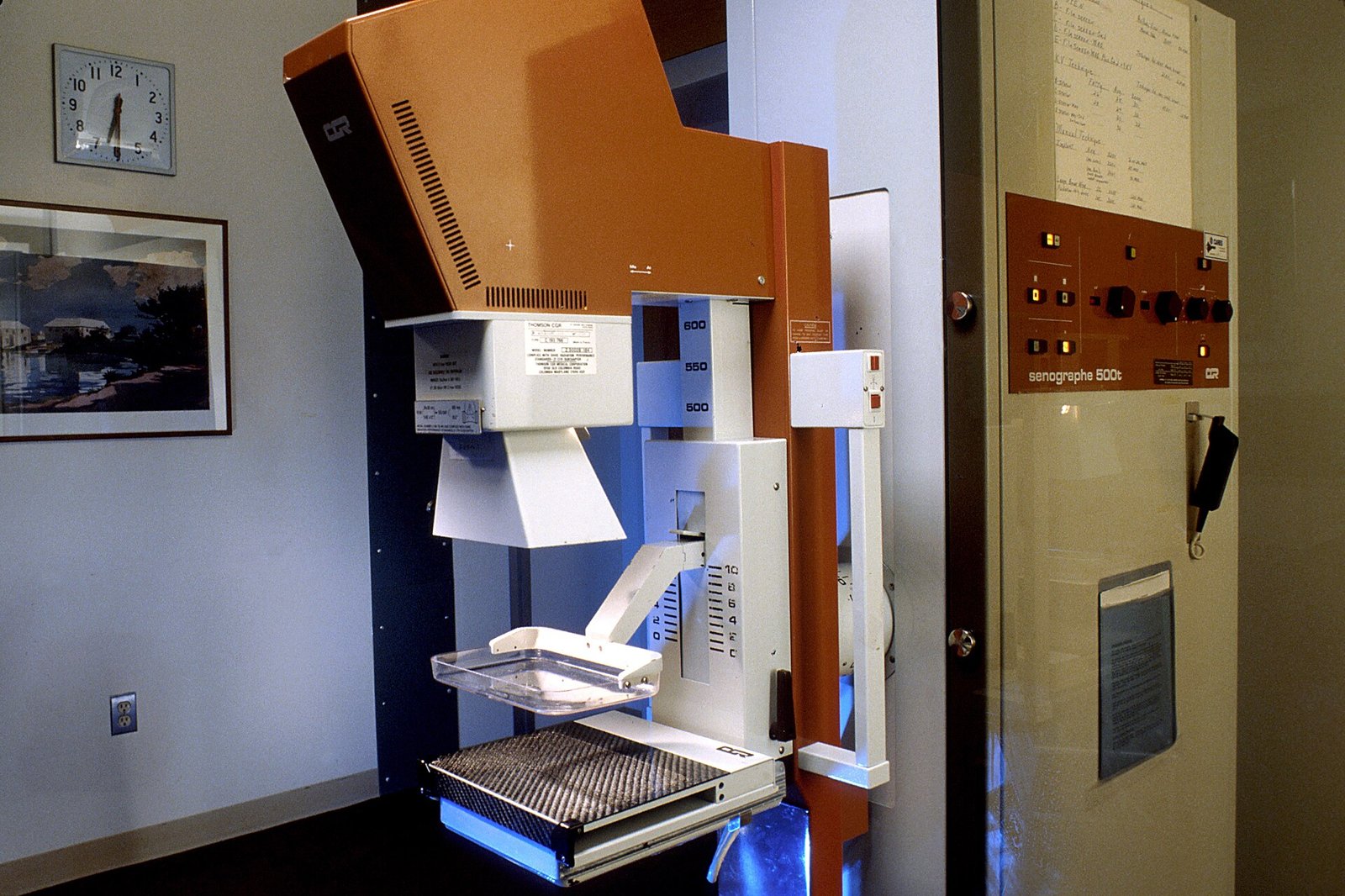
3D mammograms (digital breast tomosynthesis): Medicare pays for 3D screening mammograms, and many imaging centers now use them by default. Confirm with the facility that the exam will be billed as a screening.
Dense breasts: Nearly half of women have dense breast tissue, which makes cancers harder to see and slightly raises risk. Since September 2024, FDA rules require mammography facilities across the country to tell you in your results letter whether your breasts are dense. The USPSTF says there isn’t enough evidence yet to recommend routine extra ultrasound or MRI for dense breasts alone. If your letter says “dense,” ask your doctor whether additional imaging makes sense for you. Medicare covers breast ultrasound or MRI when ordered as medically necessary, with normal Part B cost sharing.
Tips to keep your mammogram free
- Wait a full 12 months. Medicare counts 11 full months after the month of your last screening. Going a few weeks early can turn a free screening into a bill. Check the date of last year’s exam.
- Choose a facility that accepts assignment. Most hospital and imaging centers do. Ask when you book.
- Schedule it as a screening. If you have a symptom, tell your doctor first; a diagnostic exam is the right test, even if it costs more.
- Ask about the callback cost up front, so a diagnostic follow-up doesn’t come as a shock.
- Keep your old images or know where they are. Comparison with earlier films reduces unnecessary callbacks.
Mammograms are just one of Medicare’s no-cost screenings. Check the full list of free Medicare preventive services, and if cancer is found, my guide to Medicare cancer treatment coverage explains what Parts A, B and D pay.
Common questions
Does Medicare pay for a mammogram every year?
Yes. Part B covers one screening mammogram every 12 months for women 40 and older, at $0 if the provider accepts assignment.
Is there an age limit for Medicare mammograms?
No. Medicare covers yearly screening at any age 40 and up. Whether to keep screening after 75 is a medical decision to make with your doctor.
Why did I get a bill for my mammogram?
Usually because the exam was diagnostic (for a symptom or a callback), it happened less than 12 months after your last screening, or extra services like an ultrasound were added. Diagnostic imaging costs 20% after the Part B deductible.
Does Medicare cover 3D mammograms?
Yes. Medicare pays for 3D (tomosynthesis) mammograms. Screening 3D exams are covered like regular screenings.
Does Medicare cover breast ultrasound or MRI?
Yes, when your doctor orders it as medically necessary. Normal Part B cost sharing applies, and Medicare Advantage plans may require prior authorization.
Written by Khasim Basha Shaik. I research Medicare coverage and compare official sources for readers. I’m not a doctor or a licensed insurance agent. This article summarizes Medicare.gov, CMS, and USPSTF information and is not medical advice. Last reviewed October 10, 2026.
Related guides
Pneumonia Vaccine for Seniors: Which Shot You Need After 50, and What Medicare Pays