
How to Manage Anxiety in Seniors Naturally: 9 Drug-Free Strategies That Work
Anxiety is not a young person’s problem — it is the most common mental health condition in adults over 65, affecting an estimated 10–20% of seniors, and the vast majority of them never receive any treatment at all. Research from the American Association for Geriatric Psychiatry shows that anxiety disorders in older adults significantly increase the risk of cognitive decline, heart disease, falls, and premature death — yet they remain dramatically under-recognized and under-treated. If worry, fear, tension, or a constant sense of dread has quietly become your daily companion, this article is for you.
The good news is powerful: learning how to manage anxiety in seniors naturally — without medications that carry serious side effect risks for older bodies — is entirely achievable. Science has identified specific, evidence-based natural interventions that calm an overactivated nervous system, retrain anxious thought patterns, and produce lasting relief for seniors over 70.
Understanding Why Anxiety Changes With Age
Anxiety in seniors often looks different from anxiety in younger adults, and often has different triggers. While younger people may worry about work or relationships, seniors commonly face anxiety driven by health concerns, fear of falling, grief and loss, financial uncertainty, or the frightening sense that independence is slipping away. Additionally, several physical changes of aging directly affect anxiety: declining levels of GABA (a calming neurotransmitter), changes in how the brain regulates the stress hormone cortisol, and the anxiety side effects of many common medications all contribute.
Many seniors also find that anxiety worsens at night, a phenomenon tied to both circadian rhythm changes and the way the aging brain’s fear center (the amygdala) becomes more reactive with age. Understanding these mechanisms helps you choose the right strategies — ones that target the actual physiological roots of your anxiety.
Research Proves: Natural Anxiety Management Is Highly Effective for Seniors
A comprehensive 2021 meta-analysis published in The Gerontologist analyzed 38 randomized controlled trials of non-pharmacological anxiety interventions in older adults. The conclusion was unambiguous: mindfulness-based interventions, relaxation training, and cognitive-behavioral techniques produced effect sizes equal to or greater than anti-anxiety medications — without the risks of dependency, falls, cognitive side effects, or drug interactions that make benzodiazepines particularly dangerous for seniors over 70.
The FDA has issued specific warnings about the risks of benzodiazepines (like Xanax, Valium, and Ativan) in older adults, citing increased fall risk (up to 50% higher), memory impairment, and paradoxical agitation. Natural approaches are not just gentler — for many seniors, they are actually safer and more effective.
9 Natural Strategies to Manage Anxiety in Seniors
1. Practice diaphragmatic breathing daily. Slow, deep breathing is the fastest-acting natural anxiety intervention known to science. Activating the diaphragm triggers the vagus nerve, which directly switches the nervous system from the “fight-or-flight” stress state to the “rest-and-digest” calm state within minutes. Practice 4-7-8 breathing: inhale for 4 counts, hold for 7 counts, exhale slowly for 8 counts. Do this for 5 minutes twice daily — morning and when anxiety peaks. Research from Stanford University confirms this technique reduces physiological anxiety markers more rapidly than any other non-pharmaceutical intervention.
2. Walk in nature every day. A groundbreaking Stanford study using brain imaging found that 90 minutes of walking in a natural setting significantly reduced activity in the subgenual prefrontal cortex — the brain region associated with rumination and repetitive anxious thoughts. Even a 20-minute walk through a park or garden reliably reduces cortisol levels and elevates mood-stabilizing serotonin. If outdoor walking is difficult, even 10 minutes of slow, mindful walking in a garden or through an open window with nature sounds provides measurable benefit.
3. Use progressive muscle relaxation (PMR) at bedtime. PMR systematically relaxes every major muscle group by first tensing, then releasing them. Starting at your feet and moving upward to your face, tense each group for 5 seconds, then release for 30 seconds while breathing slowly. The physical release of muscle tension provides a powerful signal to the nervous system that the threat has passed. A meta-analysis in Anxiety, Stress, and Coping found PMR reduced anxiety severity scores by an average of 32% in older adults after 4 weeks of nightly practice.
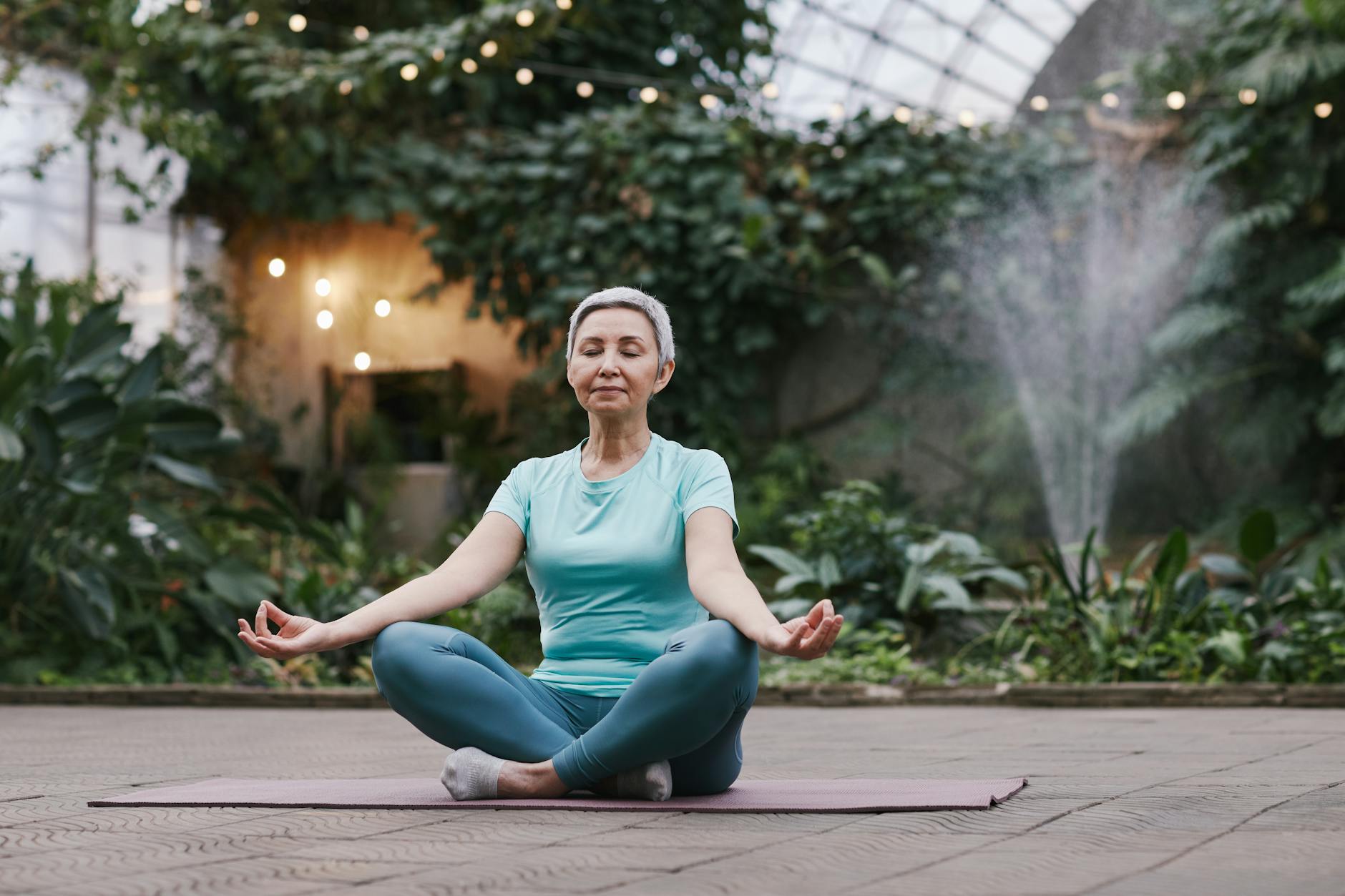
4. Try mindfulness meditation. Mindfulness — the practice of observing thoughts and sensations without judgment — has been shown to literally restructure anxiety-related brain circuits. An 8-week Mindfulness-Based Stress Reduction (MBSR) program reduced anxiety symptoms in seniors over 65 by 40% in a controlled trial published in General Hospital Psychiatry. You don’t need a program to start — free guided meditations on YouTube or the Calm and Headspace apps (both have senior-friendly tracks) can guide you through 10–15 minutes daily.
5. Limit caffeine and alcohol. Both substances dramatically worsen anxiety in seniors. Caffeine directly stimulates the release of adrenaline, mimicking and amplifying the physiological state of anxiety. Switch to half-caff coffee or herbal tea after noon. Alcohol may feel calming initially but increases anxiety significantly as it wears off, and creates a dependency cycle that escalates anxiety over time. Reducing alcohol intake is one of the highest-return changes a senior with anxiety can make.
6. Establish a structured daily routine. Anxiety thrives in unpredictability and open-ended time. A consistent daily schedule — set wake time, regular mealtimes, designated activity and social time, consistent bedtime — provides the nervous system with a predictable framework that naturally reduces baseline anxiety. This is not about rigidity; it is about giving your nervous system the safety cue of rhythm and expectation.
7. Consider magnesium and L-theanine supplements. Magnesium plays a critical role in regulating GABA receptors — the brain’s primary calming system. Multiple studies show that magnesium glycinate (200–400 mg daily) reduces anxiety scores in adults with low magnesium levels, which is extremely common in seniors over 65. L-theanine, an amino acid found in green tea, has been shown in double-blind trials to reduce anxiety without causing drowsiness, making it well-suited for daytime use. Always discuss supplements with your physician first.
8. Engage in social connection deliberately. Isolation is one of the most powerful anxiety amplifiers. When the brain has no social input, it defaults to threat-scanning — interpreting ambiguous internal signals as danger. Structured social engagement — a weekly lunch with a friend, a regular phone call with family, a community class or faith group — directly suppresses the amygdala’s fear response through social co-regulation. Even 20 minutes of warm social connection has been shown to reduce cortisol levels significantly.
9. Practice gratitude journaling. Writing down three specific things you are grateful for each evening activates the prefrontal cortex — the brain’s rational, calming executive center — and reduces overactivation of the amygdala. A rigorous study from UC Berkeley found that gratitude journaling produced measurable changes in neural activity associated with emotional regulation within 3 months. It takes 5 minutes. Be specific — “I am grateful for the warm cup of tea I had this morning and the sound of birds outside” is more neurologically activating than generic gratitude.
Research Proves: Cognitive Behavioral Therapy Is a Gold Standard for Senior Anxiety
If natural self-help strategies provide partial but insufficient relief, cognitive behavioral therapy (CBT) — specifically adapted versions for older adults such as CBT-OA — is the most robustly evidence-based treatment for anxiety in seniors. CBT helps you identify the specific thought patterns that fuel anxiety and replace them with accurate, balanced perspectives. It typically requires 8–12 sessions, and many therapists now offer telehealth options making it accessible without travel.
A 2019 Cochrane Review confirmed that CBT is effective for late-life anxiety disorders with lasting benefits, and it produces no side effects whatsoever. If cost is a concern, many community mental health centers offer sliding-scale fees, and Medicare covers mental health services including psychotherapy.
When to Seek Professional Help
If anxiety is significantly interfering with daily activities, sleep, appetite, or relationships, a conversation with your physician is warranted. Ask specifically about a referral to a geriatric psychiatrist or psychologist — these specialists understand the unique presentation of anxiety in older adults and can rule out medical causes (thyroid disorders, medication side effects, and cardiac conditions can all produce anxiety symptoms). You deserve to feel calm, safe, and present in your own life — at any age.
Follow SeniorsSecrets.com for daily tips that help you live longer and stronger.