
A landmark study from Mass General Brigham released in 2026 has put a striking number on something many seniors already know intuitively: 58% of older adults used at least one complementary health approach in the past year, and more than 75% have tried one or more in their lifetime. The most popular include massage therapy, yoga, tai chi, meditation, herbal supplements, and acupuncture.
I’m Margaret Collins, Senior Health Expert, and today I’m giving you a research-based guide to the most evidence-backed complementary therapies for seniors in 2026 — what the science actually says about each, which conditions they help most, and how to use them safely alongside your conventional medical care.
What Are Complementary Therapies? A Clear Definition for Seniors
Complementary therapies — sometimes called complementary and alternative medicine (CAM) or integrative medicine — are health approaches used alongside (not instead of) conventional medical treatment. The key word is “alongside.” The strongest evidence for complementary therapies is in their complementary role: enhancing outcomes, reducing side effects, and improving quality of life when combined with evidence-based medical care.
When you hear “alternative medicine” (used instead of conventional treatment), the evidence is much weaker and the risks are higher. What we know from 2026 research is that the most effective approach for seniors is integrative medicine — the thoughtful combination of conventional treatment with evidence-based complementary approaches.
1. Tai Chi: The Complementary Therapy With the Strongest Evidence for Seniors
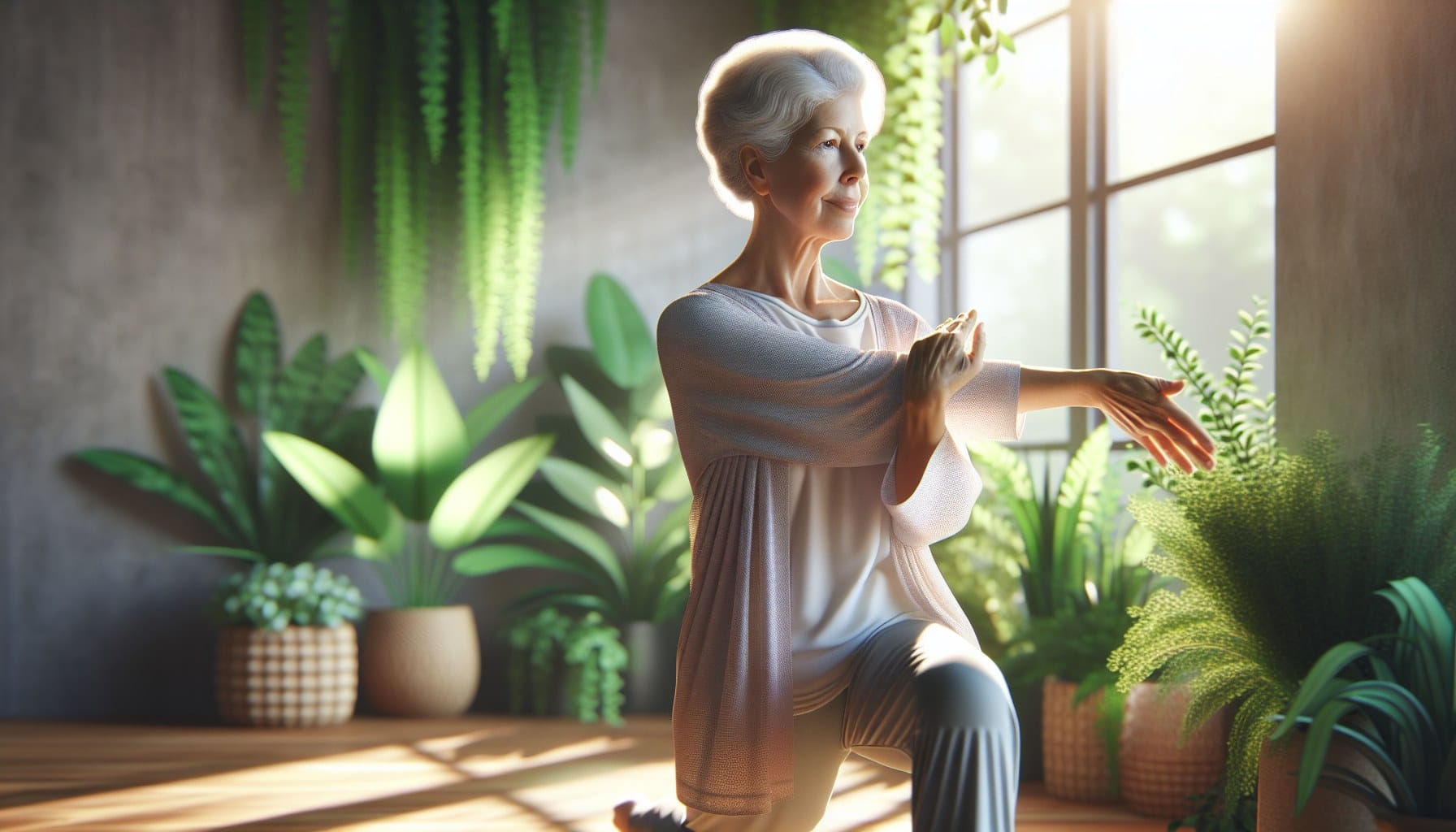
Tai chi is arguably the single best-studied complementary therapy for older adults, with hundreds of randomized controlled trials supporting its benefits. In 2026, tai chi maintains the strongest evidence base for senior health across multiple outcomes:
- Fall prevention: Multiple meta-analyses confirm tai chi reduces fall rates in seniors by 20–47% — one of the most powerful fall-prevention interventions available.
- Balance and mobility: Significant improvements in balance scores, gait speed, and functional mobility in seniors over 65.
- Chronic pain management: Strong evidence for reducing pain in osteoarthritis, fibromyalgia, and chronic lower back pain.
- Cognitive benefits: Research published in 2024 found that 12 weeks of tai chi improved executive function and working memory in seniors with mild cognitive impairment.
- Blood pressure: A 2025 meta-analysis found tai chi reduced systolic blood pressure by an average of 7–13 mmHg — comparable to some medications.
Tai chi is covered by many Medicare Advantage plans as a fitness benefit through Silver Sneakers or similar programs. Look for community classes specifically designed for seniors or “Tai Chi for Arthritis” programs developed in partnership with the Arthritis Foundation.
2. Acupuncture: Complementary Therapies for Seniors 2026 — New Medicare Coverage
Acupuncture received a significant boost in legitimacy in 2020 when Medicare began covering it for chronic low back pain — up to 20 sessions per year. In 2026, that coverage continues and there is ongoing discussion about expanding it to additional conditions including osteoarthritis and cancer-related pain.
What the evidence shows for seniors:
- Chronic lower back pain: Multiple high-quality trials show acupuncture reduces pain scores by 30–50% in seniors with chronic LBP — sufficient evidence for Medicare coverage.
- Osteoarthritis knee pain: A 2024 Cochrane review found acupuncture produced meaningful short-term improvements in pain and function for knee osteoarthritis, though effects were modest at 6 months.
- Chemotherapy-related nausea: Strong evidence from oncology trials supports acupuncture for managing chemotherapy-induced nausea and vomiting in cancer patients.
- Insomnia: Preliminary evidence suggests acupuncture improves sleep quality in older adults, though more large trials are needed.
Always use a licensed, credentialed acupuncturist (L.Ac. or equivalent). Most states require licensure. For Medicare coverage of chronic LBP acupuncture, the acupuncturist must work under the direct supervision of a physician, nurse practitioner, or physician assistant.
3. Yoga: Adapted for Senior Strength, Flexibility, and Mental Health
Chair yoga and gentle yoga styles adapted for older adults have accumulated an impressive evidence base for senior health in 2026:
- Flexibility and range of motion: 8–12 weeks of yoga significantly improves flexibility, hamstring length, and range of motion in seniors — reducing injury risk.
- Lower back and joint pain: Multiple trials show yoga reduces chronic low back pain and improves function comparably to physical therapy for many seniors.
- Mental health: Yoga consistently reduces anxiety and depression symptoms in older adults. A 2025 trial found 8 weeks of gentle yoga reduced depression scores in seniors as effectively as a standard antidepressant in mild-to-moderate cases.
- Cognitive function: A study from UCLA found seniors who practiced yoga showed improvements in verbal memory and spatial working memory — better than standard brain training exercises.
For seniors new to yoga, look for classes labeled “Chair Yoga,” “Senior Yoga,” or “Gentle Yoga.” These classes adapt traditional poses for limited flexibility and balance concerns and are appropriate for all fitness levels.
4. Massage Therapy: Evidence for Pain, Sleep, and Anxiety
The Mass General Brigham 2026 study found massage is one of the most commonly used complementary therapies among older adults — and for good reason. The evidence base is solid for several conditions:
- Chronic pain: Moderate evidence supports massage for reducing chronic musculoskeletal pain, including neck pain, shoulder pain, and lower back pain in older adults.
- Anxiety and stress: Multiple trials show significant reductions in anxiety, cortisol levels, and subjective stress after massage therapy sessions.
- Sleep quality: Research shows massage improves sleep quality in older adults, including those with chronic pain conditions or cancer.
- Circulation: Regular massage improves peripheral circulation — particularly valuable for seniors with circulatory issues in the extremities.
Medicare generally does not cover massage therapy, but many Medicare Advantage plans include massage benefits. Check your plan’s supplemental benefits. Some Medigap plans may reimburse for massage when ordered by a physician as part of a medical treatment plan.
5. Herbal Supplements: What Seniors Must Know in 2026
Herbal supplements are among the most widely used complementary therapies — and the area where seniors most need to exercise caution. The challenge is that the U.S. FDA does not rigorously regulate supplements for safety, efficacy, or purity before sale.
Evidence-backed supplements that have the most research support for seniors:
- Melatonin (0.5–3 mg): Strong evidence for improving sleep quality in older adults, especially for sleep initiation. Lower doses are more appropriate for seniors than the high-dose supplements marketed in the U.S.
- Omega-3 fatty acids (EPA/DHA): Excellent evidence for cardiovascular health, anti-inflammatory effects, and reducing triglycerides. Generally safe and beneficial for most seniors.
- Ginger: Good evidence for reducing nausea and moderate evidence for reducing osteoarthritis pain. Available as capsules, tea, or food.
- Curcumin (with piperine): Emerging evidence for anti-inflammatory effects and joint pain reduction. Absorption requires piperine (black pepper extract).
Critical warning for seniors: Many herbal supplements have significant drug interactions. St. John’s Wort interacts with over 70 medications including warfarin, statins, and antidepressants. Ginkgo biloba increases bleeding risk. Valerian can enhance sedative medications. Always tell your doctor and pharmacist about every supplement you take.
6. Meditation and Mindfulness: The Evidence for Senior Cognitive Health
Mindfulness-based stress reduction (MBSR) has moved firmly into evidence-based medicine territory. For seniors specifically:
- An 8-week MBSR program reduced cortisol levels by 14% in older adults — with corresponding reductions in inflammatory markers linked to accelerated aging.
- Seniors who meditated regularly showed slower age-related cortical thinning in key brain regions — suggesting neuroprotective effects.
- A 2025 meta-analysis confirmed mindfulness meditation reduces anxiety symptoms in older adults with chronic illness by approximately 30%.
Free resources: The NIH’s National Center for Complementary and Integrative Health (NCCIH) offers evidence summaries on all major complementary therapies at nccih.nih.gov. Many senior centers offer free mindfulness and meditation classes as part of Older Americans Act programming.
Sources: NIH National Center for Complementary and Integrative Health | AARP: Complementary Medicine Guide for Seniors | CDC: Complementary and Alternative Medicine
Related Articles You May Find Helpful
- Senior Stress Management: 10 Science-Backed Ways to Beat Anxiety in 2026
- Healthspan Over Lifespan: 8 Longevity Habits for Seniors in 2026
- Poor Sleep Raises Dementia Risk 40%: What Seniors Must Know
- Science Confirms: A Positive Attitude About Aging Slows Decline
- Older Americans Month 2026: 7 Health Actions to Champion Now