
If you’re a senior concerned about maintaining muscle strength, energy, and independence as you age, there’s one nutrient you absolutely cannot afford to overlook: protein. Yet research shows that up to 50% of women and 30% of men over 71 are not getting enough protein daily — a deficiency that accelerates muscle loss, increases fall risk, and shortens healthy life expectancy.
Why Protein Needs for Seniors Are Higher Than You Think
The standard Recommended Dietary Allowance (RDA) for protein is 0.8 grams per kilogram of body weight per day. This number has been the guideline for decades — but here’s the problem: it was set to prevent deficiency, not to optimize muscle health in aging adults. A growing body of research, including a landmark 2026 paper published in the journal Nutrients, shows that older adults need significantly more protein to maintain muscle mass and function.
Why do seniors need more protein? Several age-related changes drive this increased need:
- Anabolic resistance — Older muscles are less efficient at using dietary protein to build new muscle tissue, requiring a higher intake to achieve the same response as younger adults
- Reduced appetite — Aging decreases appetite and alters taste perception, making it harder to consume adequate calories and protein
- Chronic inflammation — Low-grade inflammation common in aging increases protein breakdown
- Reduced digestion efficiency — Changes in gut function reduce protein absorption efficiency by 10–20% in older adults
- Medication side effects — Many common senior medications suppress appetite or impair nutrient absorption
How Much Protein Do Seniors Actually Need Per Day in 2026?
Based on the most current evidence from the PROT-AGE Study Group and the European Society for Clinical Nutrition and Metabolism (ESPEN), here are the updated protein recommendations for older adults:
| Health Status | Recommended Protein Intake | Example (150 lb / 68 kg senior) |
|---|---|---|
| Healthy, active senior | 1.0–1.2 g/kg body weight/day | 68–82 grams per day |
| Senior with chronic disease or at frailty risk | 1.2–1.5 g/kg body weight/day | 82–102 grams per day |
| Acutely ill senior or recovering from surgery | Up to 2.0 g/kg body weight/day | Up to 136 grams per day |
| Senior doing regular strength training | 1.2–1.6 g/kg body weight/day | 82–109 grams per day |
To put this in practical terms: if you weigh 150 pounds (about 68 kg), you should aim for at least 68–82 grams of protein per day — nearly double what many seniors actually consume. If you’re dealing with any chronic illness or recovering from surgery, your needs are even higher.
Protein Timing: When You Eat Protein Matters as Much as How Much
One of the most important — and most overlooked — discoveries in senior nutrition research is protein distribution. Research from Oxford Academic shows that spreading protein intake throughout the day is just as important as the total amount consumed.
The optimal strategy is to consume 25–40 grams of high-quality protein at each meal, three times daily. Studies show that consuming at least 0.4 g/kg of body weight per meal (approximately 25–30 grams for a 150-pound senior) is associated with significantly better muscle strength and mass outcomes compared to eating the same total protein in fewer, larger doses.
This means that skipping breakfast or having a very low-protein meal at any point in the day is actively working against your muscle health — even if you hit your daily total.
Protein-Rich Meal Timing Guide for Seniors
| Meal | Target Protein | Example Options |
|---|---|---|
| Breakfast | 25–30 grams | 3 eggs + Greek yogurt; or protein shake with 2% milk |
| Lunch | 25–35 grams | 5 oz canned tuna + cottage cheese; or chicken breast wrap |
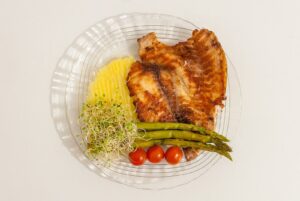
| Dinner | 30–40 grams | 6 oz salmon + lentil soup; or beef stir-fry with edamame |
| Snack (optional) | 10–15 grams | String cheese + almonds; hard-boiled egg + hummus |
The Best Protein Sources for Seniors in 2026
Not all protein is created equal. For seniors, the key is choosing proteins that are high in leucine (the amino acid that triggers muscle protein synthesis), easy to digest, and nutrient-dense. Here are the top protein sources ranked for senior health:
Animal Proteins (Complete Proteins)
- Eggs — 6g per egg; highest leucine-to-calorie ratio; inexpensive; the gold standard for muscle protein synthesis
- Greek yogurt — 15–20g per cup; also provides calcium and probiotics for bone and gut health
- Canned tuna/salmon — 20–25g per 3 oz; rich in omega-3 fatty acids that independently preserve muscle mass
- Chicken breast — 26g per 3 oz; lean, easy to prepare, extremely versatile
- Cottage cheese — 14g per ½ cup; slow-digesting casein protein, ideal before bed for overnight muscle repair
- Lean beef/turkey — 22–24g per 3 oz; rich in creatine and zinc, both important for senior muscle function
Plant Proteins (for vegetarian/vegan seniors)
- Edamame — 17g per cup; one of the few complete plant proteins
- Tofu/tempeh — 10–20g per 3 oz; tempeh is fermented and more bioavailable
- Lentils — 18g per cup cooked; also provides fiber and iron
- Chickpeas/black beans — 15g per cup; best combined with grains for complete amino acids
- Quinoa — 8g per cup cooked; complete protein and rich in magnesium
Protein Supplements: Do Seniors Really Need Them?
Protein supplements — whey protein shakes, protein powders, fortified drinks — are not magic, but they can be genuinely helpful for seniors who struggle to eat enough protein through food alone. Here’s when supplements make sense:
- You’ve had recent surgery or illness and need to recover muscle mass quickly
- Your appetite is suppressed due to medication or chronic disease
- You have difficulty chewing meat or other solid proteins
- You’re vegetarian and find it challenging to hit protein targets from plant sources
If choosing a supplement, whey protein isolate is the best option for seniors — it’s fast-absorbing and has the highest leucine content of any protein source. Look for products with 20–25g of protein per serving and minimal added sugar. Avoid products with more than 5g of sugar per serving.
Protein and Sarcopenia: The Critical Link
Sarcopenia — the age-related loss of muscle mass and strength — begins as early as age 40 and accelerates after 60. By age 80, some seniors have lost up to 50% of their peak muscle mass. The consequences are devastating: increased fall risk, loss of independence, metabolic decline, and higher mortality rates.
The most powerful tool to slow sarcopenia is the combination of adequate protein intake + resistance training. A 2026 randomized controlled trial published in Age and Ageing found that seniors who increased protein intake to 1.2 g/kg per day while performing strength training 2–3 times per week preserved significantly more muscle mass over 12 weeks compared to those who did either alone. This dual strategy — eat more protein AND lift weights — is the gold standard of evidence-based senior muscle preservation.
5 Action Steps: Start Increasing Your Protein Today
- Calculate your personal protein target. Divide your weight in pounds by 2.2 to get your weight in kilograms, then multiply by 1.2. That’s your daily minimum protein goal in grams.
- Add protein to every meal. Never eat a meal without a protein source. Even breakfast should have eggs, yogurt, or protein-fortified cereal.
- Front-load protein at breakfast. Many seniors eat their lightest, lowest-protein meal at breakfast. Flip this — a 30g protein breakfast sets the metabolic tone for the entire day.
- Combine protein with strength training. Ask your doctor about starting a resistance training program — even light resistance bands count. Protein works best in muscles that are being challenged.
- Track your intake for one week. Use a free app like Cronometer or MyFitnessPal to track protein for 7 days. Most seniors are shocked to discover they’re eating 40–50% less protein than they need.
Sources
- NIH/PubMed — Protein and Aging: Practicalities and Practice (2026)
- Oxford Academic — Impact of Increased Protein Intake in Older Adults
- Administration for Community Living — Nutrition Needs for Older Adults: Protein
Related Articles You May Find Helpful
- Sarcopenia Warning: Why Every Senior Needs Strength Training in 2026
- Anti-Inflammatory Diet for Seniors: 10 Foods That Fight Chronic Disease
- Dehydration in Seniors: The Hidden Danger Most Doctors Miss in 2026
- Healthspan Over Lifespan: 8 Longevity Habits for Seniors in 2026
- Peripheral Neuropathy Relief: Latest Treatments for Seniors in 2026