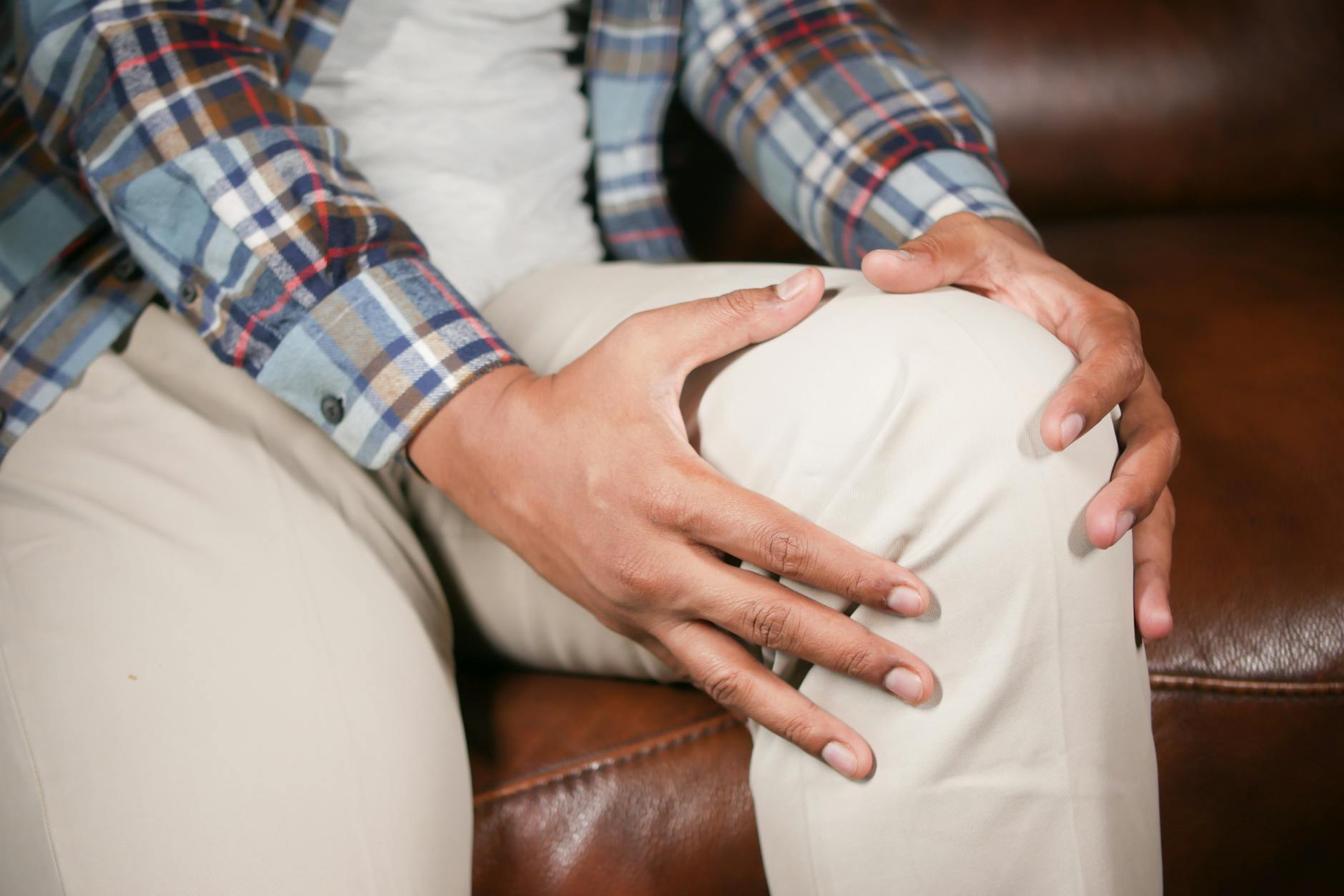
Joint Pain After 60 Isn’t a Life Sentence — Here’s the Science That Most Patients Never Hear

Joint Pain After 60 Isn’t a Life Sentence — Here’s the Science That Most Patients Never Hear
More than 54 million Americans have been diagnosed with arthritis, and the majority are over 65. Joint pain is so common in seniors that it’s become normalized — something to be endured, managed with medication, and quietly accommodated by adjusting your life around it. Stop doing what hurts. Protect the joint. Rest it.
That advice is decades out of date. And in many cases, it actively makes joint pain worse.
The latest research in rheumatology, sports medicine, and physical therapy paints a very different picture. Movement — not rest — is the primary medicine for most joint pain. Inflammation — not simply “wear and tear” — is the central driver. And there are specific, evidence-backed interventions that go far beyond ibuprofen and cortisone shots.
This is what you need to know.
The Anatomy of Joint Pain: What’s Actually Happening
The word “arthritis” means inflammation of the joint. But there are over 100 types of arthritis, and understanding the distinction between the most common forms changes everything about how you approach treatment.
Osteoarthritis (OA)
Osteoarthritis — the most common form in seniors — was for decades called “wear and tear” arthritis, implying joints simply wear out like tires. We now know this is an oversimplification that has harmed millions of people by telling them their joints were broken and the only options were drugs or surgery.
Modern research, including a landmark 2019 review in Nature Reviews Rheumatology, demonstrates that OA is an active inflammatory disease involving the entire joint — the cartilage, bone, synovial membrane, and surrounding tendons and ligaments. Obesity, systemic inflammation, and reduced loading (too little movement) all accelerate its progression. Cartilage, unlike bone, has no direct blood supply — it receives nutrients through the compression and decompression of movement. Joints that stop moving, starve.
Rheumatoid Arthritis (RA)
RA is an autoimmune disease in which the immune system attacks the synovial lining of joints. It typically affects joints symmetrically (both hands, both knees), involves morning stiffness lasting more than an hour, and causes systemic symptoms like fatigue and low-grade fever. If you suspect RA, early diagnosis and treatment with disease-modifying antirheumatic drugs (DMARDs) is critical to preventing irreversible joint damage.
Gout
Gout results from uric acid crystal deposition in joints — most often the big toe, ankle, or knee. It presents as sudden, severe, burning joint pain, often waking people from sleep. Gout is entirely manageable with dietary changes and medication, but untreated, it causes progressive joint destruction.
The Inflammation Connection: Why Your Diet Is Either Helping or Hurting
Systemic inflammation — chronic, low-grade immune activation circulating throughout the body — is the common thread in nearly all forms of joint disease. And your diet is either feeding that fire or dampening it, three times a day, every single day.
A 2021 meta-analysis in Arthritis Research & Therapy found that adherence to an anti-inflammatory diet pattern was associated with significantly lower levels of C-reactive protein (CRP) and IL-6 — two primary markers of systemic inflammation — and with reduced joint pain scores in OA patients.
Foods That Drive Inflammation (Reduce or Eliminate)
- Ultra-processed foods — refined flour, seed oils high in omega-6, artificial additives
- Sugar and high-fructose corn syrup — directly stimulate pro-inflammatory cytokine production
- Trans fats (partially hydrogenated oils) — found in some commercial baked goods and margarines
- Excessive alcohol — disrupts gut barrier integrity, promoting systemic inflammation
- Red and processed meat in large quantities — particularly relevant for gout (purines)
Foods That Fight Inflammation (Prioritize)
- Fatty fish (salmon, sardines, mackerel, herring) — the omega-3 fatty acids EPA and DHA directly inhibit pro-inflammatory prostaglandins. The American College of Rheumatology recognizes omega-3s as having moderate evidence for reducing joint tenderness in RA
- Extra-virgin olive oil — contains oleocanthal, a compound with similar anti-inflammatory mechanism to ibuprofen, without the gastrointestinal side effects
- Colorful vegetables — quercetin (onions, apples), anthocyanins (berries, cherries), and sulforaphane (broccoli, Brussels sprouts) all show anti-inflammatory activity in clinical studies
- Tart cherries — multiple randomized controlled trials show tart cherry juice reduces gout flare frequency and lowers uric acid levels
- Turmeric (curcumin) — a 2016 systematic review in the Journal of Medicinal Food found curcumin supplementation significantly reduced joint pain and stiffness in OA patients versus placebo. Combine with black pepper (piperine) for 20-fold better absorption
Movement Is Medicine: Why Exercise Doesn’t Damage Arthritic Joints
The most dangerous thing you can do for arthritic joints is stop moving. This is not a motivational statement — it is physiology. Cartilage receives its nutrition from synovial fluid, which is pumped through the joint during movement. Immobility accelerates cartilage degradation, weakens the muscles that protect joints, and increases pain sensitization.
A 2017 Cochrane Review analyzing 54 randomized controlled trials found that exercise therapy produced clinically meaningful reductions in pain and improvements in physical function for knee OA — comparable in magnitude to NSAIDs, but without the side effects. The key is choosing the right type.
Best Exercise Types for Joint Pain
Hydrotherapy / Water Exercise
The single best option for severe joint pain. Water reduces effective body weight by up to 90%, allowing full-range movement with minimal joint loading. The hydrostatic pressure simultaneously reduces swelling. Multiple studies show water exercise improves pain, function, and quality of life in hip and knee OA.
Cycling
Stationary or outdoor cycling provides significant cardiovascular benefit and leg strengthening with minimal impact on joints. It maintains range of motion in the knee and hip without compressive force.
Strength Training
Counterintuitively, strengthening the muscles around an arthritic joint reduces pain. Strong quadriceps reduce compressive force on the knee by absorbing shock that would otherwise travel through cartilage. A study in Arthritis Care & Research found that every 20% increase in quadriceps strength was associated with a 22% reduction in knee pain.
Tai Chi
A 2016 New England Journal of Medicine study — the highest-quality research venue there is — found that tai chi was equally effective as physical therapy for reducing knee OA pain, and produced superior improvements in depression and quality of life. It is uniquely suited to seniors because it builds balance, proprioception, and flexibility simultaneously.
Yoga
Particularly gentle yoga styles (Iyengar, restorative) improve joint range of motion, reduce morning stiffness, and decrease pain with very low injury risk. Focus on supported poses and avoid high-compressive positions on affected joints.
Supplements With Genuine Evidence
The supplement industry is full of unsubstantiated claims for joint health. Here is what the actual clinical research supports:
Glucosamine and Chondroitin
The evidence is mixed but leans positive for a subset of patients. The GAIT trial (the largest study of these supplements, funded by the NIH) found that while the combination didn’t outperform placebo on average, patients with moderate-to-severe knee pain showed significant pain reduction. Some patients respond dramatically; others do not. A 3-month trial is reasonable to determine whether you are a responder. Dose: glucosamine sulfate 1,500mg + chondroitin sulfate 1,200mg daily.
Omega-3 Fatty Acids
Fish oil (EPA + DHA) has the strongest evidence base for RA, with multiple RCTs showing reduced joint tenderness, morning stiffness, and NSAID requirement. Evidence is more modest for OA but still positive. Dose: 2–4g combined EPA+DHA daily.
Collagen Peptides
A 2018 randomized controlled trial in the British Journal of Sports Medicine found that hydrolyzed collagen (10g/day with vitamin C) significantly increased collagen synthesis in tendons and cartilage. Emerging evidence suggests it may reduce joint pain and improve function, particularly when combined with exercise.
Boswellia Serrata
An Ayurvedic herb with robust anti-inflammatory evidence. A 2014 systematic review in Public Library of Science ONE found Boswellia extract significantly superior to placebo for reducing knee OA pain and improving function. It inhibits 5-lipoxygenase, a key inflammatory enzyme, without the gastrointestinal side effects of NSAIDs.
The Role of Weight Management
For every pound of body weight, the knee joint experiences approximately 4 pounds of compressive force during walking, and up to 8 pounds during stair climbing. Losing 10 pounds removes 40–80 pounds of pressure from your knees with every step you take.
A study in Arthritis & Rheumatology found that obese adults who lost at least 10% of their body weight experienced a 50% reduction in knee pain — more than any supplement or drug studied in similar populations. Weight loss combined with exercise produced the largest pain reductions of any intervention, including surgery.
Medical Interventions: When to Consider Them
Lifestyle and supplement interventions work best for mild to moderate joint disease. When these are insufficient, evidence-based medical options include:
- Topical NSAIDs (diclofenac gel) — as effective as oral NSAIDs for localized joint pain with dramatically lower systemic side effects. First-line recommendation from ACR guidelines for knee OA
- Intra-articular corticosteroid injections — effective for short-term flare management but should not be used more than 3–4 times per year; evidence suggests frequent injections may accelerate cartilage loss
- Hyaluronic acid injections — evidence is mixed; some patients report excellent relief; works best in mild-moderate OA
- Platelet-rich plasma (PRP) — emerging evidence shows superiority over corticosteroids for knee OA at 12 months; not yet universally covered by insurance but increasingly available
- Joint replacement surgery — highly effective for end-stage OA when quality of life is severely impaired and conservative measures have been exhausted. Modern knee and hip replacements last 15–25 years and restore function dramatically
Managing Flares: The Acute Pain Plan
Even with excellent management, joint flares happen. Having a structured response prevents panic and minimizes duration:
- RICE in the first 24–48 hours (Rest relative to activity level, Ice 15–20 minutes several times daily, Compression if there is swelling, Elevation if possible)
- Topical NSAID applied to the affected joint 3–4 times daily
- Gentle range-of-motion movement — complete rest is counterproductive; gentle movement prevents stiffness
- Identify the trigger — overexertion? Diet change? Weather? Tracking patterns allows you to prevent future flares
The Mindset Shift That Changes Everything
The most damaging belief about joint pain is that it is inevitable, irreversible, and separate from the rest of your health. It is none of those things. Joint pain is deeply connected to your body weight, your systemic inflammation levels, your muscle strength, your movement habits, and your sleep quality.
Change those inputs, and the joint pain changes too. Not always to zero — but often dramatically, and consistently enough that the research calls exercise and anti-inflammatory lifestyle change the most effective long-term interventions available for OA. More effective than surgery for moderate disease. More effective than long-term opioid therapy. With beneficial side effects instead of harmful ones.
Your joints are not broken. They are asking for better inputs. Give them that, and most people are genuinely surprised by how much improves.
Has this changed how you think about your joint pain? Share it with someone who is limiting their life around it — there is a better path available.