Peripheral Artery Disease (PAD) in Seniors: 7 Warning Signs, the ABI Test, Treatment and Medicare Coverage

If your calves cramp after a block or two of walking and ease up when you stop, it’s easy to blame age or arthritis. That pattern is also the classic sign of peripheral artery disease (PAD): plaque has narrowed the arteries to your legs, so your muscles run short of oxygen when they work harder.
PAD is common. The 2024 ACC/AHA multisociety guideline estimates it affects 10 to 12 million Americans over 40, and risk rises steeply with age. It matters beyond your legs. The same plaque that narrows leg arteries often narrows the arteries to the heart and brain, so people with PAD have a higher risk of heart attack and stroke. Severe PAD can also lead to non-healing wounds and amputation.
I’m a researcher, not a doctor. This guide explains the signs and the testing so you can have an informed conversation with your doctor.
The 7 warning signs
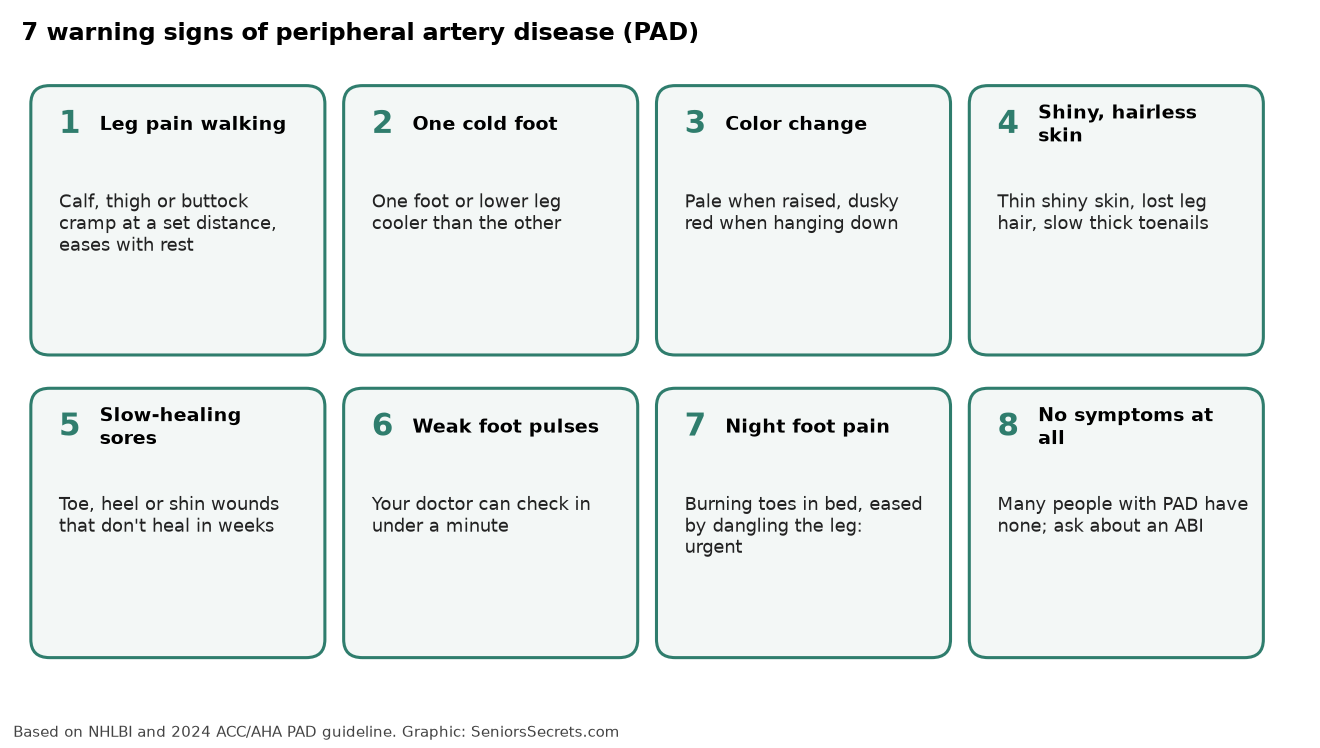
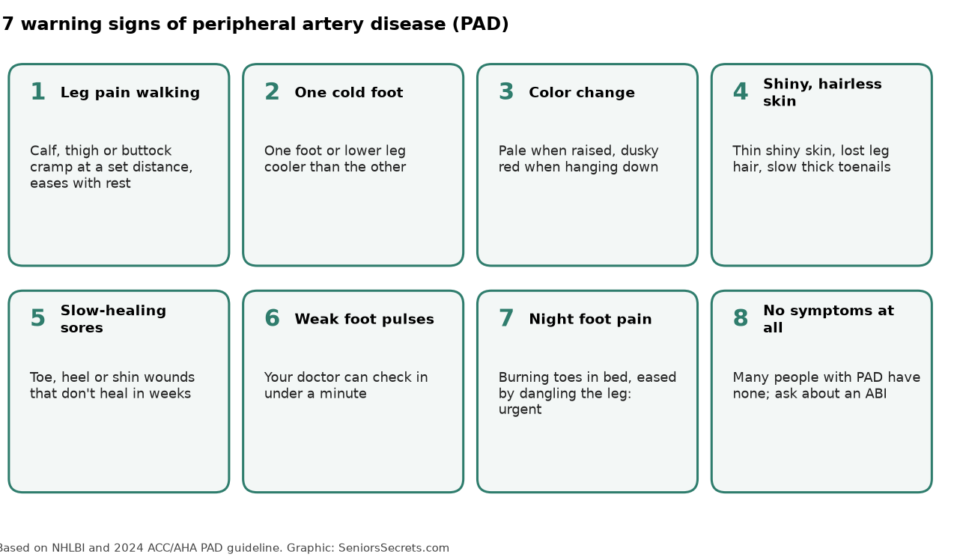
- Leg pain when walking (claudication). A cramp, ache or heaviness in the calf, thigh or buttock that starts after walking a fairly predictable distance and goes away within a few minutes of rest. Arthritis pain usually sits in the joint and doesn’t stop as neatly when you rest. The NHLBI notes only about 1 in 4 people with PAD have this classic symptom.
- One cold foot. One foot or lower leg feels noticeably cooler than the other, even in a warm room.
- Color changes. The foot turns pale when raised and a dusky red when it hangs down.
- Shiny, hairless skin. Thin, shiny skin, lost hair on the lower legs, and thick, slow-growing toenails are signs of long-term poor circulation.
- Sores that won’t heal. Wounds on the toes, heels or shins that don’t improve in a few weeks, especially if you have diabetes.
- Weak or missing foot pulses. Your doctor can check the pulses on the top of your foot and inside your ankle in under a minute. Ask them to.
- Burning foot pain at night. Pain in the toes or foot when lying flat that eases when you hang your leg over the side of the bed. This is “rest pain,” a sign of severe PAD. Get seen urgently.
Many people have no symptoms, or they’ve unknowingly slowed down to avoid the pain. If you have risk factors, ask about testing even if your legs feel fine.
Emergency: a leg that suddenly becomes painful, pale, cold, numb or weak can mean a sudden blockage. Call 911.
Who’s at higher risk
- Smoking, now or in the past. It’s the strongest risk factor you can change.
- Diabetes. It also causes neuropathy, which can hide PAD pain and foot wounds.
- High blood pressure and high cholesterol
- Chronic kidney disease
- Being over 65 (or over 50 with diabetes or a smoking history)
- Heart disease, a previous stroke, or a family history of PAD
- Black Americans have higher PAD rates, partly because diabetes and high blood pressure are more common.
The test: ankle-brachial index (ABI)
The ABI is quick and painless. You lie down for a few minutes, and a technician uses blood pressure cuffs and a small handheld Doppler probe to compare the pressure at your ankles with the pressure in your arms. The 2024 guideline names the resting ABI as the main test for detecting PAD.
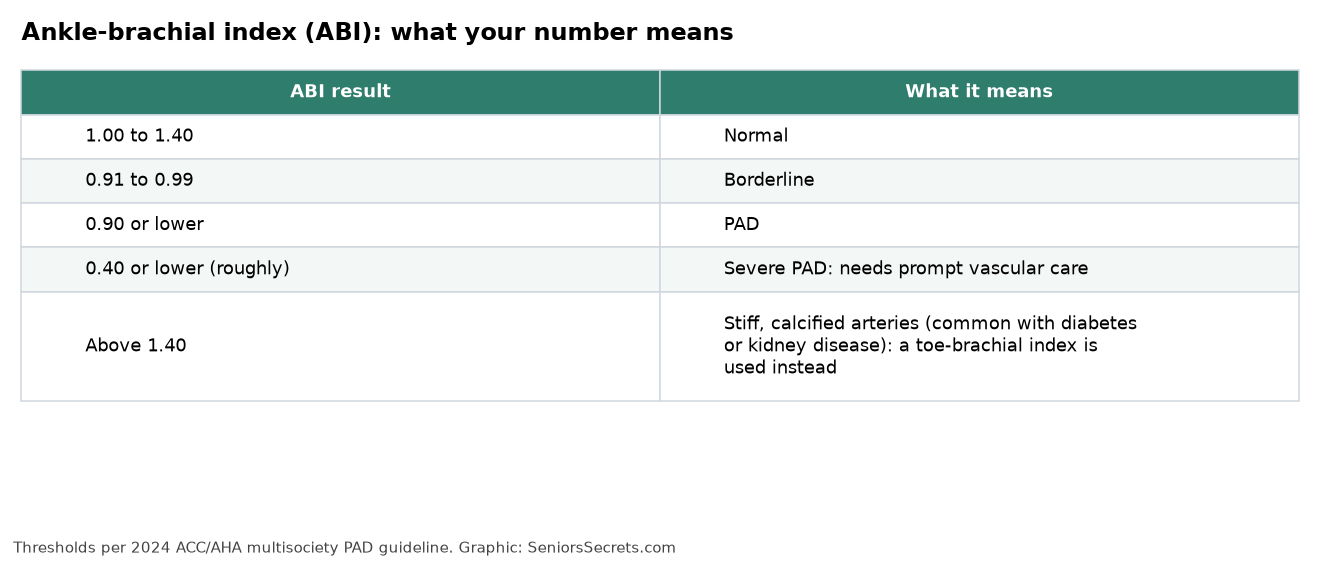
- 1.00 to 1.40: normal
- 0.91 to 0.99: borderline
- 0.90 or lower: PAD. Lower numbers mean more severe disease.
- Above 1.40: the arteries are too stiff (calcified) to squeeze. This is common with diabetes or kidney disease. A toe-brachial index is used instead.
If your ABI is normal at rest but your symptoms suggest PAD, an exercise ABI (measured after walking on a treadmill) can reveal it. If a procedure is being considered, an ultrasound, CT or MR angiogram maps the blockages.
Treatment: what helps most
1. Walk, ideally in a supervised program
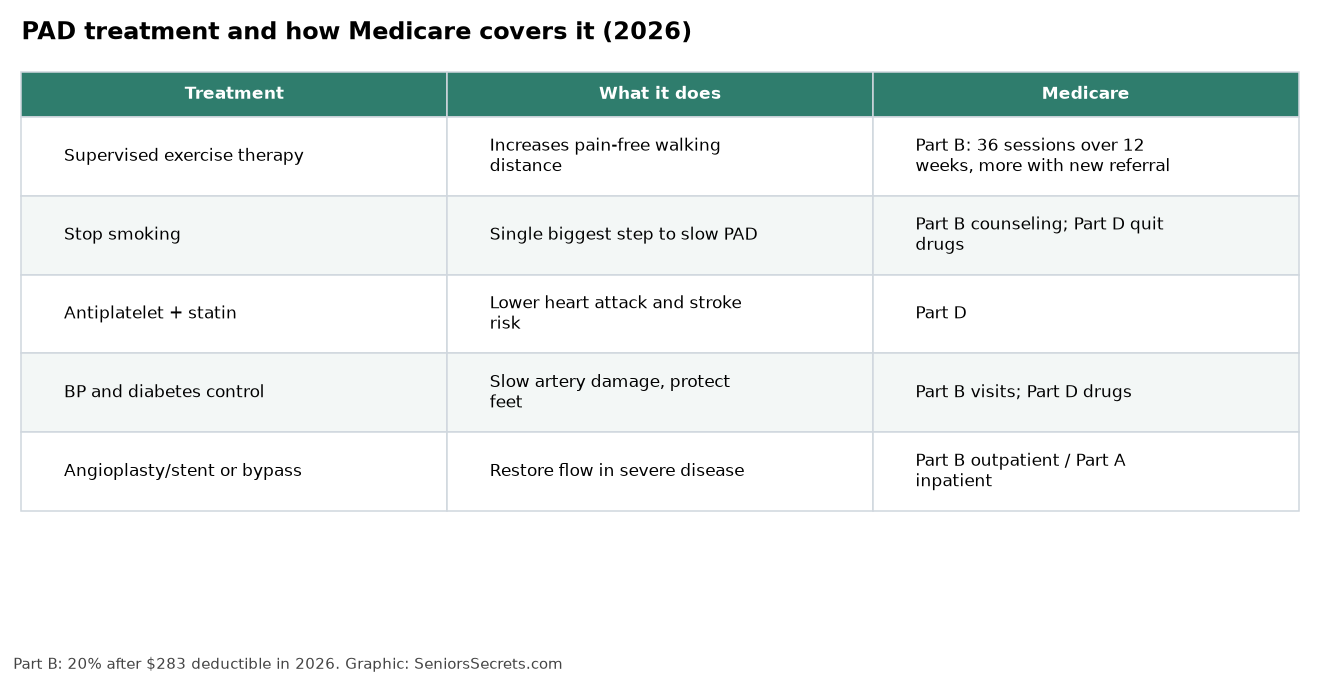
Supervised exercise therapy is a first-line treatment for claudication. You walk on a treadmill until the pain is moderate, rest until it fades, and repeat, for 30 to 60 minutes per session, about three times a week. Over 12 weeks, many people can walk noticeably farther before pain starts. In the CLEVER trial, supervised exercise improved treadmill walking time more than stenting at six months in people with blockages in the pelvic arteries. A structured home walking program also helps if you can’t get to a center.
2. Stop smoking
Quitting is the single most important step for slowing PAD and lowering the risk of amputation, heart attack and stroke. Medicare covers quit-smoking counseling, and Part D covers medications that help.
3. Protect your heart and arteries with medication
The 2024 guideline recommends for most people with PAD:
- an antiplatelet medicine (usually low-dose aspirin or clopidogrel)
- a high-intensity statin, whatever your cholesterol level
- blood pressure control
- good diabetes management
For some patients, the guideline notes that low-dose rivaroxaban (2.5 mg twice daily) plus low-dose aspirin lowers major heart and limb events. Doctors may also prescribe cilostazol to improve walking distance, though it isn’t for people with heart failure. Don’t start or stop blood thinners on your own.
4. Look after your feet
Check your feet daily, wear well-fitting shoes, and have any sore checked promptly. This matters even more with diabetes. See my guide on protecting your feet with neuropathy.
5. Procedures for severe disease
Angioplasty and stenting, or bypass surgery, can restore blood flow when symptoms are disabling despite exercise and medication, or when a limb is threatened.
What Medicare covers
- ABI and other diagnostic tests are covered under Part B when your doctor orders them for symptoms or risk factors.
- Supervised exercise therapy: under Medicare’s national coverage decision, Part B covers up to 36 sessions over 12 weeks for symptomatic PAD with claudication. You need a face-to-face referral visit with your doctor. Another 36 sessions may be covered with a new referral if medically necessary.
- Medications like statins, antiplatelets and cilostazol are covered by Part D, with out-of-pocket costs capped at $2,100 in 2026.
- Angioplasty, stents and bypass are covered under Part B (outpatient) or Part A (inpatient).
Expect 20% coinsurance after the 2026 Part B deductible of $283, unless you have Medigap or a Medicare Advantage plan with different cost-sharing.
PAD often travels with high blood pressure. See my guide to blood pressure treatment for seniors, plus heart-healthy eating and the broader senior fitness guide.
FAQ
Is leg pain when walking always PAD?
No. Arthritis, spinal stenosis and nerve problems can cause it too. Pain that reliably starts at a certain distance and eases within minutes of standing still points toward PAD. An ABI can sort it out.
Does walking make PAD worse?
No. Walking to the point of moderate discomfort, resting and repeating is one of the best treatments. It gradually increases how far you can walk.
Is the ABI test painful?
No. It’s like having your blood pressure taken at your arms and ankles, and it takes about 15 minutes.
Does Medicare cover exercise therapy for PAD?
Yes. Part B covers up to 36 supervised sessions over 12 weeks for symptomatic PAD, with a doctor’s referral, and possibly 36 more with a new referral.
Can PAD be reversed?
The narrowed arteries usually don’t fully reopen. Exercise, quitting smoking and medication can improve symptoms, slow the disease and cut the risk of heart attack, stroke and amputation.
Related guides