
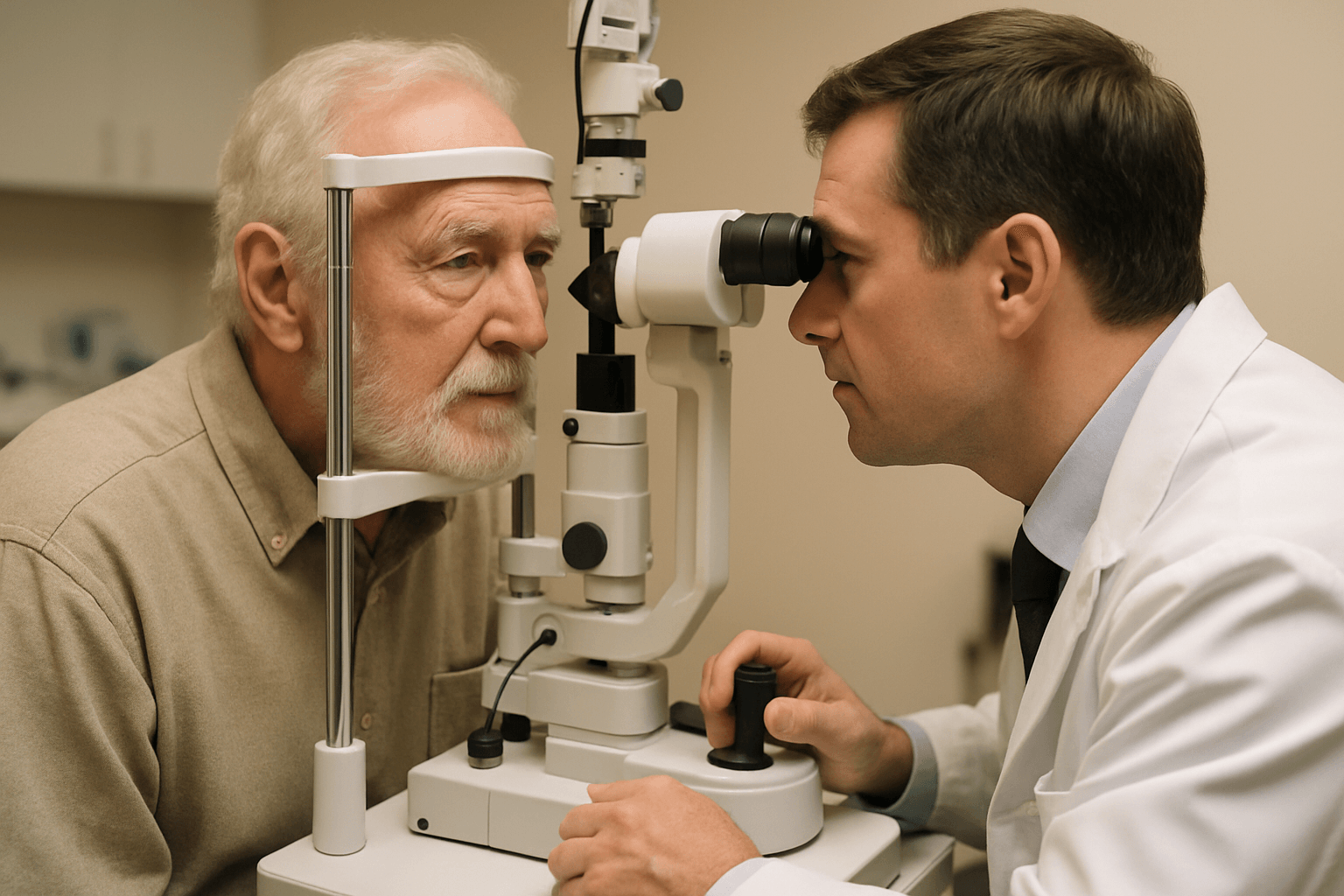
Age-related macular degeneration (AMD) is the leading cause of permanent vision loss in Americans over 50 — and it often steals your central vision silently, without pain, before most seniors realize anything is wrong. More than 11 million Americans currently have AMD, a number projected to reach 22 million by 2050. The good news: 2026 brings better treatment options than ever before, and early intervention can preserve your vision for years. Here’s everything seniors need to know about macular degeneration prevention, detection, treatment, and what Medicare covers.
What Is Macular Degeneration? The Basics Seniors Must Know
The macula is the small central portion of your retina — the light-sensitive tissue at the back of your eye — responsible for the sharp detail vision you need for reading, recognizing faces, and driving. When it deteriorates with age, central vision blurs or disappears even while peripheral vision remains intact. AMD comes in two forms:
| Type | Description | Progression | Treatment |
|---|---|---|---|
| Dry AMD (atrophic) | Gradual breakdown of macular cells; 85–90% of cases | Slow, over years | AREDS2 supplements; no drug cure yet |
| Wet AMD (neovascular) | Abnormal blood vessels leak under the retina | Rapid — severe loss possible in weeks | Anti-VEGF injections (highly effective) |
About 10–15% of dry AMD cases progress to wet AMD over time. When wet AMD develops, it’s a medical emergency requiring immediate treatment to prevent irreversible vision loss.
Macular Degeneration Risk Factors for Seniors
Understanding your risk is the first step to protecting your vision. Major risk factors include: age over 60 (30% prevalence in adults 75+), smoking (3–4x higher risk — the most modifiable factor), family history of AMD (doubles risk), Caucasian race, obesity (BMI over 30 accelerates progression), cardiovascular disease, lifetime UV exposure without protection, and the CFH gene variant present in approximately 40% of people.
Warning Signs of AMD: What to Watch For
AMD often has no pain and minimal early symptoms. Watch for: blurry or fuzzy central vision when reading; straight lines appearing wavy or distorted (test daily with the Amsler Grid — free at nei.nih.gov); a dark blurry spot in the center of your vision; colors appearing less vivid; needing more light to see clearly; difficulty recognizing faces up close. If you notice any sudden change in central vision, call your ophthalmologist immediately — wet AMD can progress from minor distortion to devastating loss within days.
The AREDS2 Formula: Proven Protection for Dry AMD
The Age-Related Eye Disease Study 2 (AREDS2), conducted by the National Eye Institute, is the gold standard for dry AMD supplementation. For seniors with intermediate or advanced AMD in one eye, the AREDS2 formula reduces the risk of progression to advanced AMD by 25%. The proven daily formulation includes: Vitamin C (500 mg), Vitamin E (400 IU), Lutein (10 mg), Zeaxanthin (2 mg), Zinc (80 mg), Copper (2 mg). Note: AREDS2 supplements are NOT recommended for early AMD or people without AMD — they only benefit intermediate-to-advanced cases. Do not take them without an ophthalmologist’s recommendation.
Wet AMD Treatments in 2026: Anti-VEGF Injections
Wet AMD treatment was transformed by anti-VEGF (anti-vascular endothelial growth factor) therapy — injections delivered directly into the eye by a retinal specialist that block the abnormal blood vessel growth causing wet AMD. When started promptly, they stabilize or even improve vision in the majority of patients. Current 2026 FDA-approved options include Eylea HD (high-dose aflibercept) allowing up to every-16-week dosing, Vabysmo (faricimab) with dual-action mechanism, and the Susvimo implant — a refillable port that delivers continuous anti-VEGF treatment, reducing injections to twice yearly for qualifying patients. Lucentis biosimilars are now available, significantly reducing cost for patients who respond well to ranibizumab.
Medicare Coverage for AMD in 2026
| Service | Medicare Coverage | Your Cost |
|---|---|---|
| Anti-VEGF injections (Eylea, Lucentis) | Part B covers 80% | 20% coinsurance after $283 deductible |
| Retinal exams (medically necessary) | Part B covers 80% | 20% coinsurance |
| OCT imaging | Part B covers 80% | 20% coinsurance |
| Routine eye exams | NOT covered | 100% out of pocket or MA vision benefit |
| Eyeglasses/contacts | NOT covered (except post-cataract) | MA vision benefit may help |
Medigap Plan G covers the 20% Part B coinsurance for anti-VEGF injections — important for seniors requiring injections every 4–8 weeks.
7 Science-Backed Steps to Protect Your Vision
- Get a dilated eye exam every 1–2 years after age 65. Only a dilated exam can detect early AMD deposits (drusen) before vision loss begins.
- Quit smoking immediately. The single largest modifiable AMD risk factor. Even quitting after 65 reduces risk significantly within 5 years.
- Eat lutein and zeaxanthin-rich foods daily. Kale, spinach, and eggs are top sources of these macular-protective carotenoids. Aim for 6–10 mg lutein/day.
- Wear UV-blocking sunglasses outdoors. Choose wraparound frames with 99–100% UVA/UVB protection, especially at high altitudes and coastal areas.
- Control blood pressure and cholesterol. A target BP under 130/80 mmHg and LDL under 100 mg/dL are protective. Vascular disease accelerates AMD progression.
- Exercise regularly. A British Journal of Ophthalmology study found 2.5+ hours of moderate weekly exercise associated with 70% lower risk of wet AMD progression.
- Use the Amsler Grid daily. This simple at-home test detects early central vision distortion from wet AMD — enabling prompt treatment that can save your vision.
The Bottom Line on Macular Degeneration in Seniors
Age-related macular degeneration is not an inevitable part of aging. With regular dilated eye exams, the right nutrition strategy, smoking cessation, and — when needed — prompt anti-VEGF treatment, most seniors can preserve their central vision well into their 80s and beyond. If you haven’t had a dilated eye exam recently, make that appointment today. The vision you save may be your own.
Sources: National Eye Institute — AMD | Medicare.gov — Eye Care Coverage | American Academy of Ophthalmology
Related Articles You May Find Helpful
- Hearing Loss & Dementia Risk: What Seniors Must Know in 2026
- Vitamin D & Alzheimer’s Risk: What Every Senior Must Know in 2026
- Osteoporosis Prevention for Seniors in 2026: 5 Proven Pillars
- Fall Prevention for Seniors 2026: 10 Proven Strategies That Work
- Prostate Health for Senior Men 2026: BPH, PSA & Prevention Guide